
-Dec-03-2025-07-07-25-0816-AM.png "LANDING PAGE (6)-Dec-03-2025-07-07-25-0816-AM")
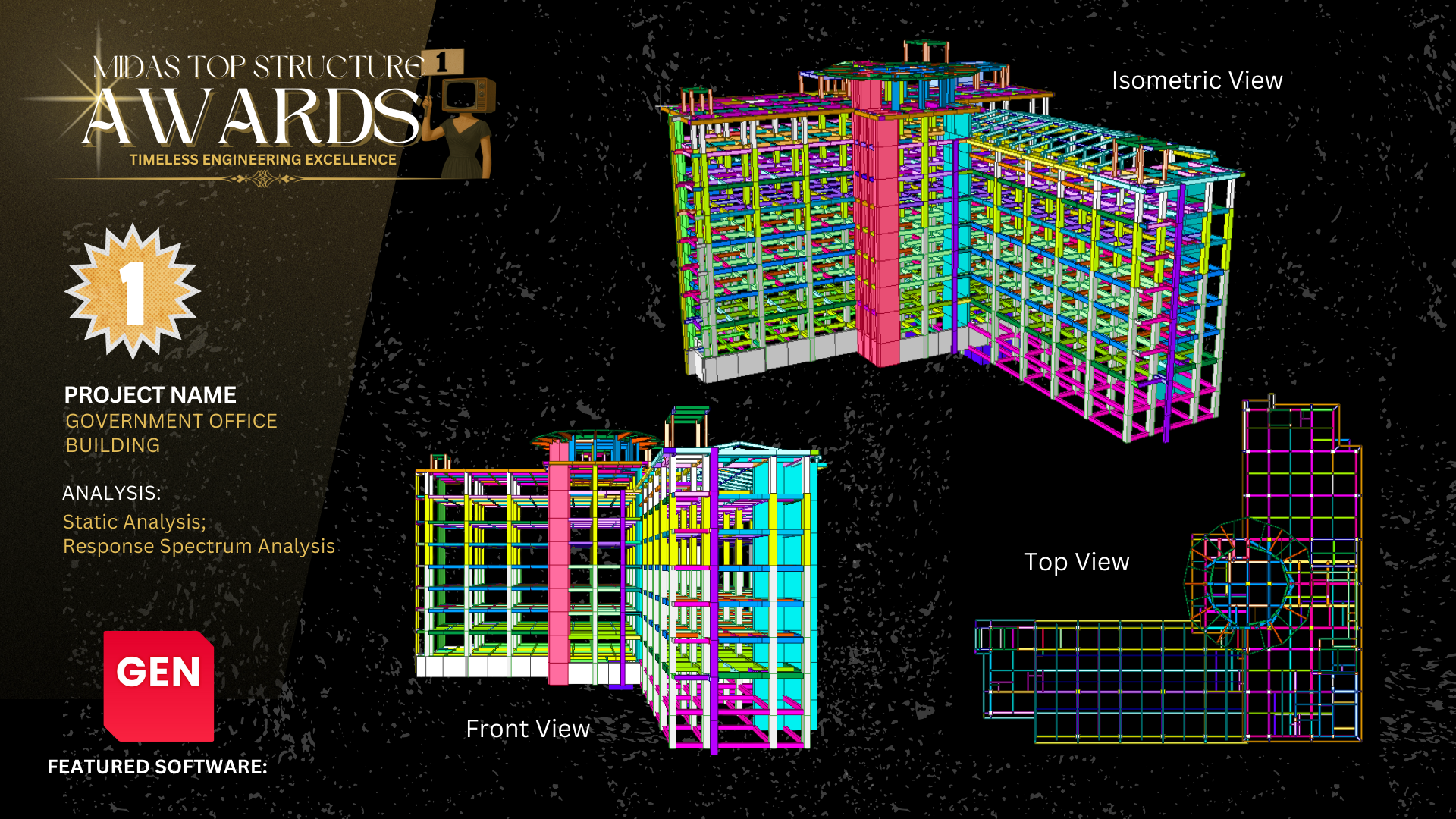
7-storey building with penthouse, roof deck, and helipad.
The reinforced-concrete building with a basement is designed for Philippine seismic conditions. Static and response spectrum analyses were performed to evaluate earthquake demands and confirm adequate strength, ductility, and energy dissipation for occupant safety.

The proposed structure combines a reinforced-concrete foundation with a steel-framed superstructure for durability and design flexibility. It is a multi-level dining facility: the ground and second floors contain enclosed, climate-controlled restaurants, while the third floor offers an open-air lounge and dining area with direct access to a separately modeled pool deck. Overall, the layout balances structural performance, user comfort, and architectural intent.
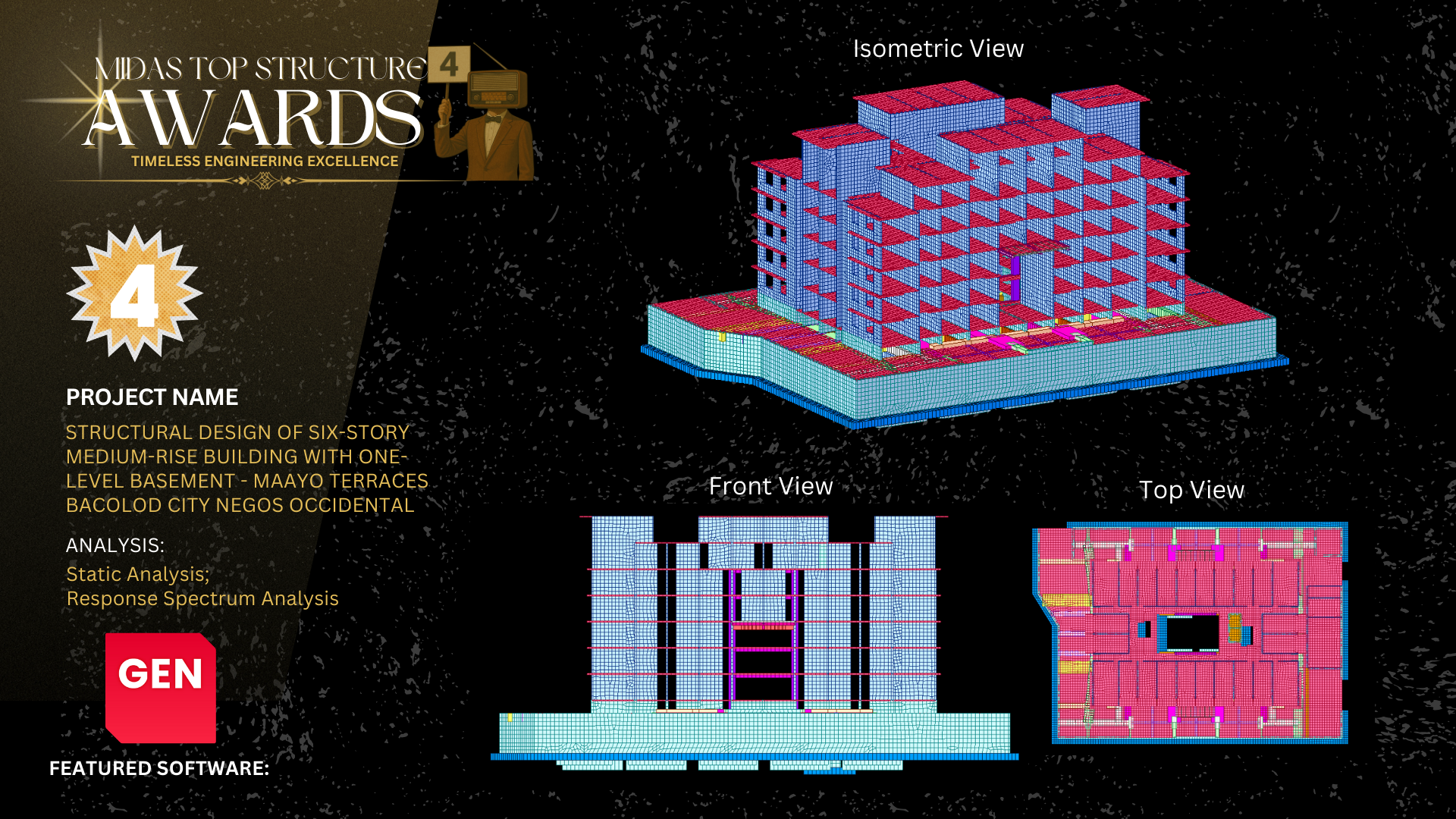
The building is part of a multi-hectare mixed-use complex by two corporations. Its bearing-wall superstructure, based on a trademark formwork system, is misaligned with ground-floor columns and girders due to basement parking constraints, so meshed walls and transfer girders are tied with rigid links to capture torsion. Stepped elevations in ground- and fourth-floor slabs and girders (for clear height and MEPF) are also modeled using rigid links, demonstrating the software’s capability for complex FE modeling.
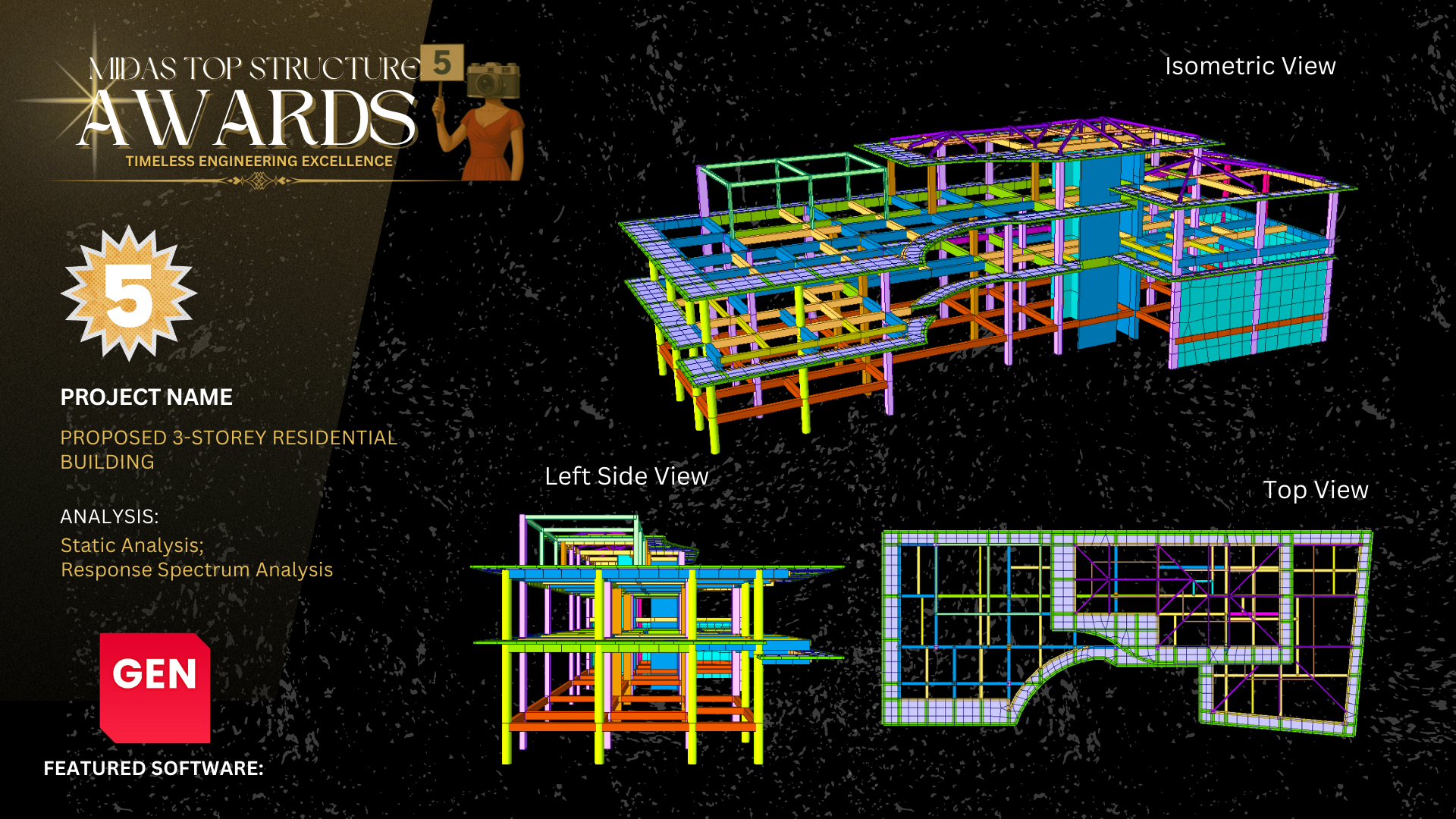
The proposed project is a 3-storey residential building situated in Las Terrazas, Davao City. The site's challenging topography necessitates a design that carefully adapts to the terrain while ensuring structural stability, functionality, and aesthetic value. Furthermore, the design approach must address vertical irregularities, employing innovative solutions that harmonize architectural layout efficiency with structural performance.
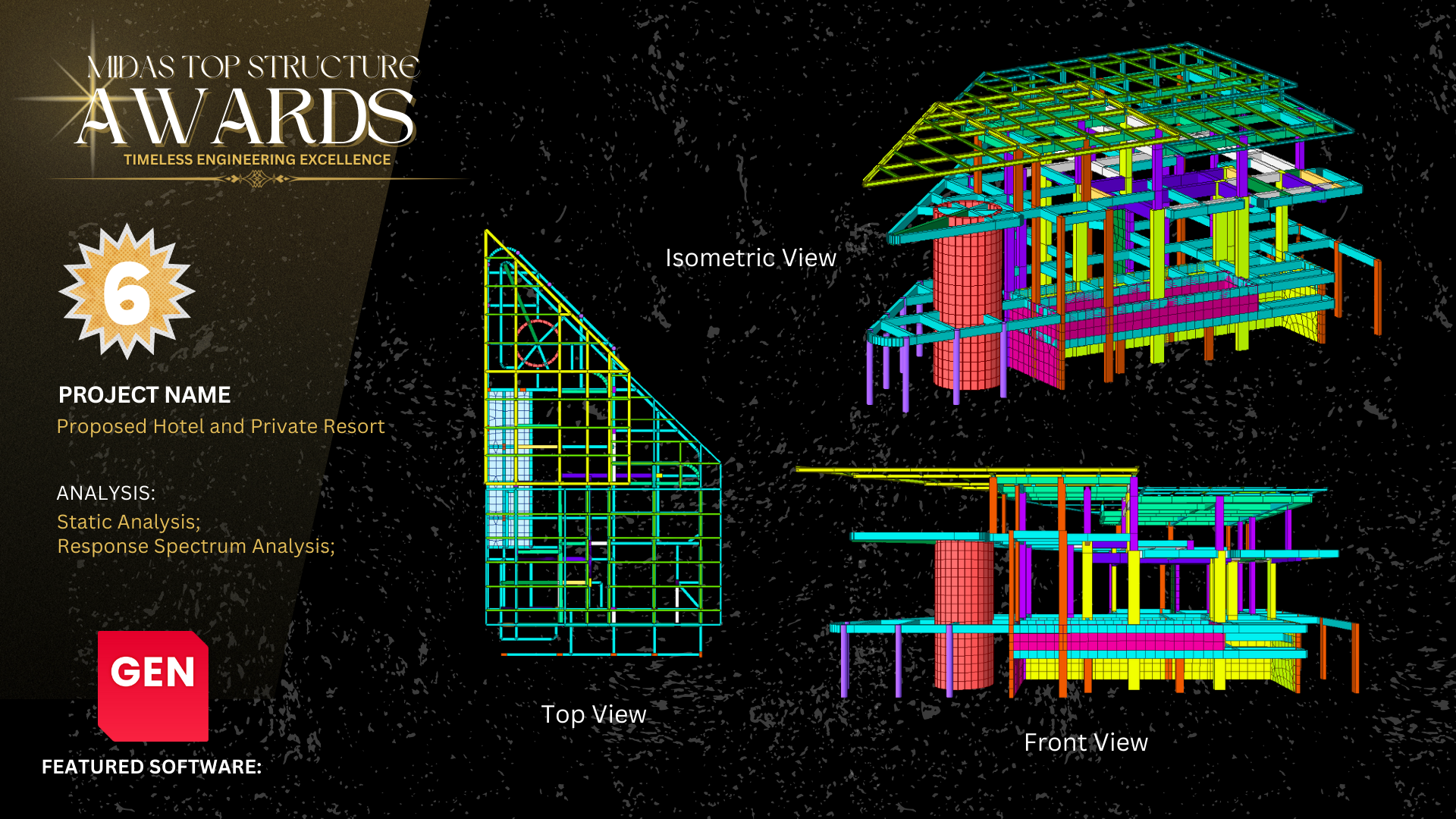
A premier private hotel and resort nestled in the Philippines, thoughtfully designed to harmonize with panoramic natural landscapes. This development features a sophisticated architectural form that demanded advanced structural modeling and meticulous analysis.
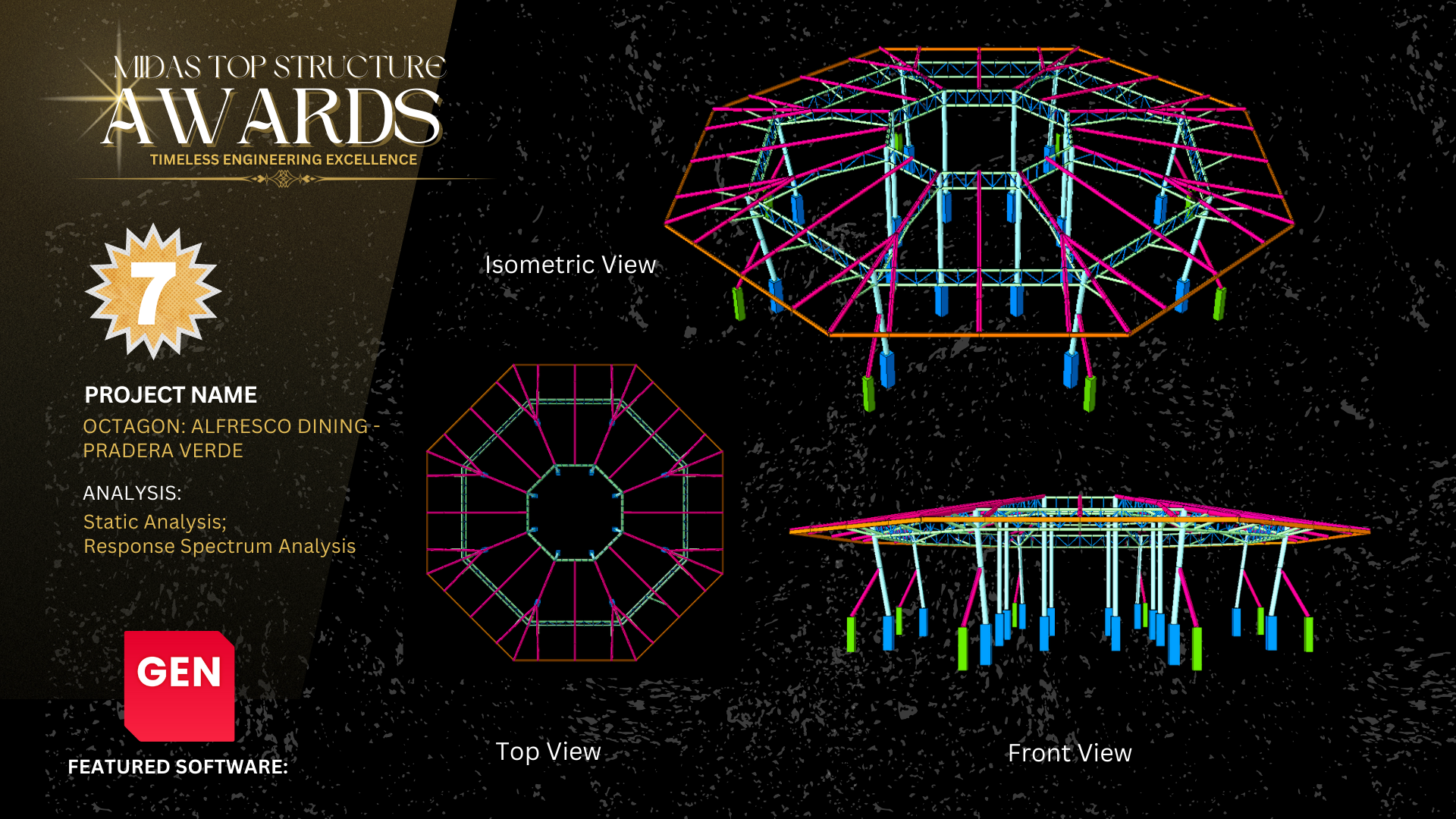
Modern outdoor structure with a unique structural design. The primary feature is a large, open pavilion supported by a network of G.I pipes arranged in an octagonal pattern. An existing tree is position at the center and the structure is built around it.

The scope covers the analysis and design of a 20 m-high steel frame for a resin statue, fabricated in the Philippines and shipped overseas in knocked-down sections. The base is anchored to a concrete block and the upper back to a concrete wall. The resin skin is supported by a pipe-member truss frame, with knock-down points set to fit container vans.
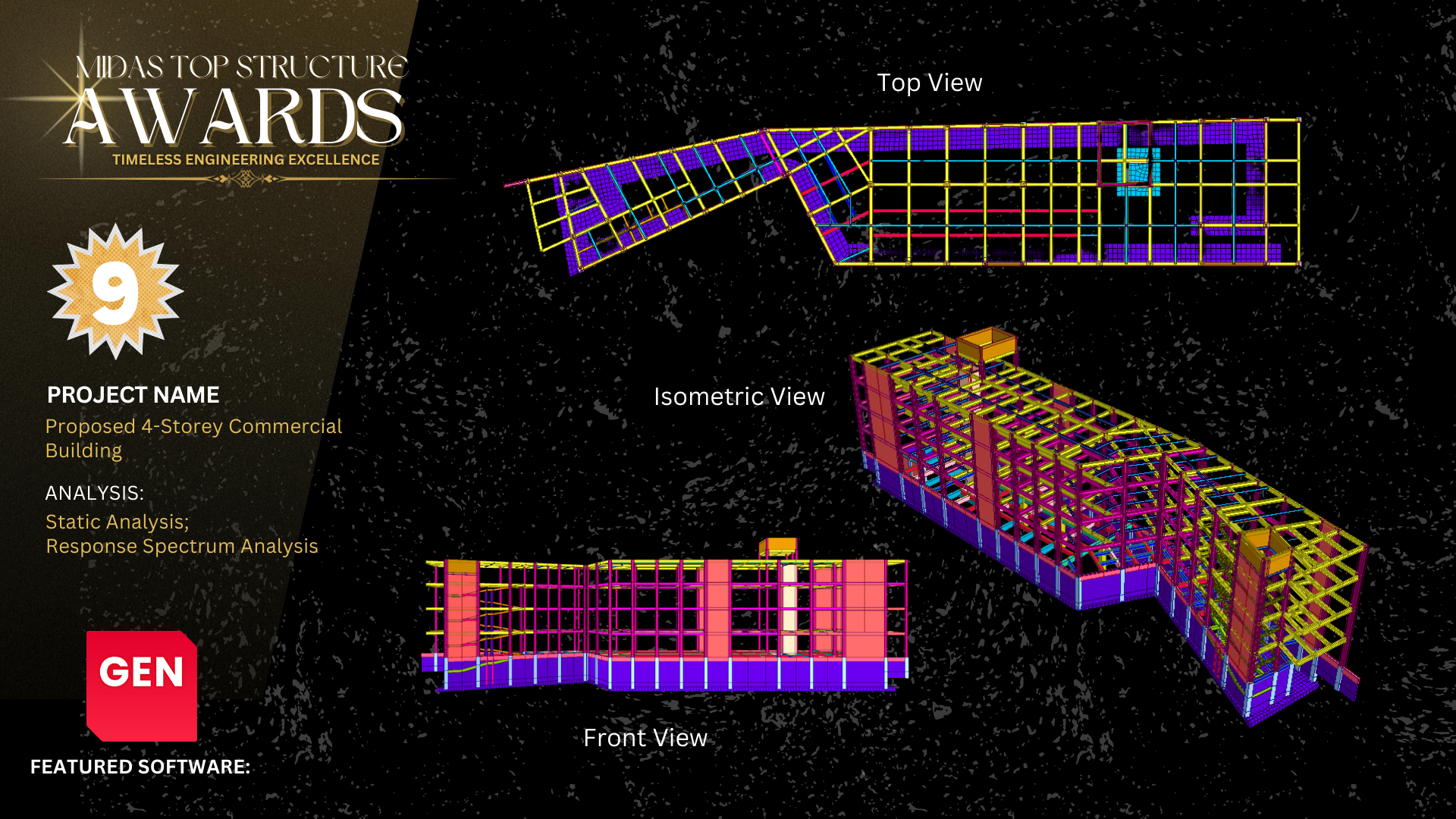
This project covers the structural analysis and design of a four-storey commercial building with a basement, using linear static and response spectrum methods. The highly irregular structure uses steel beams and composite columns. To mitigate torsional irregularity from CM–CR eccentricity, a partial seismic separation joint was introduced starting at the ground-floor slab, reducing torsional demands and improving seismic performance.

This five-storey building uses a steel frame with an RC shear-wall elevator core, forming a dual vertical and lateral system. The steel members carry most gravity loads, while the core provides stiffness and strength for wind and seismic demands. A steel roof deck improves upper-level serviceability, and bored piles support both systems to control settlement and distribute loads efficiently.
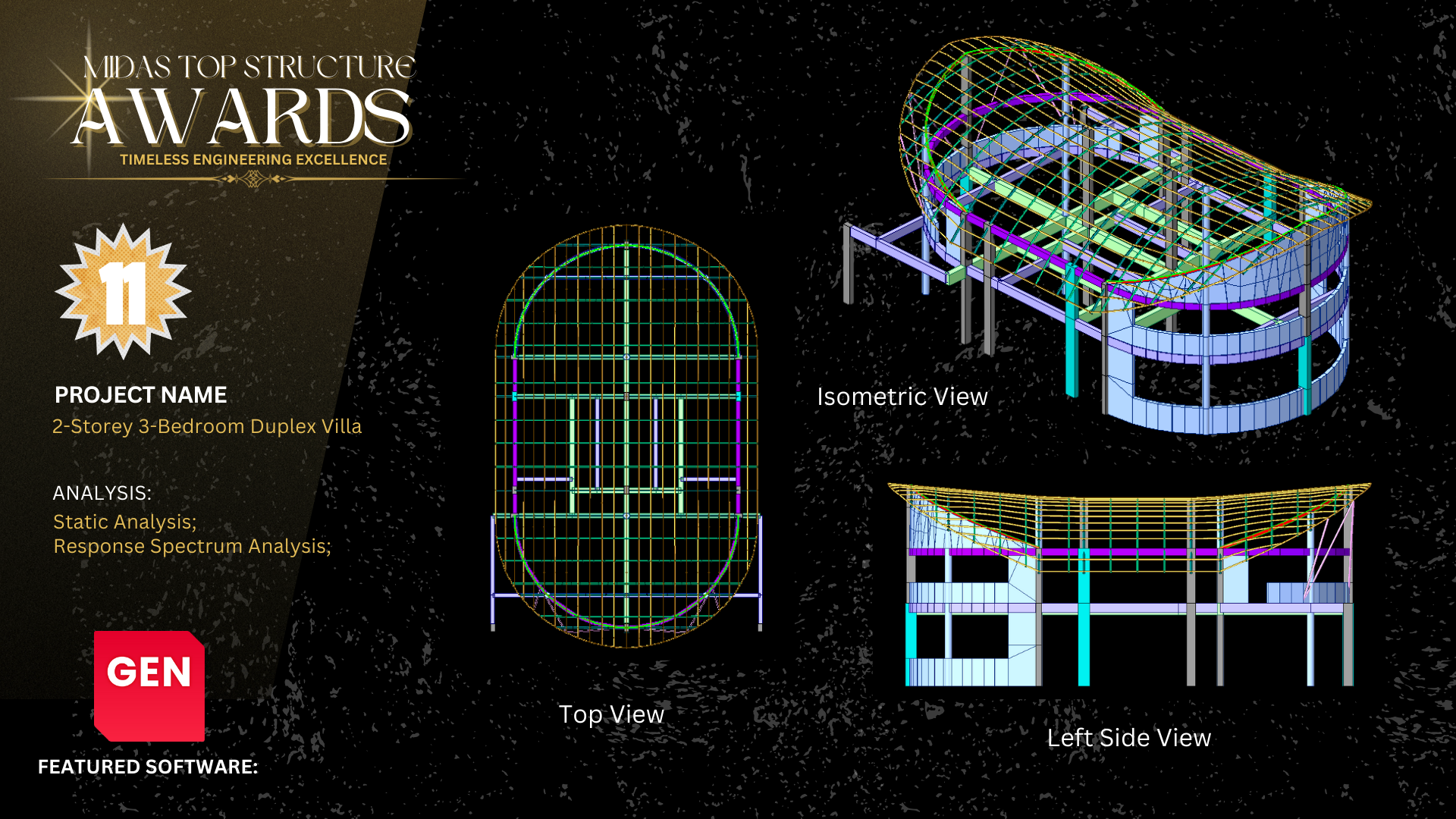
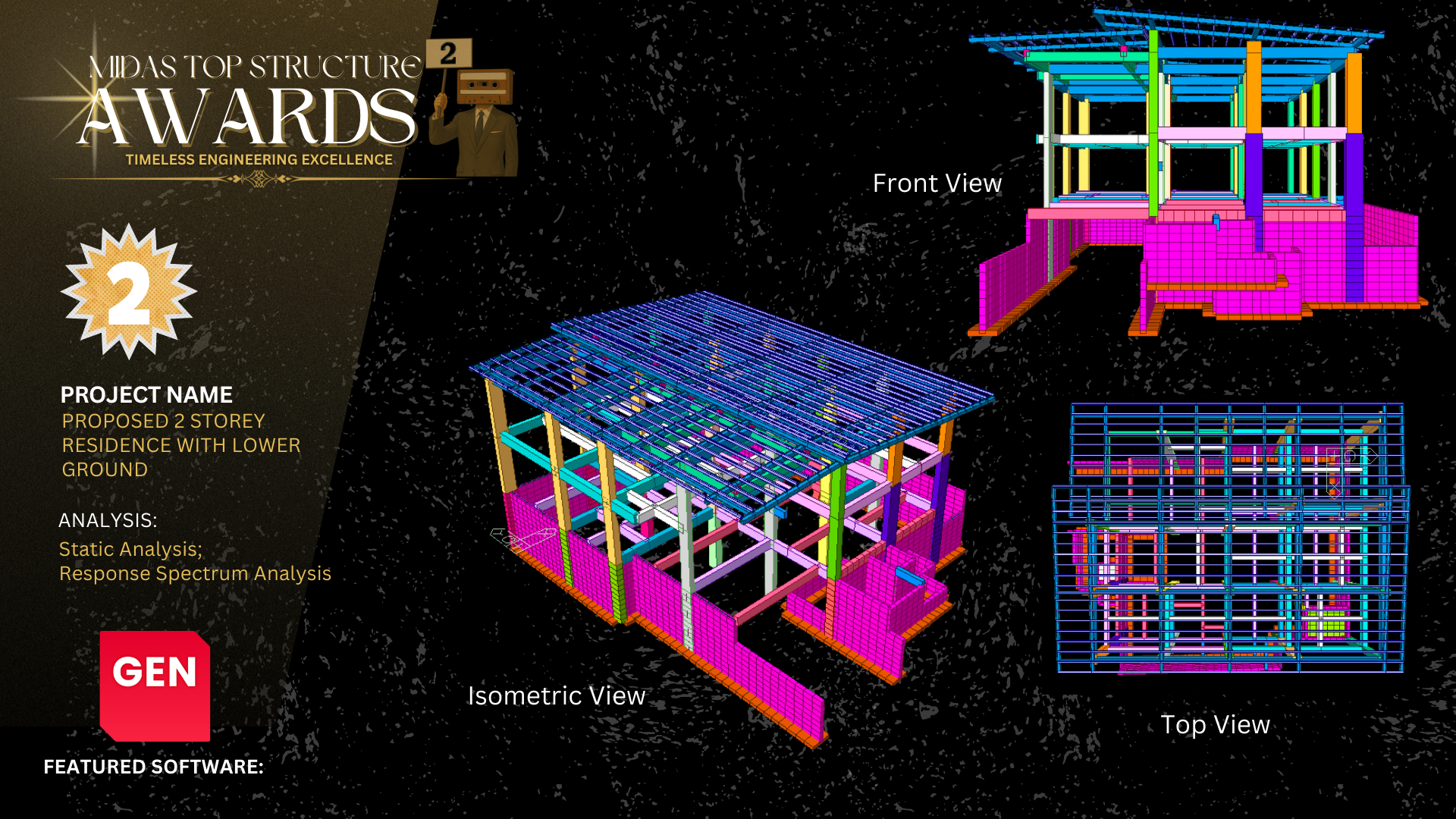
The project is a two-storey, three-bedroom duplex villa with reinforced-concrete columns, beams, and curved RC walls. Its Pringles-inspired curved roof is exposed on the interior, so the roof framing uses hollow steel pipe sections anchored on top of the columns. These pipes support the roof materials and provide lateral bracing for the columns.
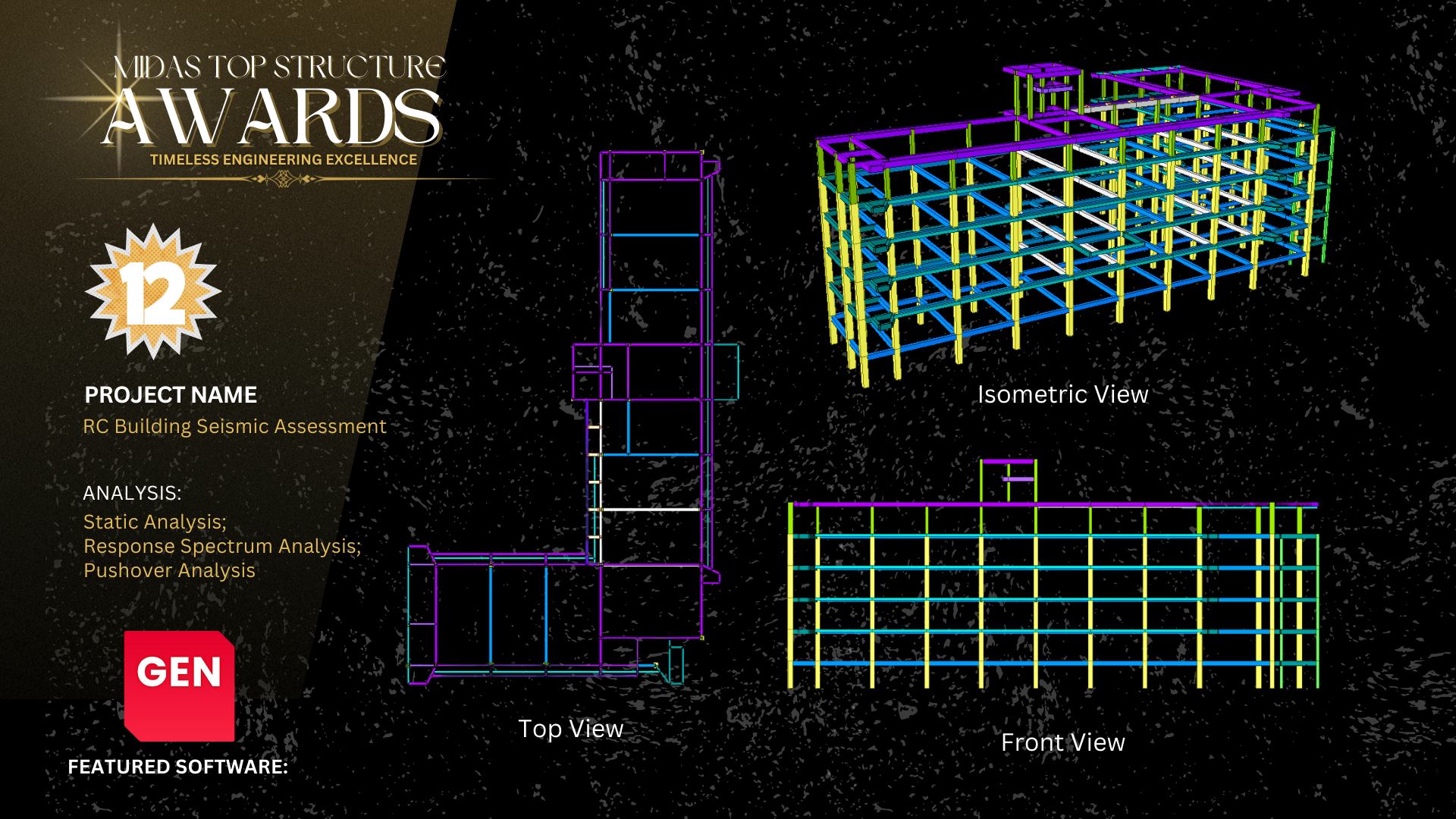
The project involves assessing an existing four-storey reinforced-concrete building with a basement (about 4,000 m² total floor area and 890 m² footprint), originally built in the 1970s, to check compliance with current code requirements and evaluate its seismic performance.
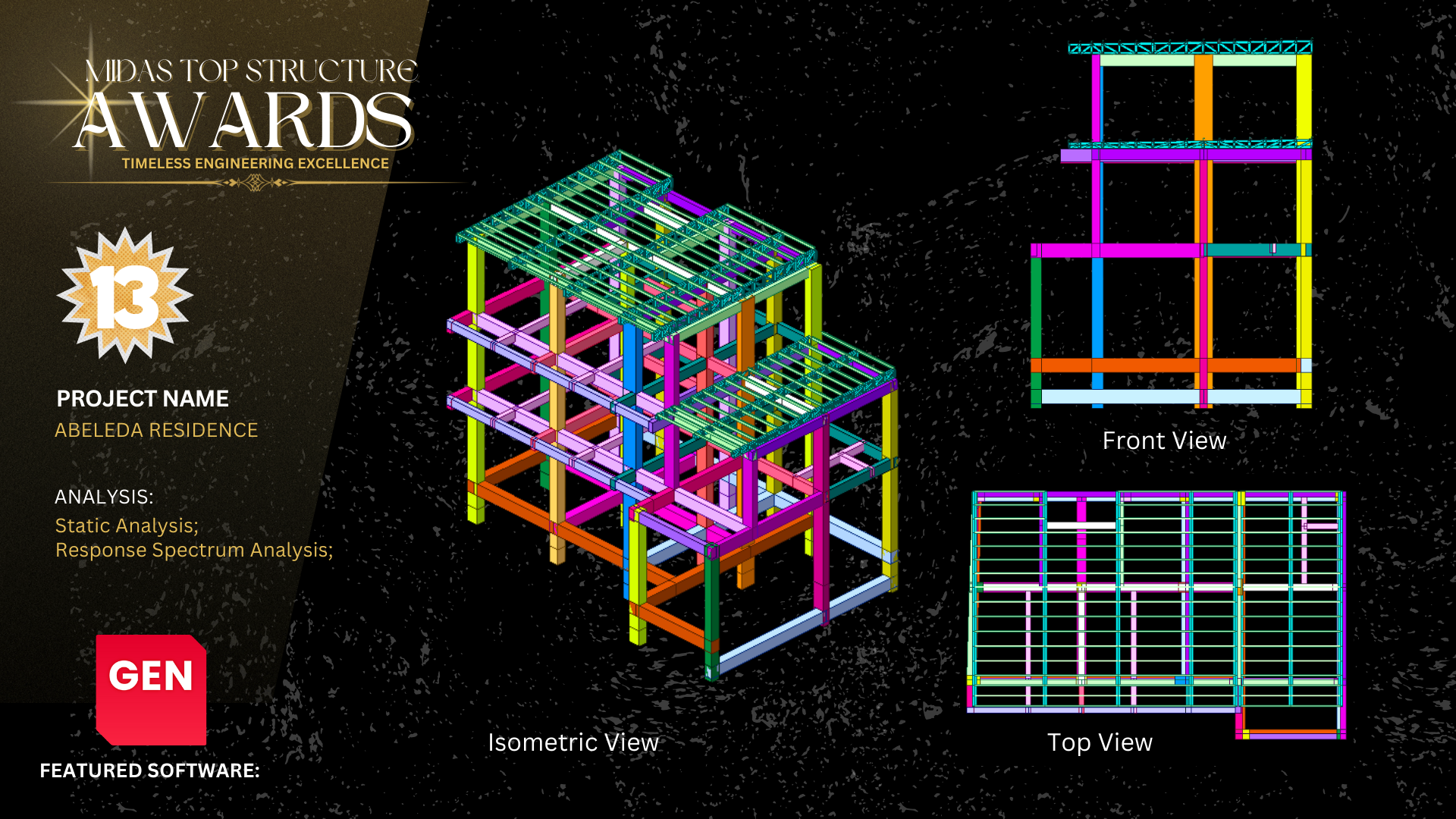
Three Storey Apartment with 3 Materials in one Model (Reinforced Concrete ,Steel and Cold Formed Steel)
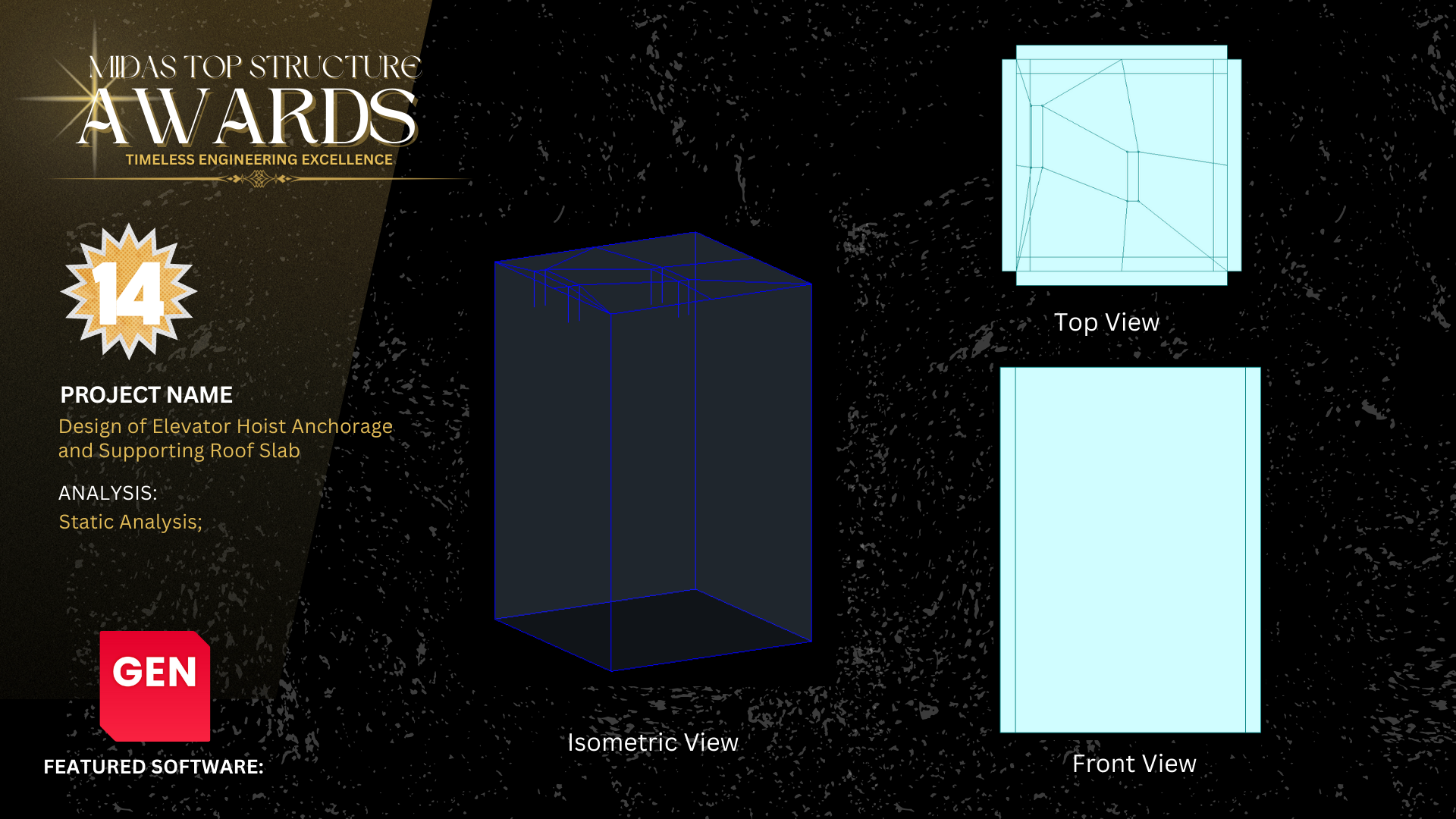
The project designs the elevator hoist anchorage and supporting roof slab for 2- and 3-ton live loads, ensuring safety under operation and maintenance. A detailed FE model of the shear wall, slab, and anchorage points was built to capture load transfer and local stresses. Using MIDAS Gen, the slab, shear capacity, and reinforcement were checked and designed per NSCP and ACI to achieve a safe, serviceable configuration.

The model represents a reinforced-concrete continuous casting machine foundation (about 1,000 m² footprint) designed for dynamic loads from steel manufacturing equipment. It consists of massive concrete pedestals, beams, and slabs on driven piles, modeled with solid and beam elements to capture load transfer and stress distribution accurately.
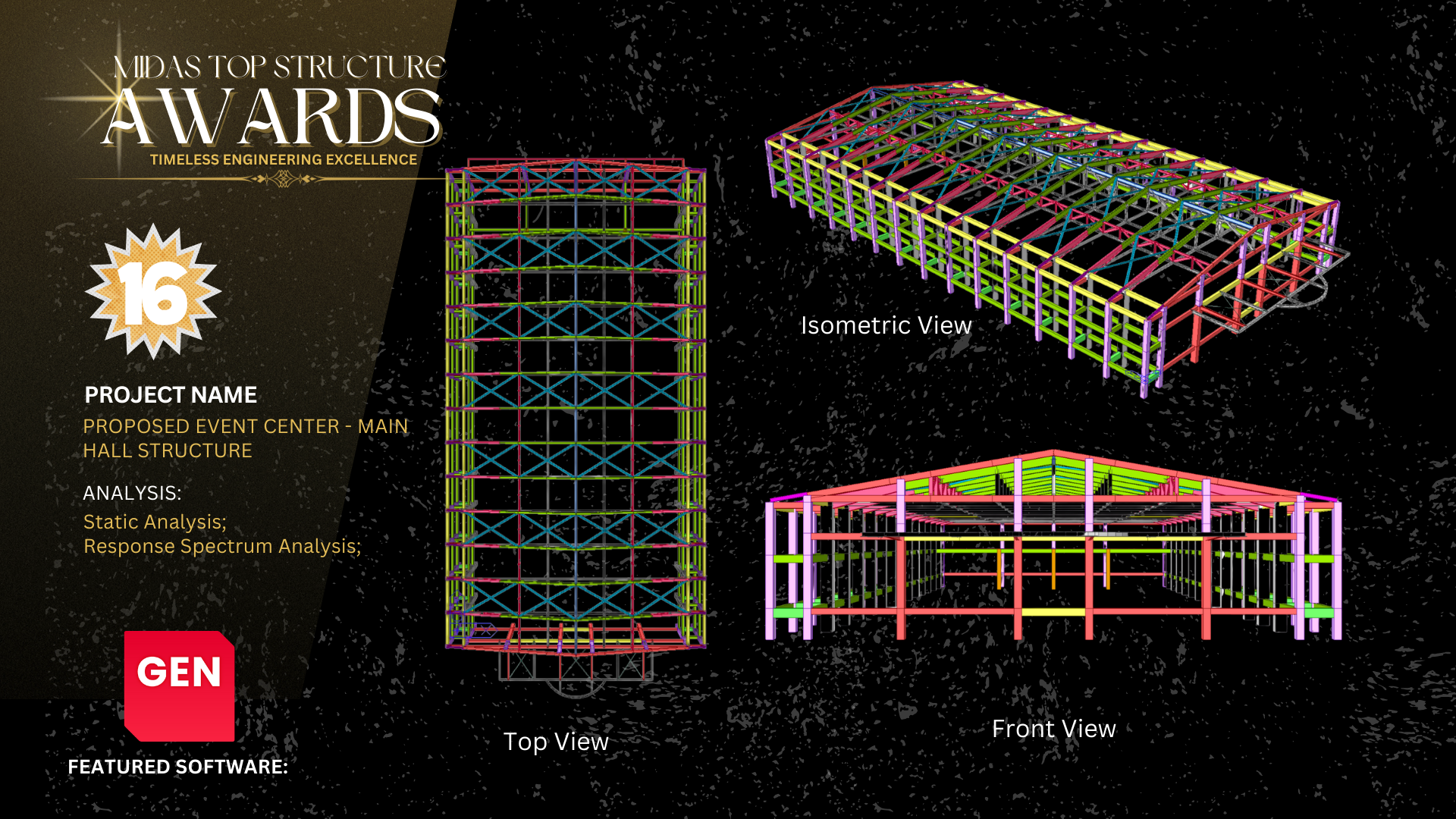
The Proposed Event Center – Main Hall is an open-span facility with a 40 m clear-span roof supported by steel rafters and reinforced-concrete columns, providing an unobstructed interior with an 8 m floor-to-ceiling height. Static and dynamic analyses were performed for gravity, wind, and seismic loads, and all load combinations were checked to confirm strength, serviceability, and reliable long-span performance.
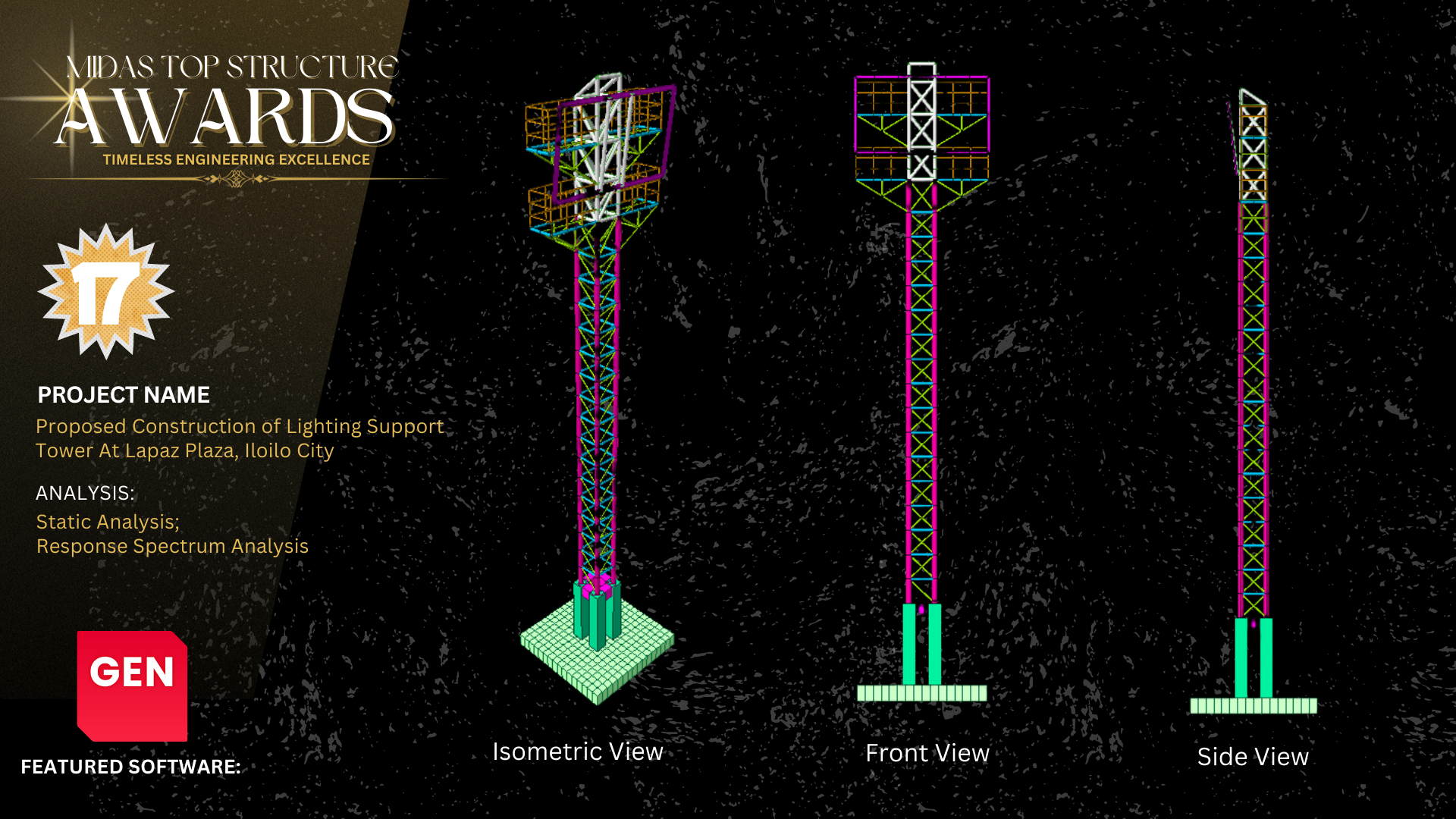
This Lighting Support Tower was constructed to facilitate evening football events by providing adequate illumination across the playing field. Its design ensures optimal visibility for players and spectators while eliminating exposure to direct sunlight, thereby enhancing comfort and performance during nighttime matches.

This project covers the structural assessment and retrofit design of an existing government center, focusing on integrity checks, irregularity identification, and seismic performance evaluation. It assesses capacity, reviews plan and vertical irregularities, and performs pushover analysis; due to multiple irregularities, nonlinear time history analysis is recommended for more accurate seismic response. Retrofitting solutions were developed using MIDAS Gen and Design+ to improve code compliance and long-term resilience.
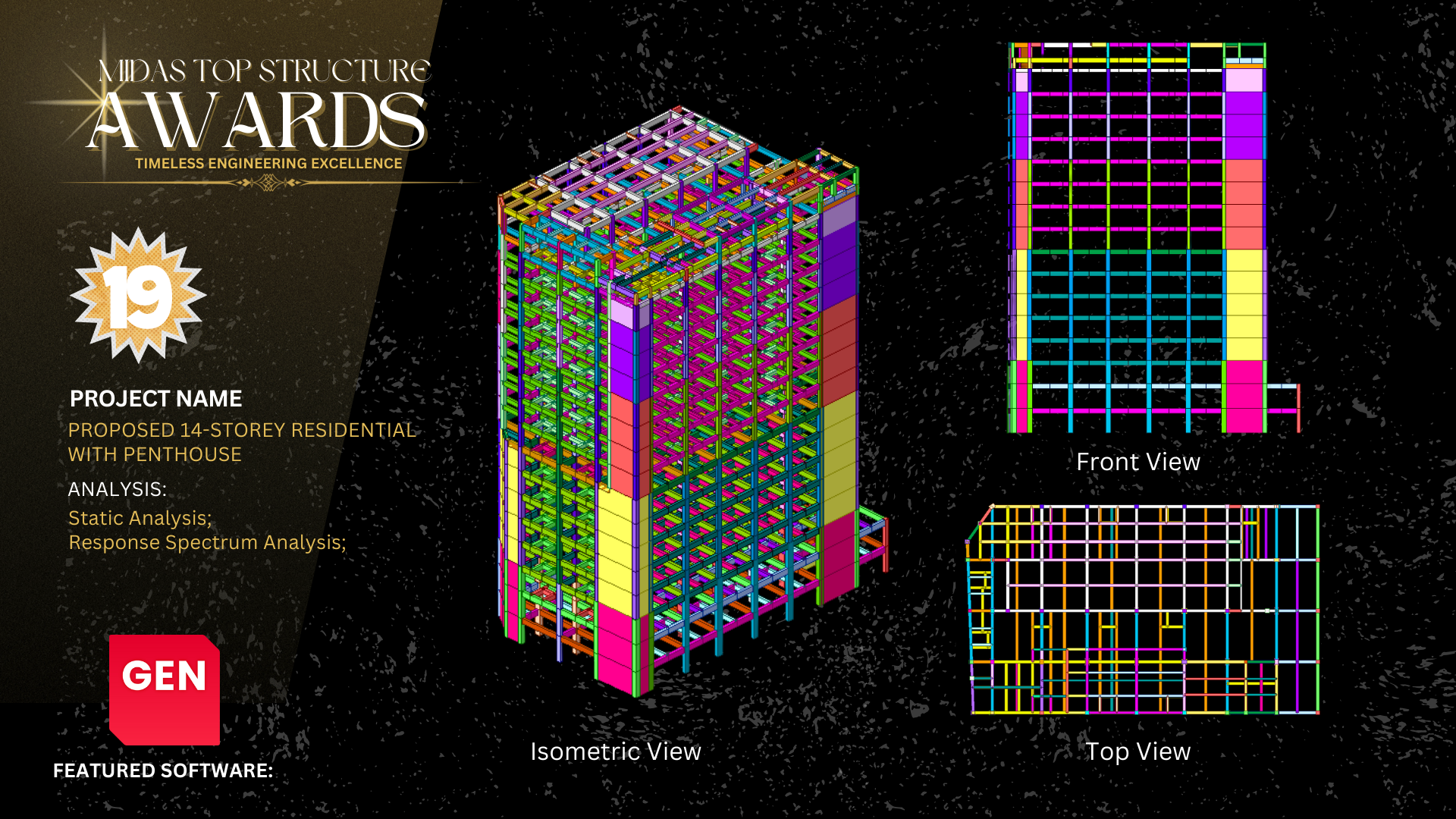
The project is a 14-storey reinforced-concrete building with a penthouse in Baler, Quezon City, featuring a 7-storey parking podium supporting the upper residential and commercial levels. It uses a conventional RC beam–column frame with two main cores for lateral stability.
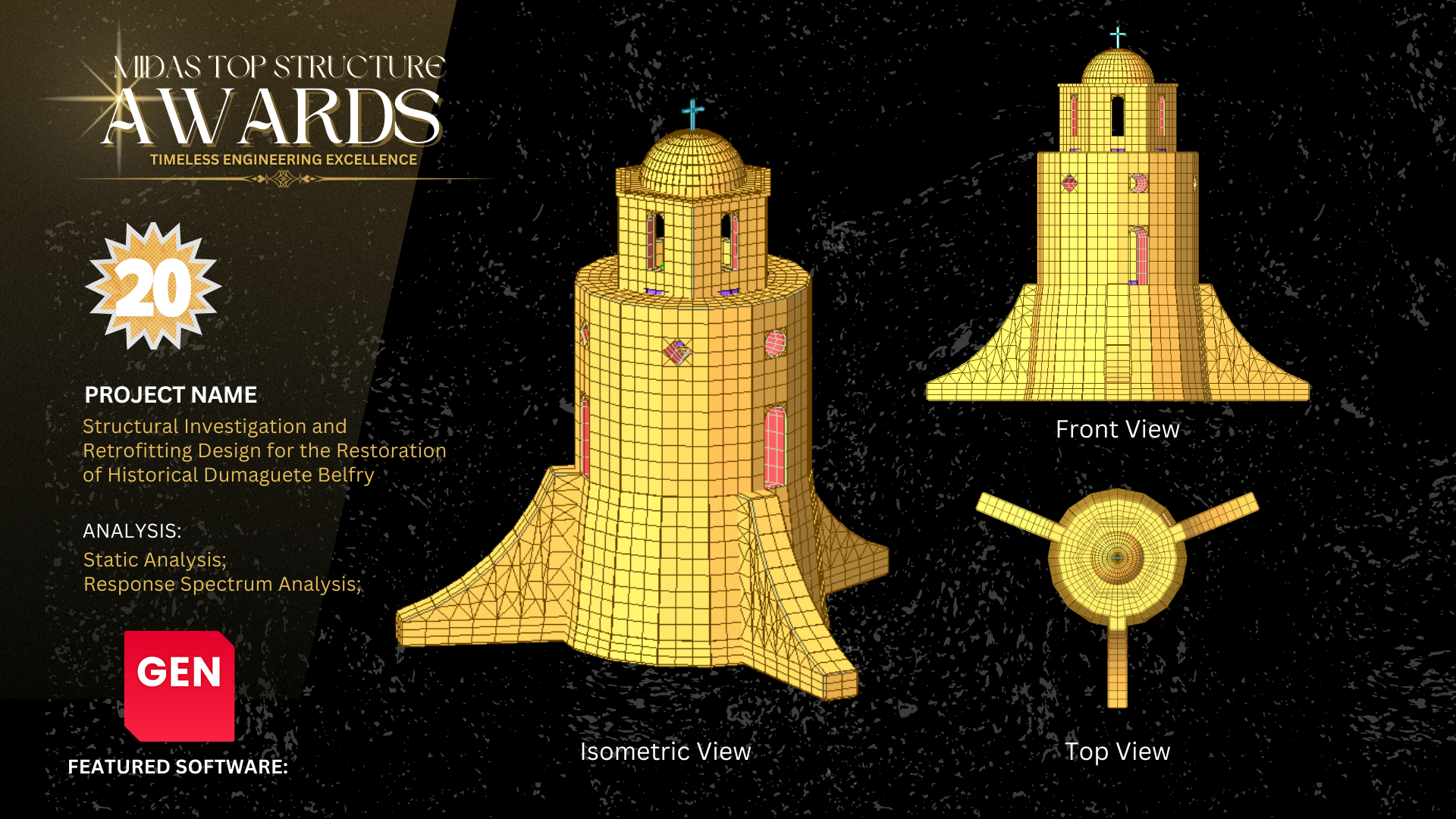
This project assessed and retrofitted the historic Dumaguete Belfry, a coral-stone structure with a rubble core, to address deterioration and cracking. Using inspections, material tests, and FE analysis in MIDAS Gen 2025 (NSCP 2015), the study found inadequate lateral strength and stiffness. The retrofit added RC columns and beams, injected lime water into the core, and repointed the coral stone cladding to improve stability while preserving its heritage character.
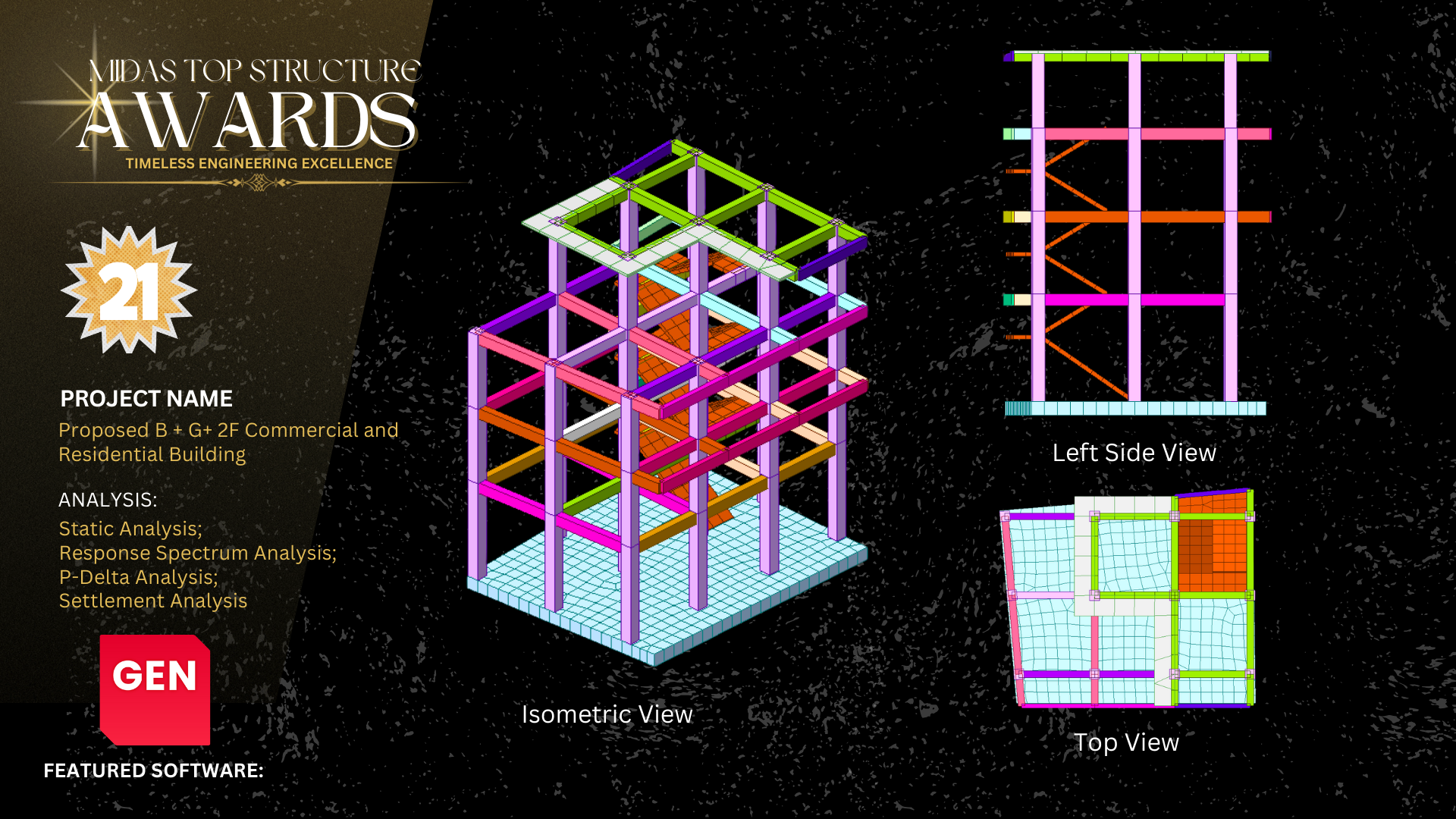
The project is a B+G+2F mixed-use building (commercial below, residential above). With three sides on the property line, a basement foundation was used to maximize space and provide lateral resistance. The stair area was modeled in 3D due to tight geometry and terminated beams, ensuring accurate load paths. The structure was analyzed for gravity and lateral loads to meet NSCP and related standards.
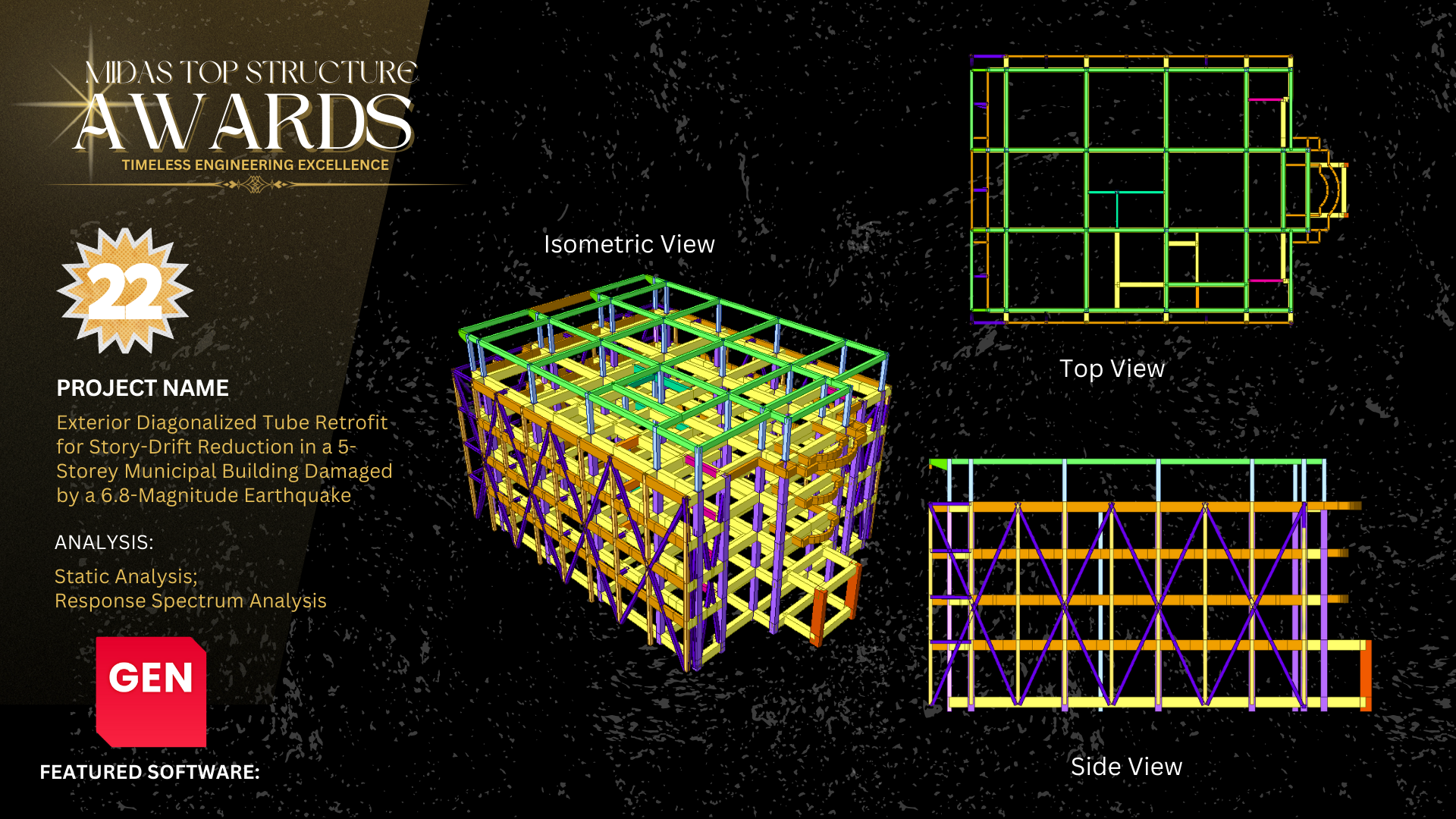
Seismic evaluation and retrofit of a 5-storey municipal building damaged by a M6.8 earthquake and aftershocks. MIDAS Gen analysis confirmed excessive drift and reduced stiffness in the existing frame. An Exterior Diagonalized Tube retrofit (perimeter diagonal bracing) was designed to boost lateral resistance and cut interstorey drift with minimal disruption, achieving improved seismic performance to modern criteria.
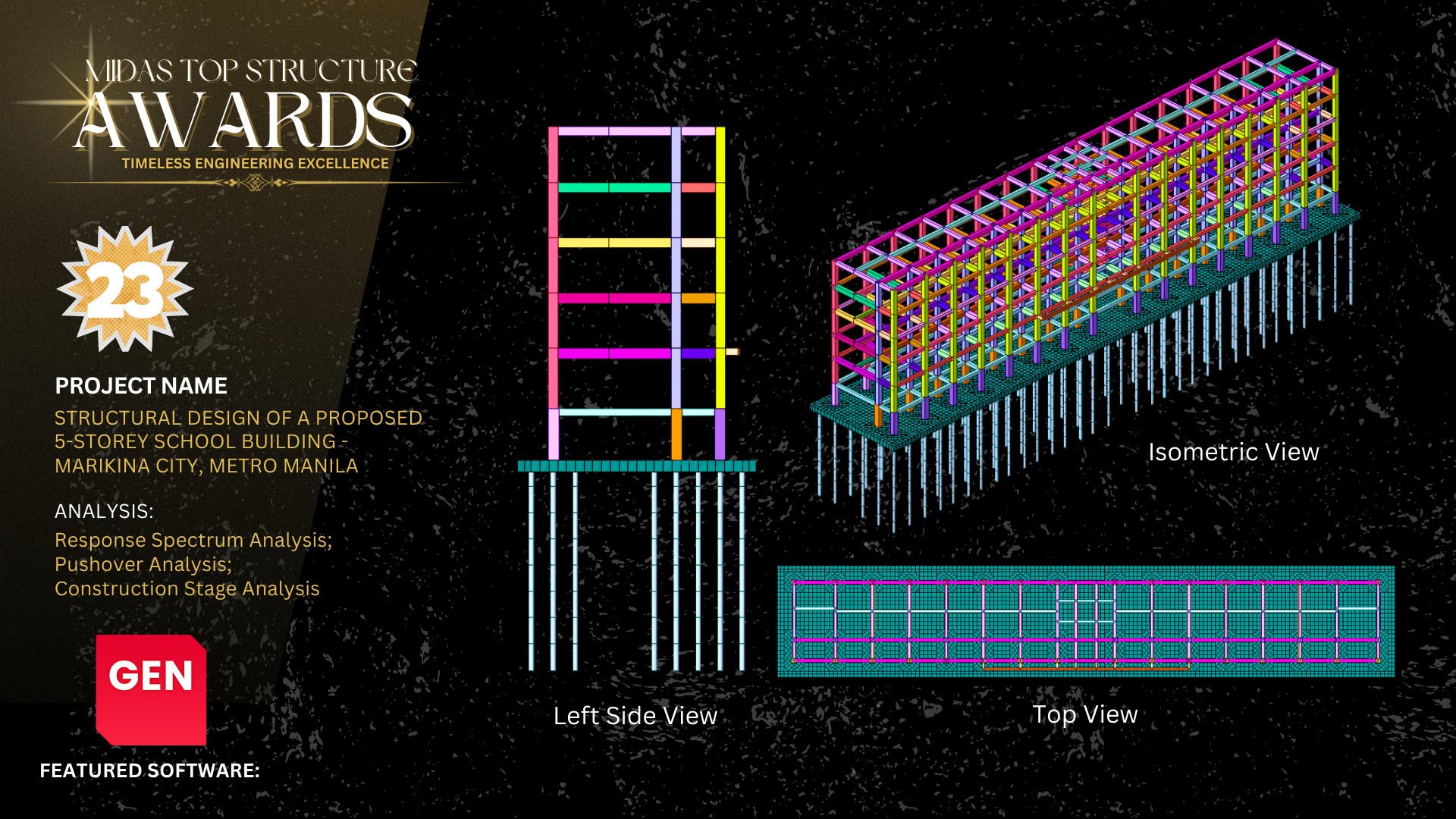
The school’s design is governed by weak soil, so a micropile foundation with soil–structure interaction was modeled in MIDAS Gen using point springs to capture pile load–deformation behavior. Construction stage analysis, including creep and shrinkage, verified load transfer and long-term pile response. The superstructure is a Special Moment-Resisting Frame, with performance-based seismic design validated through pushover analysis to balance safety and economy, showcasing MIDAS Gen’s versatility.
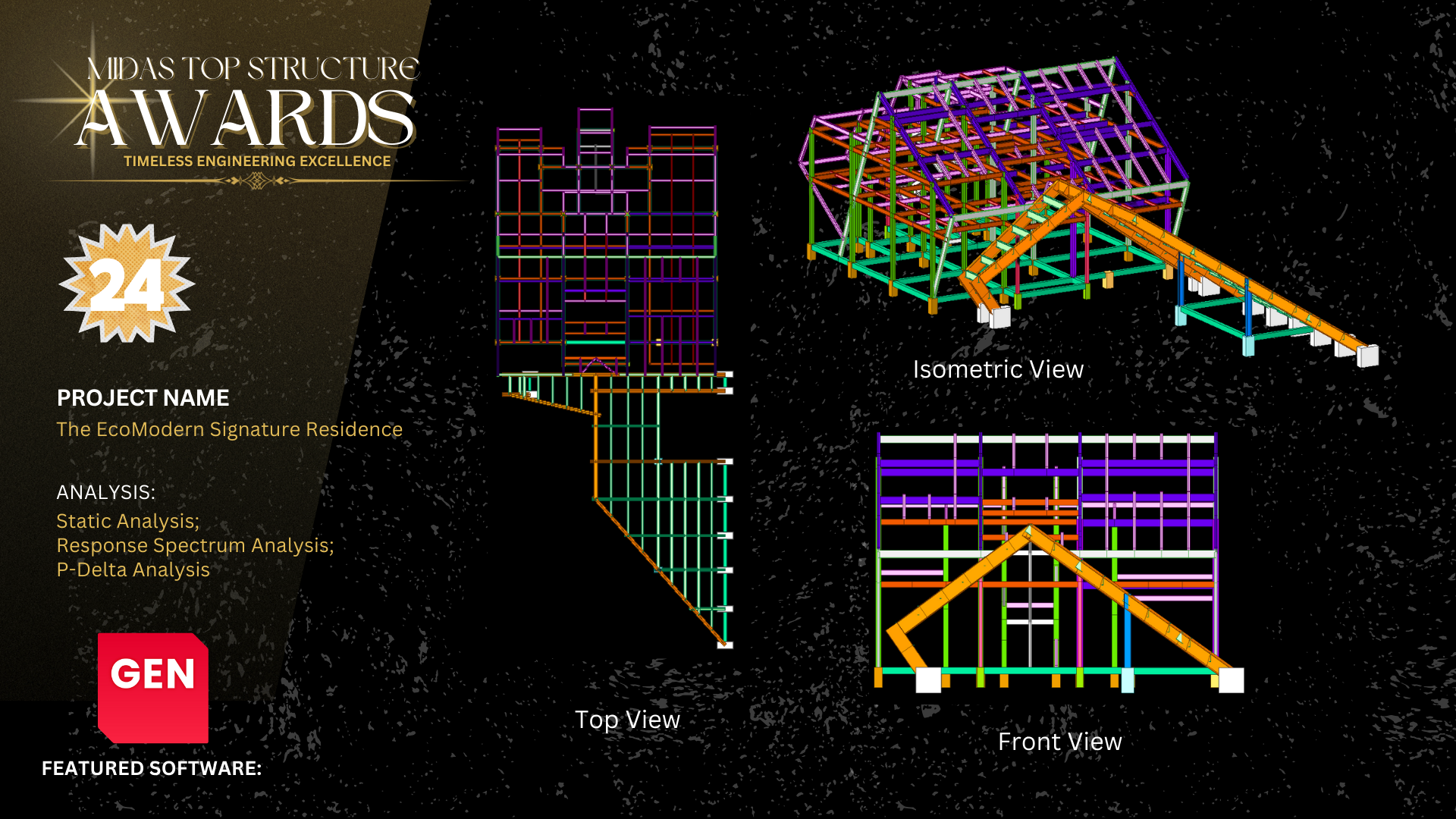
EcoModern Signature Residence is a modern eco-home with inclined geometry and long cantilevers, designed mainly in structural steel. It was modeled in 3D in MIDAS Gen using beam elements for frames and plates for composite floors/diaphragms, then checked to NSCP 2015 for gravity, wind, and seismic loads. Key checks covered torsion, lateral stability, deflection, and buckling, with complex connections verified in Design+ and eco-loads (roof gardens/solar zones) included.
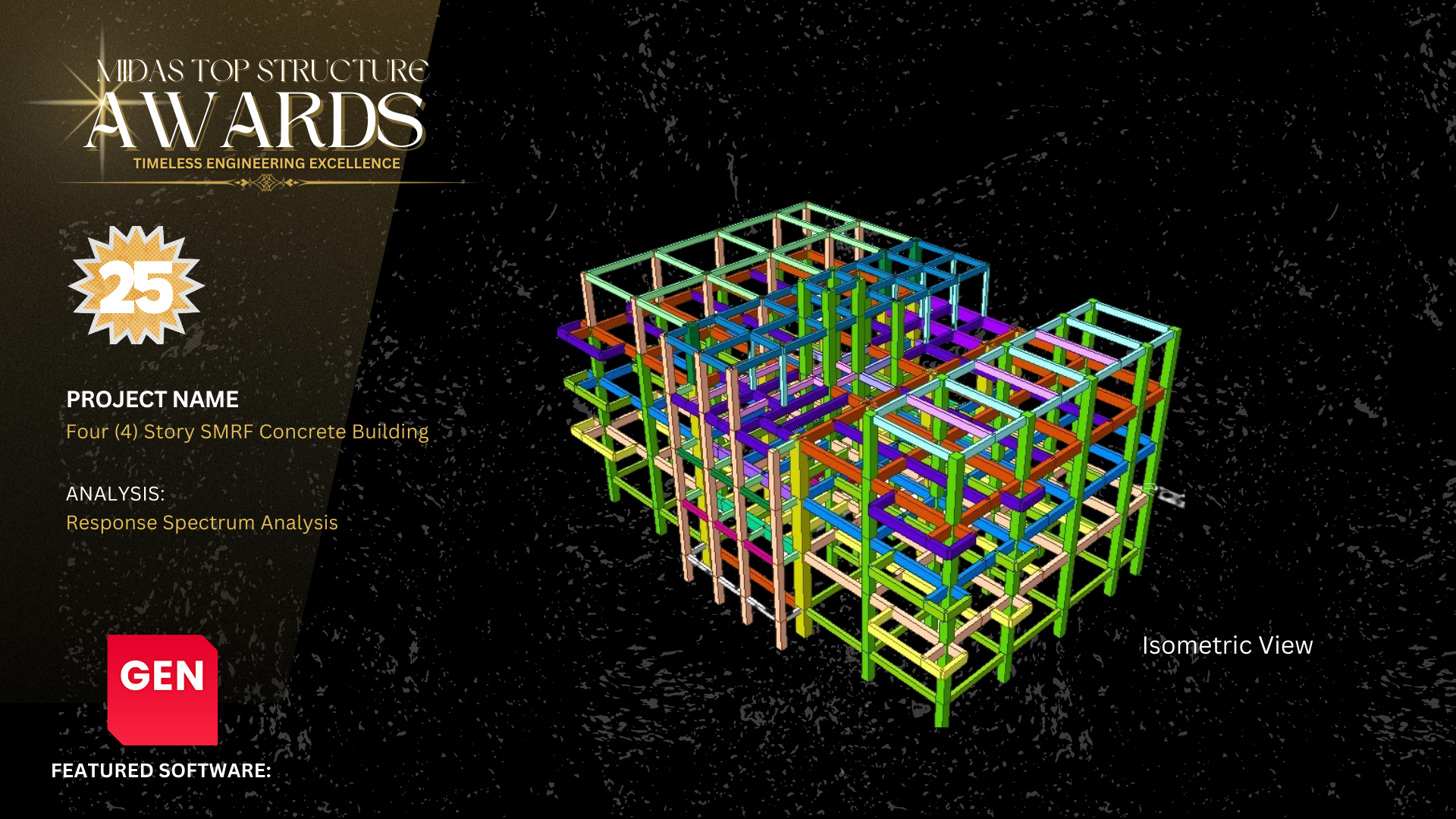
This Four Story SMRF Concrete Building is located in Palo,Leyte.
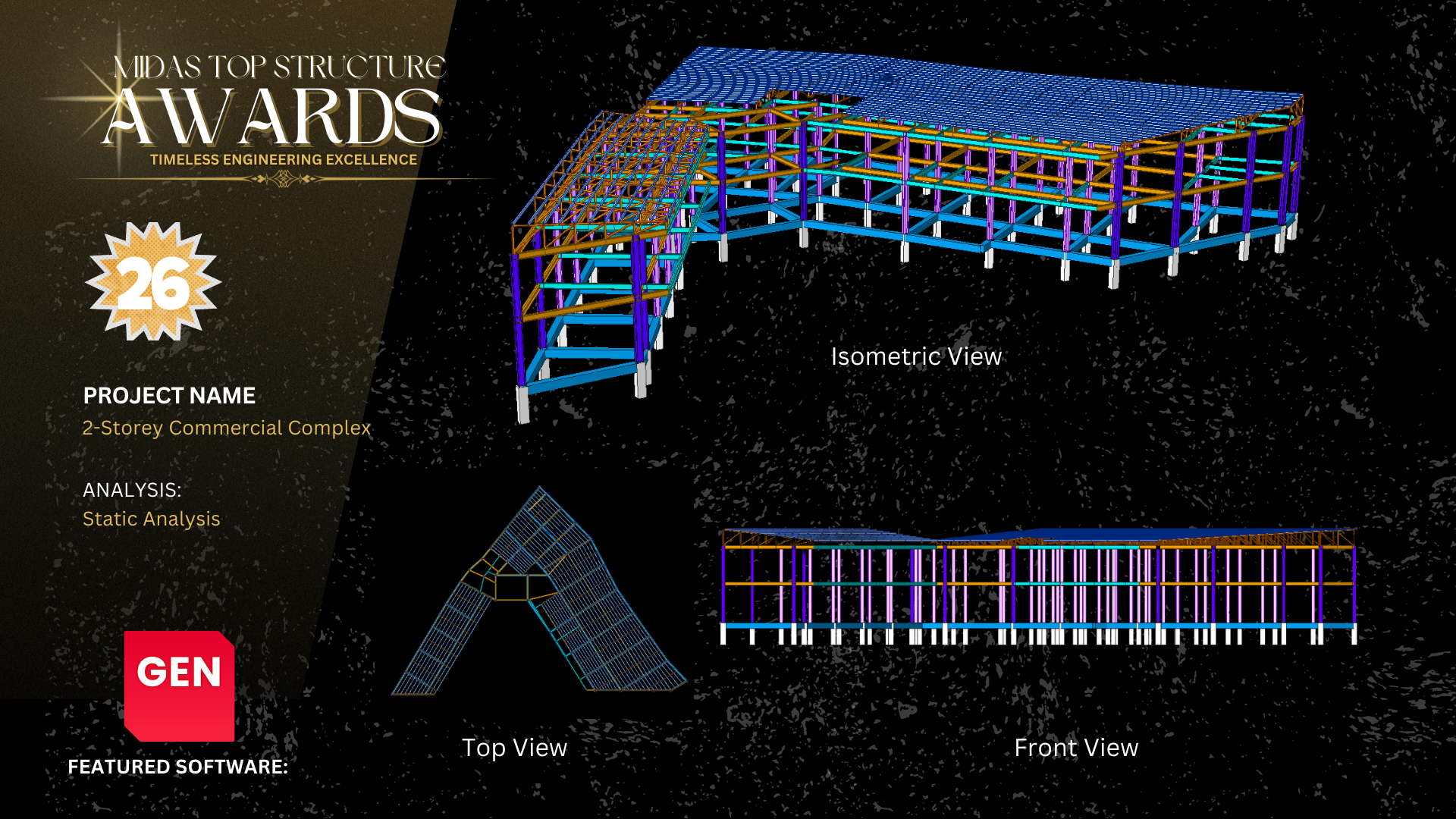
2-Storey Steel Commercial Building
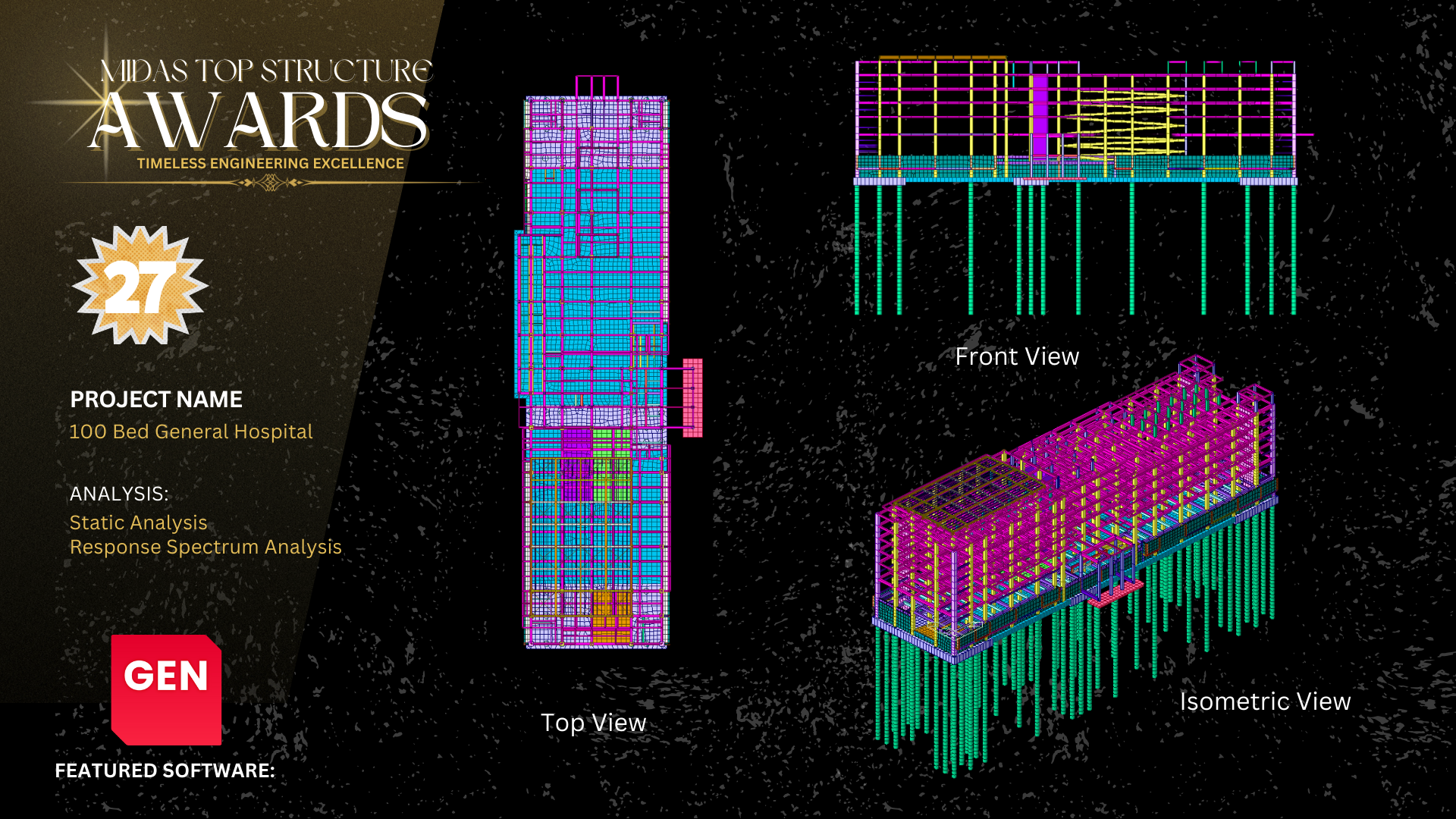
The project is a 100-bed hospital (120 m × 25 m) with six floors and a basement. Due to its long footprint, it was split into Buildings A and B with a seismic gap to reduce thermal effects and improve seismic response, validated through response spectrum analysis.
With about 23 m of highly liquefiable soil, a piled raft foundation (mat plus 40 m-deep piles) was used to bypass weak layers, with pile locations optimized in coordination with geotechnical engineers.