
-3.png "LANDING PAGE (7)-3")
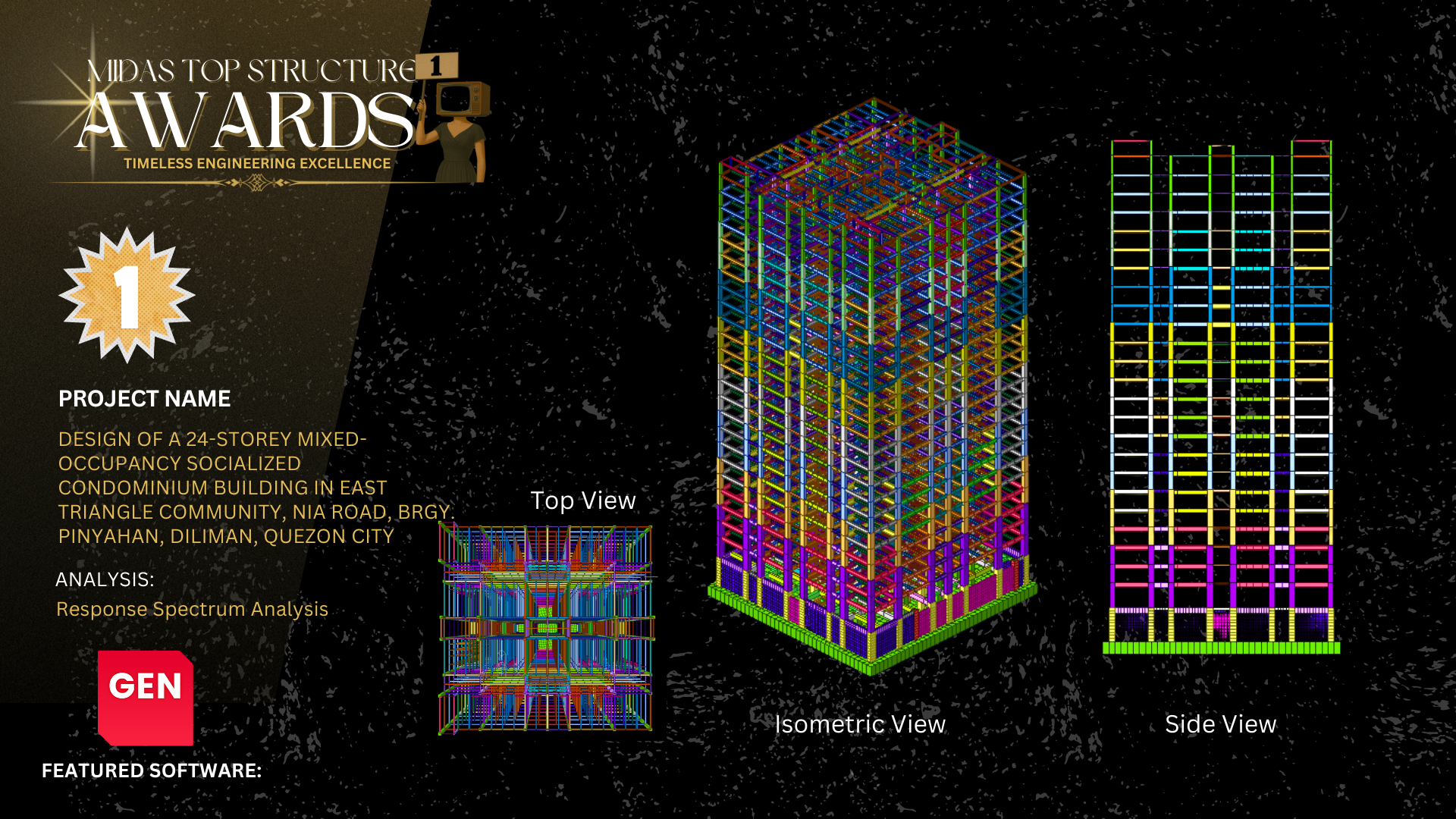
This paper proposes the design and seismic analysis of a 24-story mixed-use socialized condominium aligned with government housing initiatives. The structural model was developed in MIDAS Gen 2021 and assessed using response spectrum analysis per ASCE 7-10. Design checks follow the NBCP, NSCP, IBC, and other applicable standards. Three special moment-resisting systems were compared—(1) reinforced concrete (RC) frame, (2) steel frame, and (3) hybrid RC column–steel beam frame—using quantitative measures of cost, constructability, sustainability, risk, safety, and uncertainty. Results from the final normalization method indicate the RC special moment-resisting frame as the preferred system for the final design.
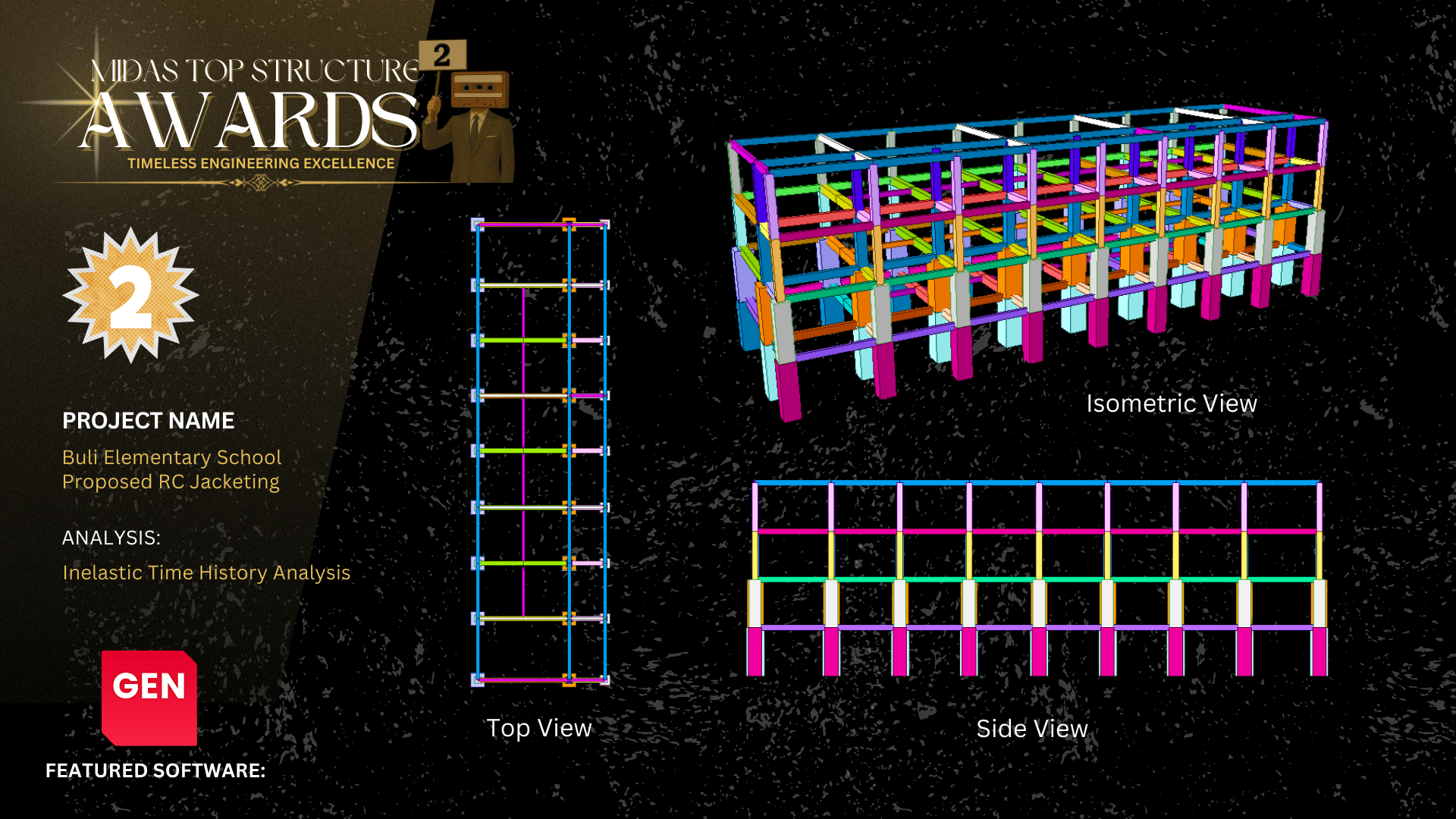
This study evaluates the seismic resilience of Buli Elementary School’s DepEd Building 1 and the effectiveness of RC jacketing as a retrofit for an extreme earthquake scenario (Mw 7.2). Nonlinear time history analysis (NTHA) was performed using three ground motions spectrally matched to the site conditions of Buli Elementary School.
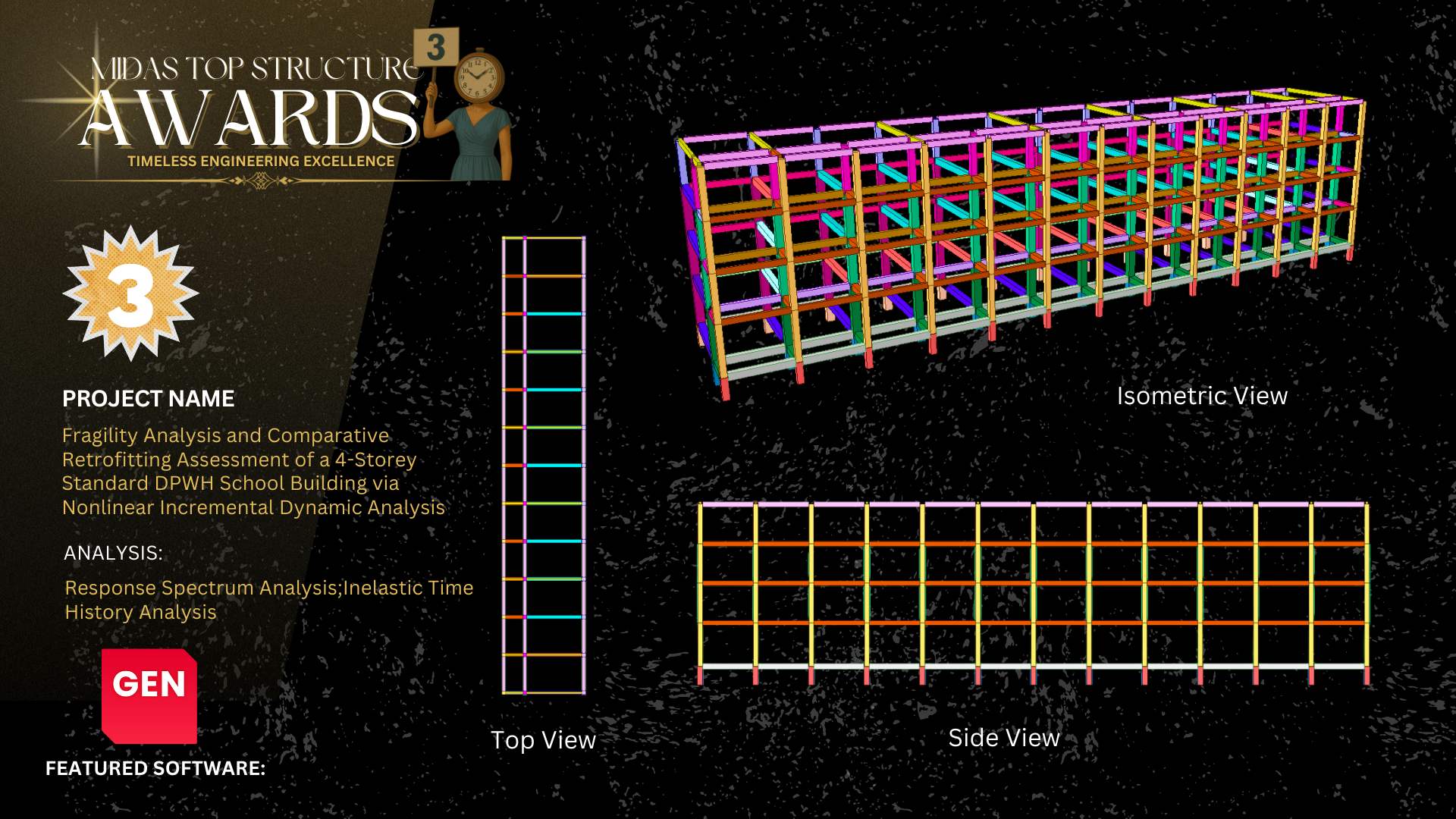
Given the West Valley Fault hazard, this study evaluates a DPWH 4-storey standard school using nonlinear IDA in MIDAS Gen and develops drift-based fragility curves. Baseline and retrofit models (shear walls and steel X-bracing) are tested at varying floor extents, then compared for damage probability, IDA performance, and benefit–cost. Shear walls from 1F–3F give the best structural response, while X-bracing up to 3F is most cost-efficient. Overall, partial—especially ground-floor—retrofits deliver major risk reduction at lower cost than full-building retrofitting.
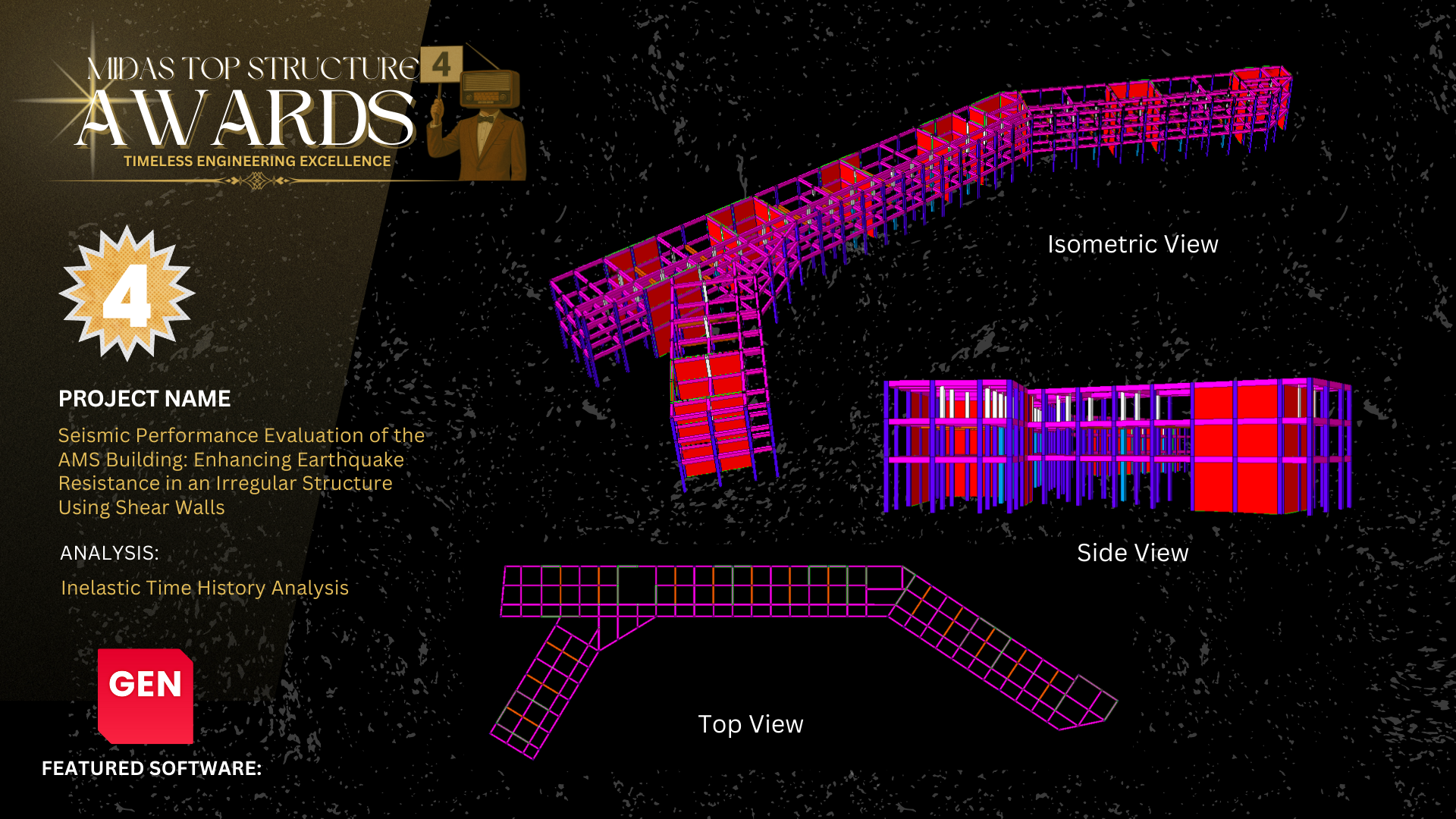
Earthquake risk calls for evaluating seismic vulnerability, especially for irregular buildings. This study examines the three-story RC Antonio M. Sison (AMS) Building at the University of Nueva Caceres, whose plan irregularity and mass–stiffness eccentricity increase torsional response under earthquakes. Using time history analysis in MIDAS Gen, the as-built model is compared with two shear-wall retrofit schemes to assess seismic performance, stability, and torsional behavior, leading to recommendations for improving the AMS Building and similar irregular structures.
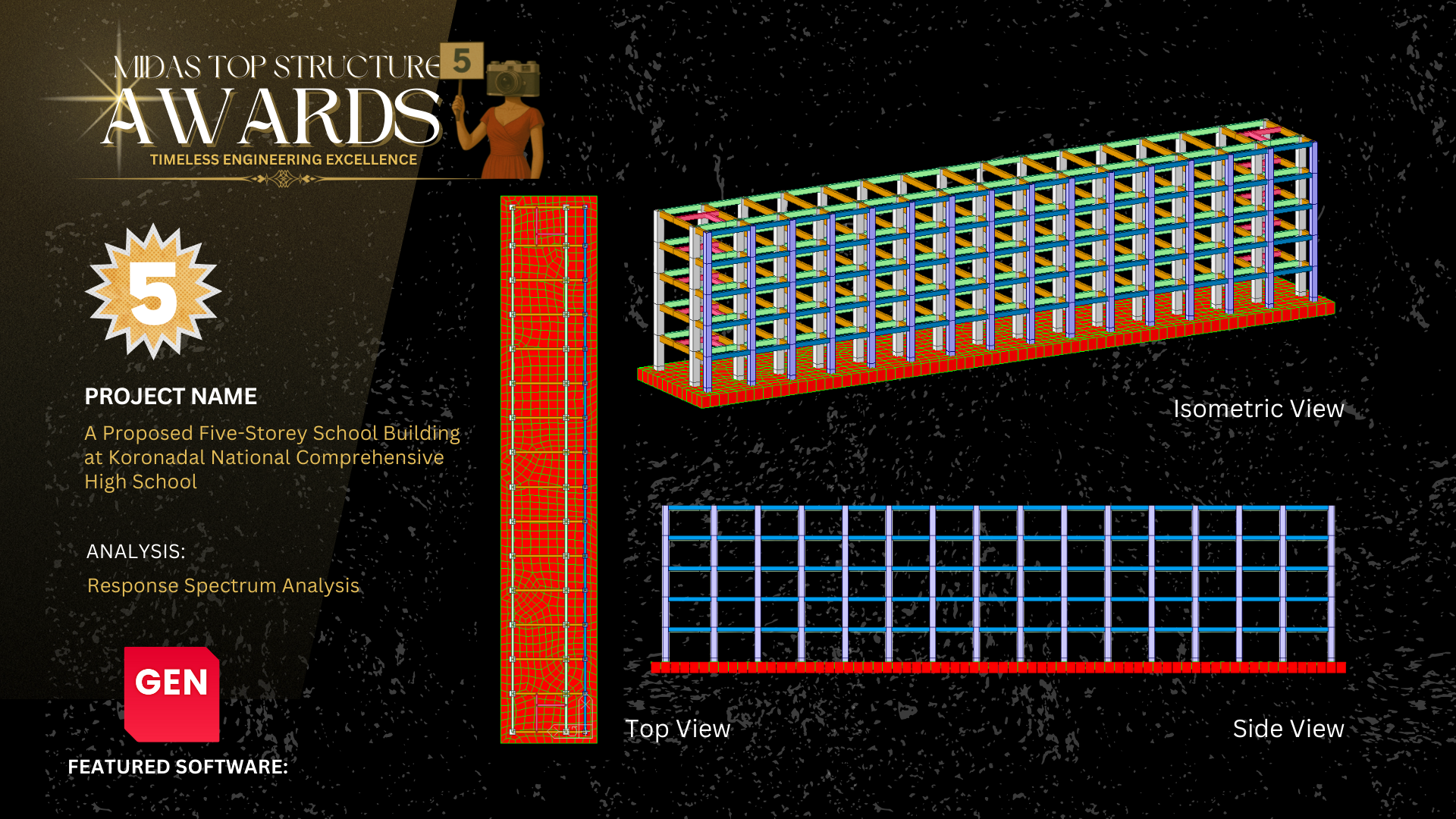
To address classroom shortages and split schedules at KNCHS, this project proposes a five-storey RC school building with an elevator. Using modern software, architectural/MEP/structural plans were developed and the building was designed to current codes. Reactions ranged from 65.350–484.500 kN, with earthquake loads governing peak deformation, shear, and moment. A 1.2 m mat foundation was recommended. Estimated cost is Php 80,140,930.29 with a 550-day construction period.
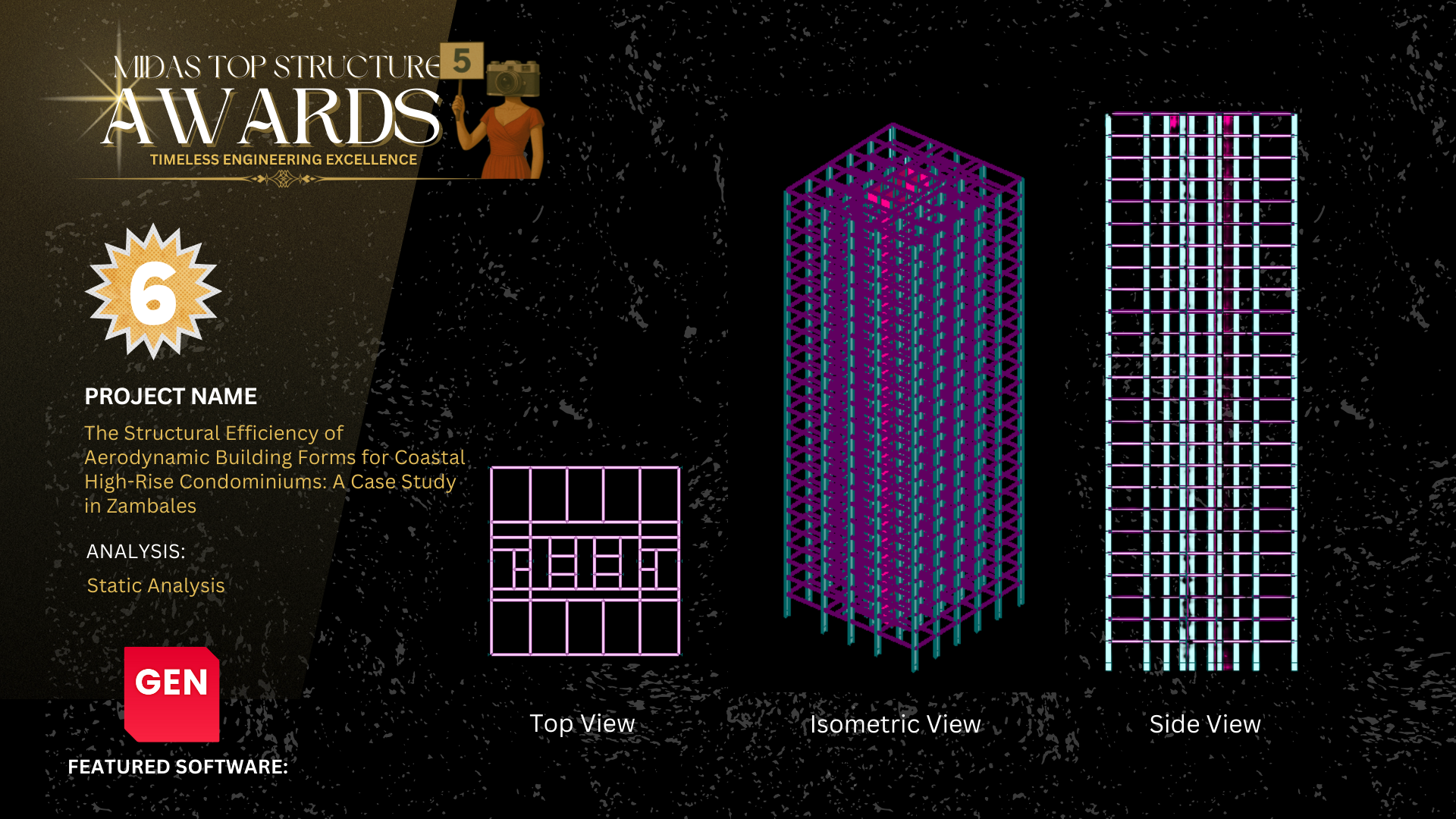
This study evaluates the structural efficiency of aerodynamic, tapered building forms versus a prismatic form. Wind pressures from CFD simulations were applied in MIDAS Gen to model each configuration. Demand-to-capacity ratios (DCR) were then analyzed using a one-sample t-test to determine whether tapered forms provide a statistically significant structural efficiency benefit.
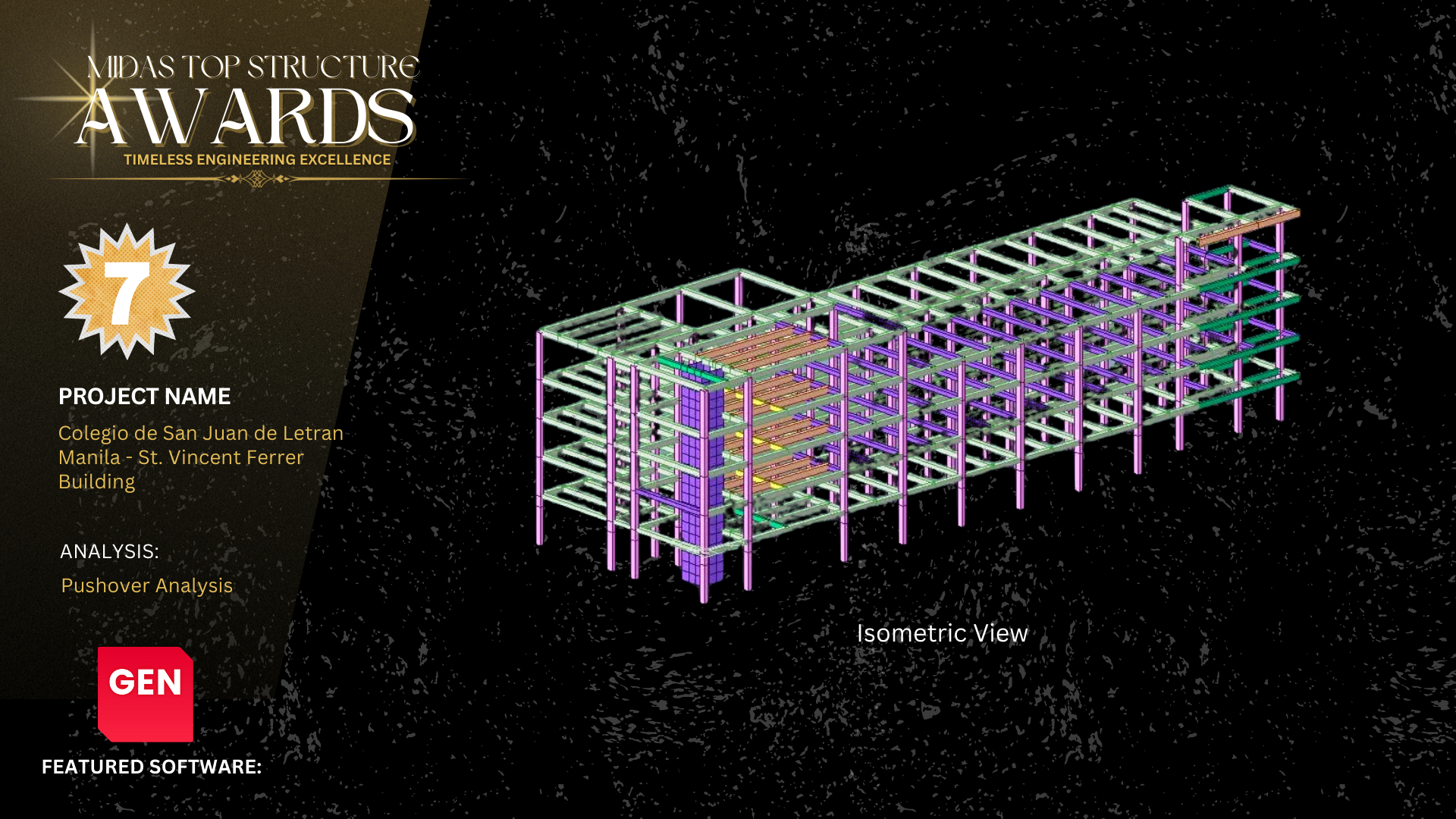
This study evaluates the seismic performance of the St. Vincent Ferrer Building (Colegio de San Juan de Letran–Manila) to develop a safer earthquake evacuation plan. Rebound hammer tests on beams and columns were used to estimate concrete strength and calibrate a MIDAS Gen finite element model for nonlinear pushover analysis. Using FEMA and NSCP 2015 criteria, plastic hinges remained within the Immediate Occupancy level and performance points in both X and Y directions indicated no major structural failure. However, localized deformations—especially on the east side—suggest potential weak zones. The proposed evacuation plan prioritizes routes through low-deformation areas, identifying the west side near the shear wall as the safest path, and includes defined zones, assembly points, drop–cover–hold, and provisions for limited-mobility occupants consistent with OSHA/FEMA guidance.

The Florante G. Millado (FGM) Building is a medium-rise facility at Ramon Magsaysay Memorial Colleges, designed by Arch. Elwyn D. Bañares and completed in 2013 to accommodate increasing enrollment. Built over 2 years and 6 months at an estimated cost of Php 105 million, it supports the school’s five colleges. After the Mw 6.8 Mindanao earthquake on November 17, 2023, the building was reassessed, prompting structural foundation upgrades. A static analysis was performed in MIDAS Gen by the project team
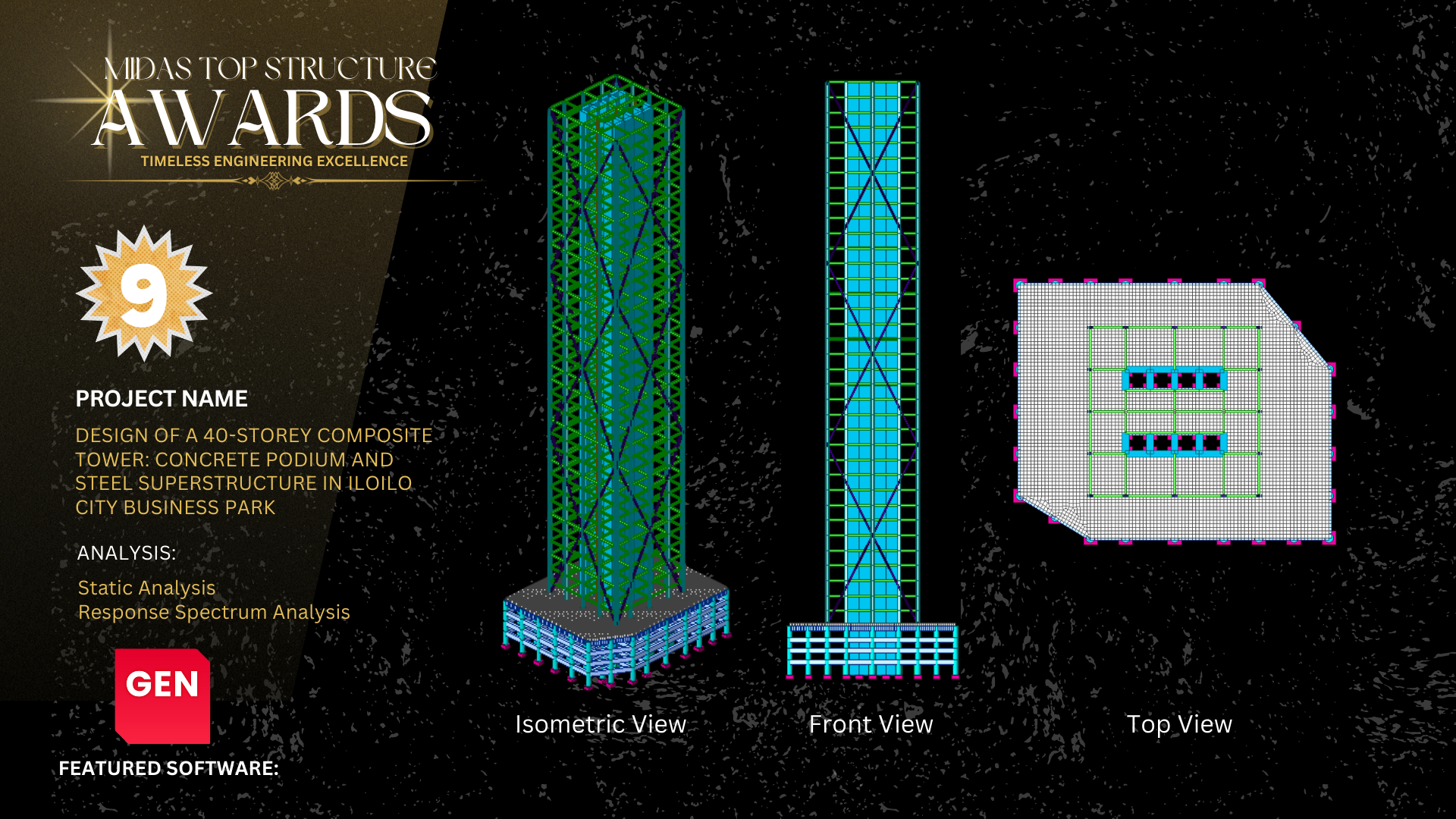
Iloilo City faces growing climate risks (super typhoons, flooding) alongside a widening shortage of suitable IT-BPM/BPO office space, threatening business continuity and investment. This proposal addresses both needs through a 40-storey composite high-rise at Iloilo Business Park, using an RC podium and core (continuous shear walls) paired with a steel superstructure and moment frames to balance stiffness, ductility, and constructability.
Market indicators (2024–2025) point to sustained BPO expansion and undersupplied premium offices, positioning the tower to attract anchor tenants, offer flexible suites, and generate thousands of jobs. Technically, the design targets NSCP 2015 seismic performance and super-typhoon wind demands, validated in MIDAS Gen through static and response spectrum analyses, quartering-wind checks, and drift verification. Overall, the project delivers modern, disaster-resilient workspace that strengthens Iloilo’s competitiveness, supports employment, and improves service continuity during extreme events.