Would you like to sign out?

Select Country

  • Afghanistan English
  • Albania English
  • Algeria English
  • American Samoa English
  • Andorra English
  • Angola English
  • Anguilla English
  • Antarctica English
  • Antigua and Barbuda English
  • Argentina Español
  • Armenia English
  • Aruba English
  • Australia English
  • Austria English
  • Azerbaijan English
  • Bahamas English
  • Bahrain English
  • Bangladesh English
  • Barbados English
  • Belarus English
  • Belgium English
  • Belize English
  • Benin English
  • Bermuda English
  • Bhutan English
  • Bolivia Español
  • Bosnia and Herzegovina English
  • Botswana English
  • Bouvet Island English
  • Brazil Español
  • British Indian Ocean Territory English
  • British Virgin Islands English
  • Brunei English
  • Bulgaria English
  • Burkina Faso English
  • Burundi English
  • Cambodia English
  • Cameroon English
  • Canada English
  • Cape Verde English
  • Caribbean Netherlands English
  • Cayman Islands English
  • Central African Republic English
  • Chad English
  • Chile Español
  • Christmas Island English
  • Cocos (Keeling) Islands English
  • Colombia Español
  • Comoros English
  • Congo English
  • Cook Islands English
  • Costa Rica Español
  • Côte d’Ivoire English
  • Croatia English
  • Cuba Español
  • Curaçao English
  • Cyprus English
  • Czech Republic English
  • Democratic Republic of the Congo English
  • Denmark English
  • Djibouti English
  • Dominica English
  • Dominican Republic Español
  • Ecuador Español
  • Egypt English
  • El Salvador Español
  • Equatorial Guinea English
  • Eritrea English
  • Estonia English
  • Ethiopia English
  • Falkland Islands English
  • Faroe Islands English
  • Fiji English
  • Finland English
  • France English
  • French Guiana Español
  • French Polynesia English
  • French Southern Territories English
  • Gabon English
  • Gambia English
  • Georgia English
  • Germany English
  • Ghana English
  • Gibraltar English
  • Greece English
  • Greenland English
  • Grenada English
  • Guadeloupe Español
  • Guam English
  • Guatemala Español
  • Guernsey English
  • Guinea English
  • Guinea-Bissau English
  • Guyana English
  • Haiti Español
  • Heard Island and McDonald Islands English
  • Honduras Español
  • Hong Kong English
  • Hungary English
  • Iceland English
  • India English
  • Indonesia English
  • Iran English
  • Iraq English
  • Ireland English
  • Isle of Man English
  • Israel English
  • Italy English
  • Jamaica English
  • Japan 日本語
  • Jersey English
  • Jordan English
  • Kazakhstan English
  • Kenya English
  • Kiribati English
  • South Korea 한국어
  • Kuwait English
  • Kyrgyzstan English
  • Laos English
  • Latvia English
  • Lebanon English
  • Lesotho English
  • Liberia English
  • Libya English
  • Liechtenstein English
  • Lithuania English
  • Luxembourg English
  • Macau English
  • Madagascar English
  • Malawi English
  • Malaysia English
  • Maldives English
  • Mali English
  • Malta English
  • Marshall Islands English
  • Martinique Español
  • Mauritania English
  • Mauritius English
  • Mayotte English
  • Mexico Español
  • Micronesia English
  • Moldova English
  • Monaco English
  • Mongolia English
  • Montenegro English
  • Montserrat English
  • Morocco English
  • Mozambique English
  • Myanmar English
  • Namibia English
  • Nauru English
  • Nepal English
  • Netherlands English
  • New Caledonia English
  • New Zealand English
  • Nicaragua Español
  • Niger English
  • Nigeria English
  • Niue English
  • Norfolk Island English
  • Northern Mariana Islands English
  • Norway English
  • Oman English
  • Pakistan English
  • Palau English
  • Palestine English
  • Panama Español
  • Papua New Guinea English
  • Paraguay Español
  • Peru Español
  • Philippines English
  • Pitcairn Islands English
  • Poland English
  • Portugal Español
  • Puerto Rico Español
  • Qatar English
  • Réunion English
  • Romania English
  • Russia English
  • Rwanda English
  • Saint Barthélemy Español
  • Saint Helena English
  • Saint Kitts and Nevis English
  • Saint Lucia English
  • Saint Martin Español
  • Saint Pierre and Miquelon English
  • Saint Vincent and the Grenadines English
  • Samoa English
  • San Marino English
  • Sao Tome and Principe English
  • Saudi Arabia English
  • Senegal English
  • Serbia English
  • Seychelles English
  • Sierra Leone English
  • Singapore English
  • Sint Maarten English
  • Slovakia English
  • Slovenia English
  • Solomon Islands English
  • Somalia English
  • South Africa English
  • South Georgia English
  • South Sudan English
  • Spain Español
  • Sri Lanka English
  • Sudan English
  • Suriname English
  • Svalbard and Jan Mayen English
  • Eswatini English
  • Sweden English
  • Switzerland English
  • Syria English
  • Taiwan English
  • Tajikistan English
  • Tanzania English
  • Thailand English
  • Togo English
  • Tokelau English
  • Tonga English
  • Trinidad and Tobago English
  • Tunisia English
  • Turkey English
  • Turkmenistan English
  • Turks and Caicos Islands English
  • Tuvalu English
  • U.S. Virgin Islands English
  • Uganda English
  • Ukraine English
  • United Arab Emirates English
  • United Kingdom English
  • United States of America English
  • U.S. Minor Outlying Islands English
  • Uruguay Español
  • Uzbekistan English
  • Vanuatu English
  • Vatican City English
  • Venezuela Español
  • Vietnam English
  • Wallis and Futuna English
  • Western Sahara English
  • Yemen English
  • Zambia English
  • Zimbabwe English
  • Åland Islands English
  • East Timor English
  • Netherlands Antilles English
  • Serbia and Montenegro English
  • North Macedonia English
  • Timor-Leste English
Structure

Analysis and Design of Brace Frame [sample download]

Table of Contents Click the table of contents for details.

이벤트배너4


Introduction: What Are Braces in Steel Structures?

Braces are an integral part of steel structures, providing stability and strength by resisting lateral forces such as wind and seismic loads. Commonly found in buildings, bridges, and towers, braces help maintain the overall stability of the structure by distributing these lateral forces throughout the framework. They ensure that the primary structural elements, like beams and columns, remain in place under varying loads.


How Do Braces Work?

The fundamental principle behind braces is the ability to resist both tensile and compressive forces. In many ways, braces function similarly to the members in a truss structure, where they work together to form a stable triangular geometry that distributes loads efficiently.


  • Tensile Braces: When a brace is under tension, it is stretched, which allows it to resist lateral forces effectively. Tensile braces prevent the sides of the structure from moving apart under load.
  • Compressive Braces: Under compression, braces help prevent buckling of columns and beams by providing lateral support, keeping the structure from swaying or collapsing.


Braces are particularly important in tall buildings and structures exposed to significant lateral loads, as they help manage the additional forces that these structures encounter.
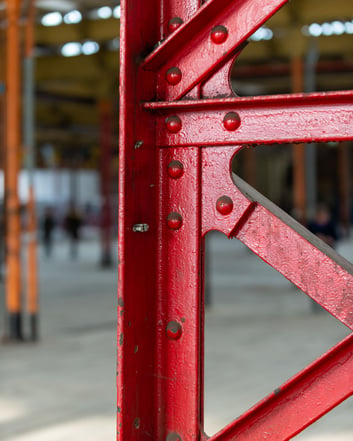
 

closeup-view-of-the-red-metal-construction-2023-11-27-05-02-59-utc


Types of Braces and Their Components


Braces come in various configurations, each suited for different types of loads and structural systems. Common types include:


  1. Diagonal Braces: Placed diagonally between beams and columns, these braces are the most common and provide effective lateral support.
  2. V-Braces and Chevron Braces: Arranged in a V-shape or inverted V, these braces connect to a central point on a beam, providing balanced support.
  3. X-Braces: X-braces consist of two diagonal members crossing each other, providing excellent resistance to both tension and compression.


Key Components of Braces


Braces are typically composed of several key components that ensure their effective integration into the structural framework:


  • Gusset Plates: Gusset plates are flat, thick sheets of steel that connect braces to other structural members like beams or columns. They help transfer the forces from the brace into the larger structure, making them a crucial element in the overall stability of the connection.
  • Steel Angles (L-Shaped Sections): L-shaped sections are often used as braces because of their ability to handle loads in multiple directions. Their geometry allows them to provide both tensile and compressive strength.
  • Hollow Structural Sections (HSS): These are tubular steel sections that are sometimes used for braces due to their high strength-to-weight ratio and uniform distribution of stress around their cross-section.


Common Connection Methods

Braces need to be properly connected to other structural members to function effectively. Here are some typical connection methods:


  • Bolted Connections: Bolting is a common method for connecting braces to gusset plates. It provides a strong and reliable connection that can be easily adjusted or replaced if needed.
  • Welded Connections: Welding is often used for a more seamless connection between braces and other steel members. It provides a high degree of stiffness but can be more challenging to adjust once the weld is complete.


Key Variables in Brace Analysis


When analyzing and designing braces, engineers need to consider various factors to ensure the structure's stability and safety. These include:


  • Slenderness Ratio: The slenderness ratio of a brace is the ratio of its length to its radius of gyration. A high slenderness ratio can increase the likelihood of buckling under compressive loads, making it a critical factor in brace design.
  • Axial Load Capacity: Braces are subjected to axial loads, both tensile and compressive. It's essential to calculate the capacity of each brace to handle these loads without failure. This involves considering the cross-sectional area, material properties, and any additional loads from other structural members.
  • Connection Design: The design of the connections, including the size and arrangement of bolts or the length of welds, directly affects the brace's ability to transfer loads. Connection strength is a key variable that needs to be considered during analysis to prevent joint failure.
  • Buckling Resistance: For braces under compression, buckling resistance is a critical aspect of their design. Engineers must evaluate the brace's ability to resist buckling, which depends on the member’s length, cross-section, and end conditions (such as whether the ends are fixed or pinned).
  • Dynamic Loads: In areas prone to earthquakes or high wind speeds, the dynamic effects on braces must be considered. These loads can cause rapid fluctuations in the tensile and compressive forces on the braces, requiring a design that can withstand these conditions without failure.
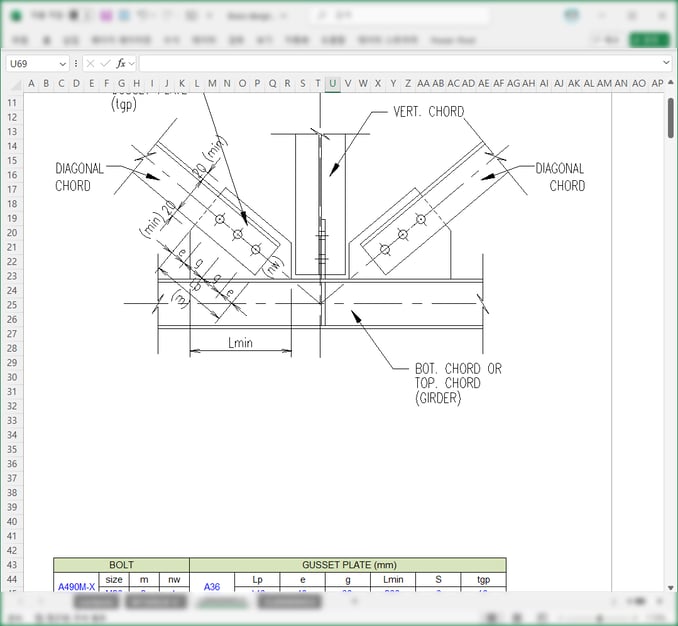
 

엑셀화면4▲ Brace Calculation & Design Sample File


Conclusion: The Role of Braces in Structural Stability


Braces play a vital role in the stability and resilience of steel structures by providing resistance to lateral forces, maintaining the structural integrity under various load conditions. Through careful analysis of variables like slenderness ratio, axial load capacity, and connection design, engineers can create bracing systems that enhance the overall strength and safety of the structure.

Whether used in high-rise buildings to prevent swaying or in bridge structures to distribute load, braces are essential for ensuring that steel structures remain secure and efficient throughout their lifespan. A well-designed bracing system is not only a structural necessity but a safeguard against the unpredictable forces that these structures face.

이벤트배너4


Subscribe to Newsletter

Catch the weekly engineer news!

Brace Design Sample Free Download

Fill out the form below to download the file.

What you may
also like