Would you like to sign out?

Select Country

  • Afghanistan English
  • Albania English
  • Algeria English
  • American Samoa English
  • Andorra English
  • Angola English
  • Anguilla English
  • Antarctica English
  • Antigua and Barbuda English
  • Argentina Español
  • Armenia English
  • Aruba English
  • Australia English
  • Austria English
  • Azerbaijan English
  • Bahamas English
  • Bahrain English
  • Bangladesh English
  • Barbados English
  • Belarus English
  • Belgium English
  • Belize English
  • Benin English
  • Bermuda English
  • Bhutan English
  • Bolivia Español
  • Bosnia and Herzegovina English
  • Botswana English
  • Bouvet Island English
  • Brazil Español
  • British Indian Ocean Territory English
  • British Virgin Islands English
  • Brunei English
  • Bulgaria English
  • Burkina Faso English
  • Burundi English
  • Cambodia English
  • Cameroon English
  • Canada English
  • Cape Verde English
  • Caribbean Netherlands English
  • Cayman Islands English
  • Central African Republic English
  • Chad English
  • Chile Español
  • Christmas Island English
  • Cocos (Keeling) Islands English
  • Colombia Español
  • Comoros English
  • Congo English
  • Cook Islands English
  • Costa Rica Español
  • Côte d’Ivoire English
  • Croatia English
  • Cuba Español
  • Curaçao English
  • Cyprus English
  • Czech Republic English
  • Democratic Republic of the Congo English
  • Denmark English
  • Djibouti English
  • Dominica English
  • Dominican Republic Español
  • Ecuador Español
  • Egypt English
  • El Salvador Español
  • Equatorial Guinea English
  • Eritrea English
  • Estonia English
  • Ethiopia English
  • Falkland Islands English
  • Faroe Islands English
  • Fiji English
  • Finland English
  • France English
  • French Guiana Español
  • French Polynesia English
  • French Southern Territories English
  • Gabon English
  • Gambia English
  • Georgia English
  • Germany English
  • Ghana English
  • Gibraltar English
  • Greece English
  • Greenland English
  • Grenada English
  • Guadeloupe Español
  • Guam English
  • Guatemala Español
  • Guernsey English
  • Guinea English
  • Guinea-Bissau English
  • Guyana English
  • Haiti Español
  • Heard Island and McDonald Islands English
  • Honduras Español
  • Hong Kong English
  • Hungary English
  • Iceland English
  • India English
  • Indonesia English
  • Iran English
  • Iraq English
  • Ireland English
  • Isle of Man English
  • Israel English
  • Italy English
  • Jamaica English
  • Japan 日本語
  • Jersey English
  • Jordan English
  • Kazakhstan English
  • Kenya English
  • Kiribati English
  • South Korea 한국어
  • Kuwait English
  • Kyrgyzstan English
  • Laos English
  • Latvia English
  • Lebanon English
  • Lesotho English
  • Liberia English
  • Libya English
  • Liechtenstein English
  • Lithuania English
  • Luxembourg English
  • Macau English
  • Madagascar English
  • Malawi English
  • Malaysia English
  • Maldives English
  • Mali English
  • Malta English
  • Marshall Islands English
  • Martinique Español
  • Mauritania English
  • Mauritius English
  • Mayotte English
  • Mexico Español
  • Micronesia English
  • Moldova English
  • Monaco English
  • Mongolia English
  • Montenegro English
  • Montserrat English
  • Morocco English
  • Mozambique English
  • Myanmar English
  • Namibia English
  • Nauru English
  • Nepal English
  • Netherlands English
  • New Caledonia English
  • New Zealand English
  • Nicaragua Español
  • Niger English
  • Nigeria English
  • Niue English
  • Norfolk Island English
  • Northern Mariana Islands English
  • Norway English
  • Oman English
  • Pakistan English
  • Palau English
  • Palestine English
  • Panama Español
  • Papua New Guinea English
  • Paraguay Español
  • Peru Español
  • Philippines English
  • Pitcairn Islands English
  • Poland English
  • Portugal Español
  • Puerto Rico Español
  • Qatar English
  • Réunion English
  • Romania English
  • Russia English
  • Rwanda English
  • Saint Barthélemy Español
  • Saint Helena English
  • Saint Kitts and Nevis English
  • Saint Lucia English
  • Saint Martin Español
  • Saint Pierre and Miquelon English
  • Saint Vincent and the Grenadines English
  • Samoa English
  • San Marino English
  • Sao Tome and Principe English
  • Saudi Arabia English
  • Senegal English
  • Serbia English
  • Seychelles English
  • Sierra Leone English
  • Singapore English
  • Sint Maarten English
  • Slovakia English
  • Slovenia English
  • Solomon Islands English
  • Somalia English
  • South Africa English
  • South Georgia English
  • South Sudan English
  • Spain Español
  • Sri Lanka English
  • Sudan English
  • Suriname English
  • Svalbard and Jan Mayen English
  • Eswatini English
  • Sweden English
  • Switzerland English
  • Syria English
  • Taiwan English
  • Tajikistan English
  • Tanzania English
  • Thailand English
  • Togo English
  • Tokelau English
  • Tonga English
  • Trinidad and Tobago English
  • Tunisia English
  • Turkey English
  • Turkmenistan English
  • Turks and Caicos Islands English
  • Tuvalu English
  • U.S. Virgin Islands English
  • Uganda English
  • Ukraine English
  • United Arab Emirates English
  • United Kingdom English
  • United States of America English
  • U.S. Minor Outlying Islands English
  • Uruguay Español
  • Uzbekistan English
  • Vanuatu English
  • Vatican City English
  • Venezuela Español
  • Vietnam English
  • Wallis and Futuna English
  • Western Sahara English
  • Yemen English
  • Zambia English
  • Zimbabwe English
  • Åland Islands English
  • East Timor English
  • Netherlands Antilles English
  • Serbia and Montenegro English
  • North Macedonia English
  • Timor-Leste English
Bridge

Determining Concurrent Live Load for Strut and Tie Models

Table of Contents Click the table of contents for details.

In the article "strut-and-tie modeling for pier caps", we have discussed the definition of strut-and-tie analysis and how to construct a strut-and-tie model using the example of pier cap. After creating the geometry of a strut-and-tie model, the next step usually is calculating dead and live loads from the superstructure. This article discusses how to determine the boundary loads for a pier cap with a superstructure that has irregular geometries. 


What is Lever Rule? 


Applying the lever rule allows us to consider the deck to be simply supported between girder lines in the transverse direction. We can then use a line girder analysis to determine the tributary length for loads on each supported superstructure span, and use different live load placements that maximize these reaction force (shear and moment) from the deck at the girders following the AASHTO rules for lane width, vehicle placement, and multiple presence provisions. 


Is Lever Rule Always Able to Obtain Superstructure Dead and Live Load? 


However, there are cases where lever rule cannot be applied. Figure 1 shows a bridge with a significant skew, and with a girder line that stops at the top of a pier, and with cross frames that are oriented at a different angle than the piers, and with different span lengths. Using lever rule in this case would not be accurate to determine what the superstructure reaction should be that is applied to the pier cap. Therefore, we included the superstructure model and the piers in the same analysis model and used the superstructure model to determine what the bearing loads should be. For this analysis to be accurate, all the live load forces for each of the different cases need to be concurrent with one another, and we cannot use a live load envelope. This article shows the process of determining the concurrent live loads using midas Civil to find the load cases that maximizes the shear and moment reactions at the pier cap. 
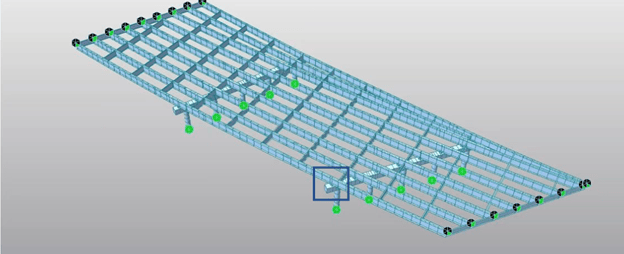
 Figure 1. Skewed steel girder bridge with sub beam and variable girder span lengths

Figure 1. Skewed steel girder bridge with sub beam and variable girder span lengths.

Figure 2 shows the zoomed view of the region highlighted in blue box from figure 1. What we are trying to do is to figure out what would be the live load from the superstructure that maximizes the vertical shear and negative moment at the element that is highlighted by the blue box. We can define that as an equivalent static load case so that we can be sure its loads are concurrent. In this example, we are interested in obtaining the maximum HL-93 shear and negative moment in the element 30053 part i, shown in figure 3. 
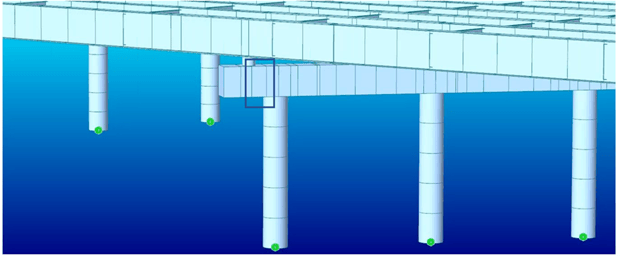
 

Figure 2. Maximum HL-93 Shear and negative moment in element 30053

Figure 2. Maximum HL-93 Shear and negative moment in element 30053 [i]


Skewed steel girder bridge with sub beam and variable girder span lengths.

Figure 3. Maximum HL-93 Shear and negative moment in element 30053 [i]


To determine which live load maximizes the loading conditions at element 30053i, the following steps can be followed. As shown in figure 4, in midas Civil post-processor, we can select all the individual load patterns, and select element of interest (30053i). After requesting the list of forces at the element 30053i, we can visually determine which of the live load pattern that maximizes the forces at element 30053i, as shown in figure 5. 
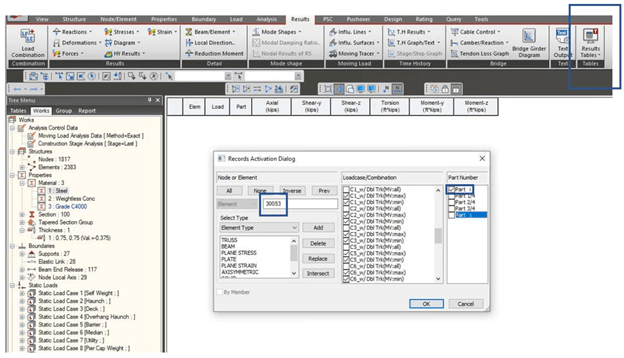
Figure 4. Results

Figure 4. Results -> Tables -> Results Tables -> Records Activation Dialog.


Figure 5. Case 2 live load pattern that could maximize the loading conditions at the element 30035

Figure 5. Case 2 live load pattern that could maximize the loading conditions at the element 30035 [i].


After determining the load pattern that maximizes the loading conditions at element 30053i (load pattern: C2_w/Dbl Trk_min), we can visualize this load pattern and save it as an equivalent static load. To visualize this load pattern: Results -> Moving Load -> Moving Tracer, would show us the position of the vehicle that contribute to the load which maximizes the shear and vertical moments at the element of interest, as shown in figure 6. 
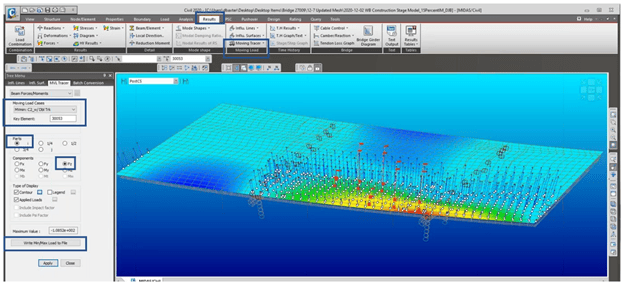
 

Figure 6. Moving load tracer for load case C2

Figure 6. Moving load tracer for load case C2_w/Dbi Trk that contributes to the maximum loads at element 30035.


To define this load pattern as an equivalent static load case for strut-and-tie analysis, follow the highlighted blue boxes in figure 6 and click "Write Min/Max Load to File", we can get a text-based file (.mct file) shown in figure7. 
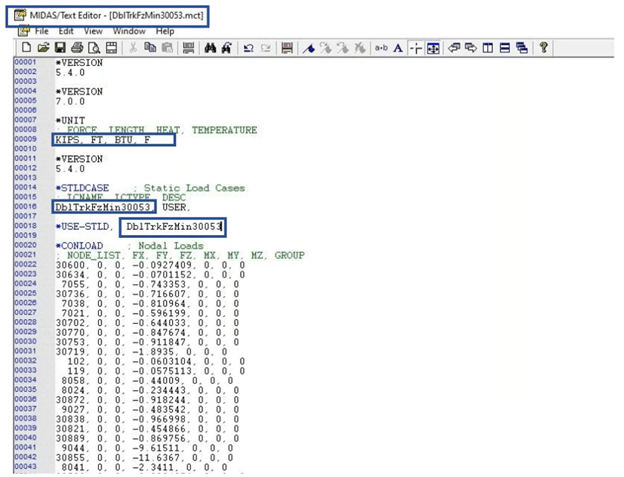
 

Figure 7. Midas Civil .mct file that specifies the static load

Figure 7. Midas Civil .mct file that specifies the static load representing the truck location that contributes to the maximum loading effect at the element 30035.


After saving this .mct file, you can go to Tools - MCT Command Shell -> Open to open the above saved .mct file and hit "run". This would create a static load case shown in figure 8, and by adding this equivalent static live load case, we can get the concurrent loads for our strut-and-tie model.   
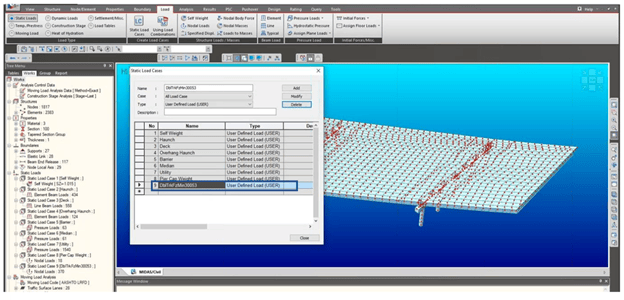
 

Figure 8. Equivalent static load case created from moving load tracer

Figure 8. Equivalent static load case created from moving load tracer.


About the Editor
Daniel Baxter P.E., S.E.
Bridge Department Manager and Project Manager at Michael Baker International (Minneapolis, MN)

Daniel Baxter is a bridge department manager in Michael Baker's Minneapolis office, where he also serves as a project manager and senior bridge engineer. He has been involved in both the rehabilitation, design, and load rating of many complex bridges such as the Third Avenue Bridge, Winona Bridge, High Bridge, Franklin Avenue Bridge, Lafayette Bridge and Hastings Bridge, all over the Mississippi River. He also recently led the analysis of 18 existing pier caps with sectional and strut-and-tie methods and helped develop procedures for the design of 38 new pier caps using the strut-and-tie method. He also serves as an NHI-certified instructor for multiple NHI bridge design and load rating training courses, including Strut-and-Tie Modeling for Concrete Structures. He is highly experienced in complex finite element analysis, has given eight presentations at the International Bridge Conference, and has published several papers in peer-reviewed journals. He graduated with a B.A. in Physics from Carleton College in 2001 and received a B.S. in Civil Engineering and an M.S. in structural engineering in December 2003 from Washington University in St. Louis. He is a licensed professional engineer in Minnesota and a licensed structural engineer in the state of Illinois.

Subscribe to Newsletter

Catch the weekly engineer news!

What you may
also like