
Would you like to sign out?

Select Country

  • Afghanistan English
  • Albania English
  • Algeria English
  • American Samoa English
  • Andorra English
  • Angola English
  • Anguilla English
  • Antarctica English
  • Antigua and Barbuda English
  • Argentina Español
  • Armenia English
  • Aruba English
  • Australia English
  • Austria English
  • Azerbaijan English
  • Bahamas English
  • Bahrain English
  • Bangladesh English
  • Barbados English
  • Belarus English
  • Belgium English
  • Belize English
  • Benin English
  • Bermuda English
  • Bhutan English
  • Bolivia Español
  • Bosnia and Herzegovina English
  • Botswana English
  • Bouvet Island English
  • Brazil Español
  • British Indian Ocean Territory English
  • British Virgin Islands English
  • Brunei English
  • Bulgaria English
  • Burkina Faso English
  • Burundi English
  • Cambodia English
  • Cameroon English
  • Canada English
  • Cape Verde English
  • Caribbean Netherlands English
  • Cayman Islands English
  • Central African Republic English
  • Chad English
  • Chile Español
  • Christmas Island English
  • Cocos (Keeling) Islands English
  • Colombia Español
  • Comoros English
  • Congo English
  • Cook Islands English
  • Costa Rica Español
  • Côte d’Ivoire English
  • Croatia English
  • Cuba Español
  • Curaçao English
  • Cyprus English
  • Czech Republic English
  • Democratic Republic of the Congo English
  • Denmark English
  • Djibouti English
  • Dominica English
  • Dominican Republic Español
  • Ecuador Español
  • Egypt English
  • El Salvador Español
  • Equatorial Guinea English
  • Eritrea English
  • Estonia English
  • Ethiopia English
  • Falkland Islands English
  • Faroe Islands English
  • Fiji English
  • Finland English
  • France English
  • French Guiana Español
  • French Polynesia English
  • French Southern Territories English
  • Gabon English
  • Gambia English
  • Georgia English
  • Germany English
  • Ghana English
  • Gibraltar English
  • Greece English
  • Greenland English
  • Grenada English
  • Guadeloupe Español
  • Guam English
  • Guatemala Español
  • Guernsey English
  • Guinea English
  • Guinea-Bissau English
  • Guyana English
  • Haiti Español
  • Heard Island and McDonald Islands English
  • Honduras Español
  • Hong Kong English
  • Hungary English
  • Iceland English
  • India English
  • Indonesia English
  • Iran English
  • Iraq English
  • Ireland English
  • Isle of Man English
  • Israel English
  • Italy English
  • Jamaica English
  • Japan 日本語
  • Jersey English
  • Jordan English
  • Kazakhstan English
  • Kenya English
  • Kiribati English
  • South Korea 한국어
  • Kuwait English
  • Kyrgyzstan English
  • Laos English
  • Latvia English
  • Lebanon English
  • Lesotho English
  • Liberia English
  • Libya English
  • Liechtenstein English
  • Lithuania English
  • Luxembourg English
  • Macau English
  • Madagascar English
  • Malawi English
  • Malaysia English
  • Maldives English
  • Mali English
  • Malta English
  • Marshall Islands English
  • Martinique Español
  • Mauritania English
  • Mauritius English
  • Mayotte English
  • Mexico Español
  • Micronesia English
  • Moldova English
  • Monaco English
  • Mongolia English
  • Montenegro English
  • Montserrat English
  • Morocco English
  • Mozambique English
  • Myanmar English
  • Namibia English
  • Nauru English
  • Nepal English
  • Netherlands English
  • New Caledonia English
  • New Zealand English
  • Nicaragua Español
  • Niger English
  • Nigeria English
  • Niue English
  • Norfolk Island English
  • Northern Mariana Islands English
  • Norway English
  • Oman English
  • Pakistan English
  • Palau English
  • Palestine English
  • Panama Español
  • Papua New Guinea English
  • Paraguay Español
  • Peru Español
  • Philippines English
  • Pitcairn Islands English
  • Poland English
  • Portugal Español
  • Puerto Rico Español
  • Qatar English
  • Réunion English
  • Romania English
  • Russia English
  • Rwanda English
  • Saint Barthélemy Español
  • Saint Helena English
  • Saint Kitts and Nevis English
  • Saint Lucia English
  • Saint Martin Español
  • Saint Pierre and Miquelon English
  • Saint Vincent and the Grenadines English
  • Samoa English
  • San Marino English
  • Sao Tome and Principe English
  • Saudi Arabia English
  • Senegal English
  • Serbia English
  • Seychelles English
  • Sierra Leone English
  • Singapore English
  • Sint Maarten English
  • Slovakia English
  • Slovenia English
  • Solomon Islands English
  • Somalia English
  • South Africa English
  • South Georgia English
  • South Sudan English
  • Spain Español
  • Sri Lanka English
  • Sudan English
  • Suriname English
  • Svalbard and Jan Mayen English
  • Eswatini English
  • Sweden English
  • Switzerland English
  • Syria English
  • Taiwan English
  • Tajikistan English
  • Tanzania English
  • Thailand English
  • Togo English
  • Tokelau English
  • Tonga English
  • Trinidad and Tobago English
  • Tunisia English
  • Turkey English
  • Turkmenistan English
  • Turks and Caicos Islands English
  • Tuvalu English
  • U.S. Virgin Islands English
  • Uganda English
  • Ukraine English
  • United Arab Emirates English
  • United Kingdom English
  • United States of America English
  • U.S. Minor Outlying Islands English
  • Uruguay Español
  • Uzbekistan English
  • Vanuatu English
  • Vatican City English
  • Venezuela Español
  • Vietnam English
  • Wallis and Futuna English
  • Western Sahara English
  • Yemen English
  • Zambia English
  • Zimbabwe English
  • Åland Islands English
  • East Timor English
  • Netherlands Antilles English
  • Serbia and Montenegro English
  • North Macedonia English
  • Timor-Leste English
Bridge

What is the purpose of hydration heat analysis? [sample download]

Table of Contents Click the table of contents for details.


이벤트배너4


Hydration heat analysis might sound complex, but it's an essential concept for those involved in the construction and engineering world, especially when working with concrete. Let's break down what hydration heat is, how it affects structures, why we need to analyze it, the methods of analysis, and when such analysis is necessary.


What is Hydration Heat?

Hydration heat refers to the heat released when cement reacts with water. This reaction is fundamental to the hardening and strength-gaining process of concrete. As water is added to cement, a chemical reaction occurs, causing the cement particles to bind together, forming a solid structure. During this process, heat is released—a phenomenon known as hydration heat.

Setting" the Record Straight… Diagnosing concrete setting issues

Concrete Hydration Stage


How Does Hydration Heat Affect Structures?

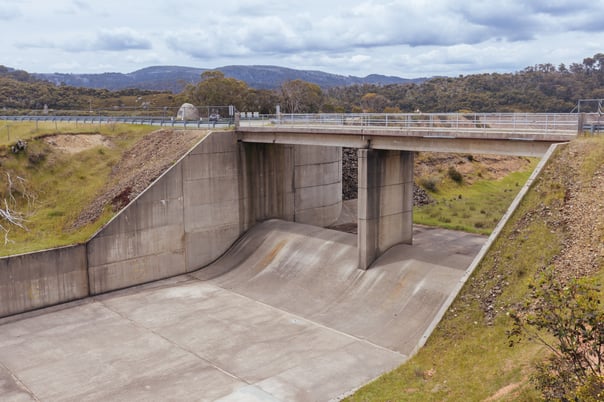
While hydration is necessary for concrete to gain strength, the heat it releases can cause challenges, especially in massive concrete structures like bridge pylons, dams, and large foundations. The main issues arise due to the temperature differences between the concrete’s core and its surface. Here’s how it can impact structures:


  • Thermal Cracking: As the temperature rises in the core of the concrete while the surface cools, it can lead to differential thermal expansion. This difference in temperature creates tensile stresses, which can cause cracks on the surface of the concrete.
  • Durability Issues: If not managed properly, thermal cracks can reduce the long-term durability of the concrete structure. Cracks can provide pathways for water and other aggressive agents, leading to corrosion of the reinforcing steel inside.
tooma-dam-in-new-south-wales-australia-2023-11-27-05-12-16-utc


Why is Hydration Heat Analysis Important?

Analyzing hydration heat is crucial for ensuring the safety, durability, and performance of large concrete structures. By understanding the temperature changes and stresses due to hydration heat, engineers can predict potential problems and take measures to prevent them. Hydration heat analysis allows for:

  • Optimized Mix Design: Adjusting the type of cement or adding supplementary materials (like fly ash or slag) can help control the rate of heat generation.
  • Improved Curing Practices: By analyzing hydration heat, engineers can design effective curing strategies to maintain the right temperature and moisture levels during the early stages of concrete setting.
  • Crack Prevention: With accurate analysis, potential cracking risks can be identified early, allowing for the implementation of measures like cooling pipes or phased construction to control temperature differences.


How is Hydration Heat Analyzed?

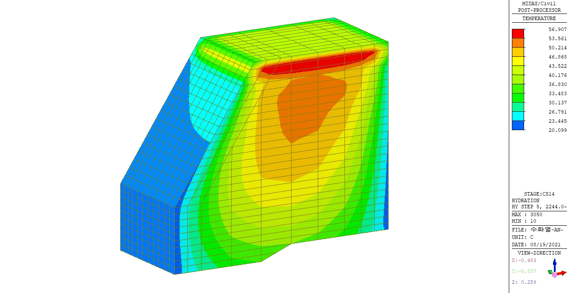
Hydration heat analysis can be conducted using computational tools that simulate the temperature development within a concrete structure over time. Here are some common methods:


  • Finite Element Analysis (FEA): Software like  MIDAS CIVIL and DIANA uses the finite element method to model the temperature distribution within the concrete. This method divides the structure into small elements and calculates the heat flow and stress in each part.
  • Maturity Method: This method estimates the temperature rise based on the maturity index, which considers both time and temperature history. It’s often used for simpler assessments.
  • Field Measurements: In some cases, temperature sensors are placed within the concrete to monitor the real-time temperature changes during curing, providing data to calibrate computational models.
 

14단 타설 온도분포


When Should Hydration Heat Analysis be Performed?

Hydration heat analysis is typically required for large-scale concrete casts where temperature control is critical. Here are a few situations where this analysis is particularly important:

  • Mass Concrete Structures: In thick concrete elements, like bridge foundations, dams, and pylons, the core can remain hot for a long time while the outer layers cool faster, increasing the risk of cracking.
  • High-Strength Concrete: High-strength concrete often generates more hydration heat due to a higher cement content, requiring careful management.
  • Cold or Hot Weather Conditions: In extreme weather conditions, the temperature variations between the concrete’s core and the environment can be more significant, making hydration heat analysis essential for proper curing.


Conclusion

Hydration heat analysis is a vital step in ensuring the structural integrity of large concrete projects. By understanding the heat generated during cement hydration, engineers can design effective measures to manage temperature differences and prevent cracking, ensuring that the concrete structures remain strong and durable over time. Through advanced analysis methods, we can optimize construction practices and create safer, more reliable infrastructure.

Whether you're working on a small project or managing a massive concrete cast, understanding hydration heat and its implications can make a big difference in the success of your construction efforts.
 

Heat of Hydration Analysis Report Sample

이벤트배너4


Subscribe to Newsletter

Catch the weekly engineer news!

Heat of Hydration Analysis Report Sample Free Download

Fill out the form below to download the file.

What you may
also like