Would you like to sign out?

Select Country

  • Afghanistan English
  • Albania English
  • Algeria English
  • American Samoa English
  • Andorra English
  • Angola English
  • Anguilla English
  • Antarctica English
  • Antigua and Barbuda English
  • Argentina Español
  • Armenia English
  • Aruba English
  • Australia English
  • Austria English
  • Azerbaijan English
  • Bahamas English
  • Bahrain English
  • Bangladesh English
  • Barbados English
  • Belarus English
  • Belgium English
  • Belize English
  • Benin English
  • Bermuda English
  • Bhutan English
  • Bolivia Español
  • Bosnia and Herzegovina English
  • Botswana English
  • Bouvet Island English
  • Brazil Español
  • British Indian Ocean Territory English
  • British Virgin Islands English
  • Brunei English
  • Bulgaria English
  • Burkina Faso English
  • Burundi English
  • Cambodia English
  • Cameroon English
  • Canada English
  • Cape Verde English
  • Caribbean Netherlands English
  • Cayman Islands English
  • Central African Republic English
  • Chad English
  • Chile Español
  • Christmas Island English
  • Cocos (Keeling) Islands English
  • Colombia Español
  • Comoros English
  • Congo English
  • Cook Islands English
  • Costa Rica Español
  • Côte d’Ivoire English
  • Croatia English
  • Cuba Español
  • Curaçao English
  • Cyprus English
  • Czech Republic English
  • Democratic Republic of the Congo English
  • Denmark English
  • Djibouti English
  • Dominica English
  • Dominican Republic Español
  • Ecuador Español
  • Egypt English
  • El Salvador Español
  • Equatorial Guinea English
  • Eritrea English
  • Estonia English
  • Ethiopia English
  • Falkland Islands English
  • Faroe Islands English
  • Fiji English
  • Finland English
  • France English
  • French Guiana Español
  • French Polynesia English
  • French Southern Territories English
  • Gabon English
  • Gambia English
  • Georgia English
  • Germany English
  • Ghana English
  • Gibraltar English
  • Greece English
  • Greenland English
  • Grenada English
  • Guadeloupe Español
  • Guam English
  • Guatemala Español
  • Guernsey English
  • Guinea English
  • Guinea-Bissau English
  • Guyana English
  • Haiti Español
  • Heard Island and McDonald Islands English
  • Honduras Español
  • Hong Kong English
  • Hungary English
  • Iceland English
  • India English
  • Indonesia English
  • Iran English
  • Iraq English
  • Ireland English
  • Isle of Man English
  • Israel English
  • Italy English
  • Jamaica English
  • Japan 日本語
  • Jersey English
  • Jordan English
  • Kazakhstan English
  • Kenya English
  • Kiribati English
  • South Korea 한국어
  • Kuwait English
  • Kyrgyzstan English
  • Laos English
  • Latvia English
  • Lebanon English
  • Lesotho English
  • Liberia English
  • Libya English
  • Liechtenstein English
  • Lithuania English
  • Luxembourg English
  • Macau English
  • Madagascar English
  • Malawi English
  • Malaysia English
  • Maldives English
  • Mali English
  • Malta English
  • Marshall Islands English
  • Martinique Español
  • Mauritania English
  • Mauritius English
  • Mayotte English
  • Mexico Español
  • Micronesia English
  • Moldova English
  • Monaco English
  • Mongolia English
  • Montenegro English
  • Montserrat English
  • Morocco English
  • Mozambique English
  • Myanmar English
  • Namibia English
  • Nauru English
  • Nepal English
  • Netherlands English
  • New Caledonia English
  • New Zealand English
  • Nicaragua Español
  • Niger English
  • Nigeria English
  • Niue English
  • Norfolk Island English
  • Northern Mariana Islands English
  • Norway English
  • Oman English
  • Pakistan English
  • Palau English
  • Palestine English
  • Panama Español
  • Papua New Guinea English
  • Paraguay Español
  • Peru Español
  • Philippines English
  • Pitcairn Islands English
  • Poland English
  • Portugal Español
  • Puerto Rico Español
  • Qatar English
  • Réunion English
  • Romania English
  • Russia English
  • Rwanda English
  • Saint Barthélemy Español
  • Saint Helena English
  • Saint Kitts and Nevis English
  • Saint Lucia English
  • Saint Martin Español
  • Saint Pierre and Miquelon English
  • Saint Vincent and the Grenadines English
  • Samoa English
  • San Marino English
  • Sao Tome and Principe English
  • Saudi Arabia English
  • Senegal English
  • Serbia English
  • Seychelles English
  • Sierra Leone English
  • Singapore English
  • Sint Maarten English
  • Slovakia English
  • Slovenia English
  • Solomon Islands English
  • Somalia English
  • South Africa English
  • South Georgia English
  • South Sudan English
  • Spain Español
  • Sri Lanka English
  • Sudan English
  • Suriname English
  • Svalbard and Jan Mayen English
  • Eswatini English
  • Sweden English
  • Switzerland English
  • Syria English
  • Taiwan English
  • Tajikistan English
  • Tanzania English
  • Thailand English
  • Togo English
  • Tokelau English
  • Tonga English
  • Trinidad and Tobago English
  • Tunisia English
  • Turkey English
  • Turkmenistan English
  • Turks and Caicos Islands English
  • Tuvalu English
  • U.S. Virgin Islands English
  • Uganda English
  • Ukraine English
  • United Arab Emirates English
  • United Kingdom English
  • United States of America English
  • U.S. Minor Outlying Islands English
  • Uruguay Español
  • Uzbekistan English
  • Vanuatu English
  • Vatican City English
  • Venezuela Español
  • Vietnam English
  • Wallis and Futuna English
  • Western Sahara English
  • Yemen English
  • Zambia English
  • Zimbabwe English
  • Åland Islands English
  • East Timor English
  • Netherlands Antilles English
  • Serbia and Montenegro English
  • North Macedonia English
  • Timor-Leste English
Structure

[Free BIM Libraries] The Value of BIM

Table of Contents Click the table of contents for details.

이벤트배너1


1. Theoretical Background


Building Information Modeling (BIM) is a critical digital technology in the architecture, engineering, and construction industries, integrating all construction data to manage a project's lifecycle. The theoretical foundation of BIM goes beyond simple 3D modeling, aiming to revolutionize project management by assigning attribute information to each building component, optimizing decision-making during the design and construction phases.


The concept of BIM originated in the 1970s following the introduction of CAD (Computer-Aided Design) and started establishing its presence in the construction industry in the mid-2000s. As it evolved from traditional 2D design to an “information model” that includes diverse data such as time, cost, and materials for each design element, BIM became more than a visual tool. It emerged as an essential data hub encompassing design, construction, and maintenance stages.


2. Current Situation and Need


Current Situation
Today, BIM has become indispensable in construction projects worldwide, with many countries mandating BIM use by law. In countries such as the U.S., the U.K., Australia, and South Korea, regulations require BIM adoption in public construction projects, accelerating its application in private projects.

The primary objectives of BIM adoption are clear: reducing costs related to design changes, minimizing errors in the construction process, enhancing project management efficiency, and providing data for facility maintenance. Numerous case studies highlight BIM's role in reducing project costs and optimizing schedules. BIM is also recognized as a valuable tool for improving sustainability by reducing waste and boosting efficiency in construction resources.


Need
As the complexity of construction projects grows, and the need for collaboration among diverse stakeholders increases, the demand for integrated data management through BIM becomes more pronounced. By implementing BIM, all parties can communicate on the same data foundation, significantly reducing errors in the construction process. Additionally, BIM is a technology that can contribute to addressing climate change and resource conservation challenges, playing a critical role in energy efficiency and environmentally friendly building design.


3. Application Methods


Application in the Design Stage
BIM enables sophisticated simulations alongside 3D modeling by incorporating various information into building components from the early design phase. This allows early detection of design errors and instant assessment of the impact of design changes. For instance, BIM-based collision detection of mechanical, electrical, and plumbing (MEP) systems can minimize delays at construction sites.


Application in the Construction Stage

The BIM model provides clear guidelines for workers during construction. By planning based on this model, the quantity and placement of necessary materials can be accurately determined, reducing resource waste. BIM also allows material delivery schedules to be adjusted based on the model, enabling visual tracking of progress according to each phase, thus enhancing schedule management efficiency.


Application in the Maintenance Stage
Information gathered through BIM is highly beneficial for building operation and maintenance. Data recorded during design and construction phases can be used to develop maintenance plans and quickly address unforeseen issues. For example, when a specific facility reaches its end-of-life, BIM provides the necessary replacement schedule and material information, aiding maintenance planning.


4. Conclusion


BIM has become an essential tool for integrated data management and efficient collaboration across the entire lifecycle of construction projects, from design to construction to maintenance. The rapid advancement of BIM technology accelerates the digital transformation of the construction industry, facilitating seamless communication among various stakeholders. Particularly, BIM is expected to play a growing role as a critical means of ensuring the sustainability of the construction industry.

BIM experts should focus not only on modeling but also on maximizing project efficiency through data utilization and integrated management. As BIM technology continues to evolve, it will foster more innovations in the digital transformation of the construction industry.


5. Event


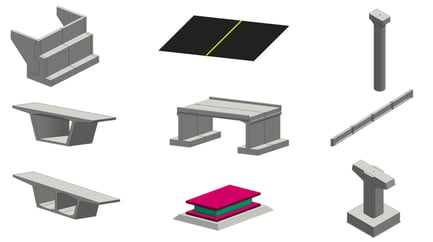
This event offers a library applicable across the civil engineering field, with over 400+ basic libraries provided upon registration.

These libraries can be applied directly to various civil engineering tasks from planning to design, greatly enhancing work efficiency.


이벤트배너1


Subscribe to Newsletter

Catch the weekly engineer news!

Get Free Library Files!

Submit the form below to download the library package.

What you may
also like