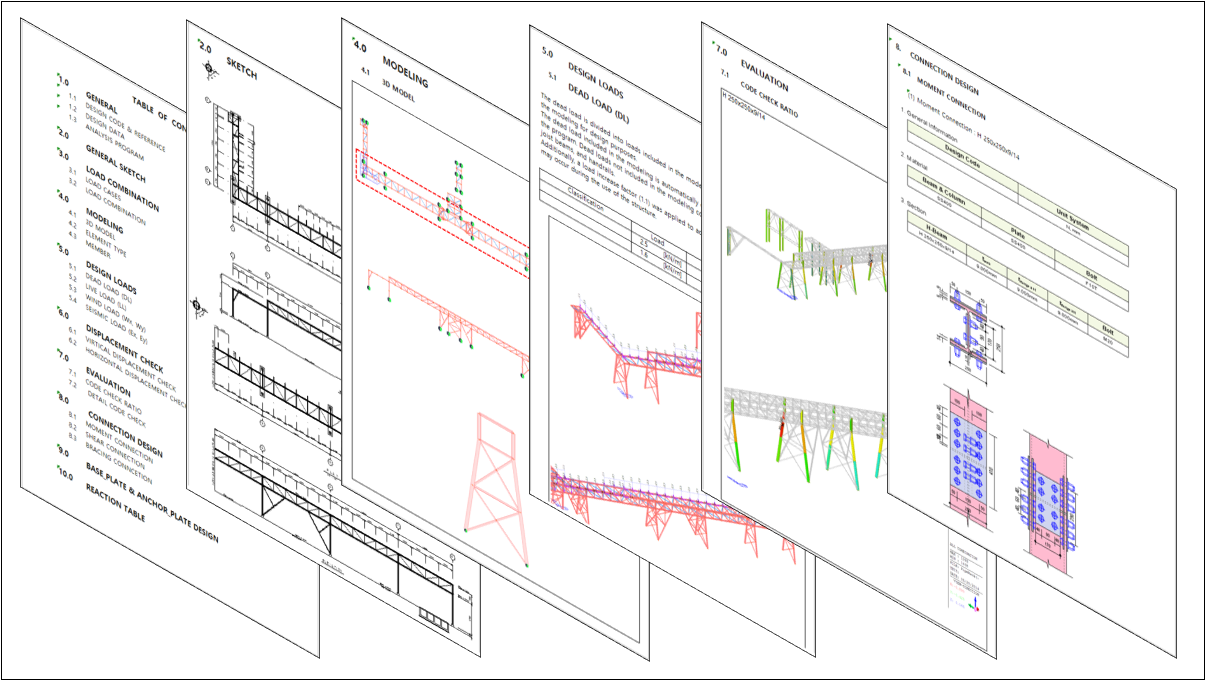
1. Theoretical Background
Role of Piperack
A piperack is a structural system installed in industrial plants to support pipes, cables, and control systems. It plays a critical role in chemical plants, refineries, power plants, and other industrial facilities. Its main functions include providing safe pipe routing, preventing interference between facilities, and enhancing accessibility for maintenance.
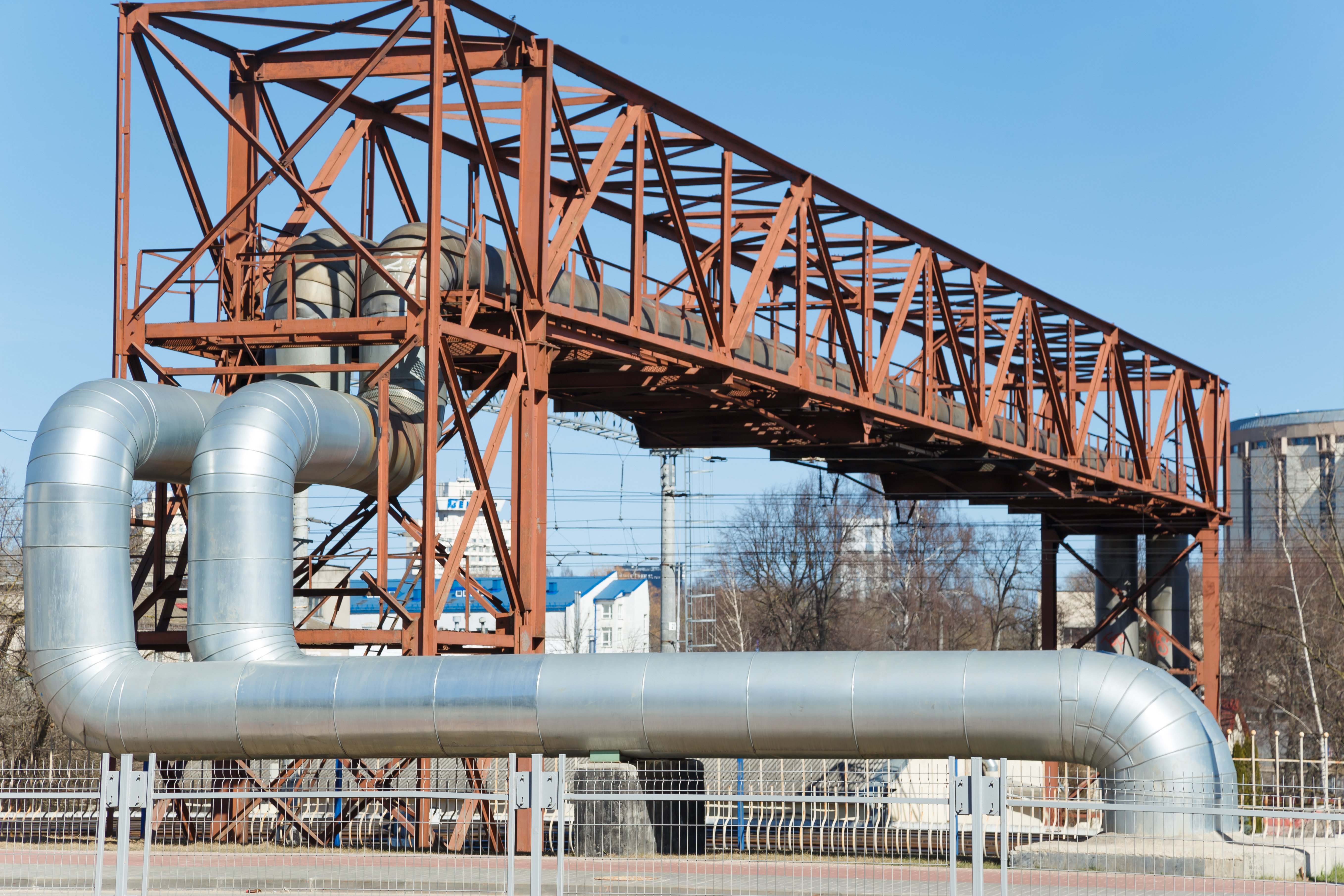
Structural Behavior of Piperack
Piperacks are primarily affected by lateral loads (wind and seismic) and vertical loads (self-weight of equipment and pipes). Key aspects of their structural behavior include:
Lateral Stiffness: Essential for suppressing vibrations and torsion in pipes. Proper bracing and joint design are crucial.
Vertical Load Resistance: Must account for the self-weight of pipes, fluid weight, and thermal expansion while preventing local buckling.
Thermal Expansion and Contraction: Structural impacts from thermal expansion of high-temperature pipes must be absorbed through sliding supports and expansion joints.
2. Structural Analysis and Design Methods
1) Structural Analysis Procedure
Modeling Stage:Create a structural model based on the layout and position of pipes. The main components include the main frame and bracing systems.
Load Calculation:Vertical Loads: Consider the self-weight of pipes, cables, and equipment.
Horizontal Loads: Calculate wind and seismic loads to ensure the safety of the structure.
Analysis Execution:Assess deformation, stress, and reactions under applied loads.
2) Design Methods
Codes and Standards
Follow international design standards (e.g., ASCE, AISC, Eurocode) and local regulations.
Member Design
Columns and Beams: Determine cross-sections to ensure stiffness and prevent buckling.
Bracing: Apply X-shaped or K-shaped bracing to maintain lateral stability.
Connection Design:Evaluate the forces at member connections and verify the strength of bolted or welded joints to ensure safety.
3. Conclusion
Designing piperack structures is a complex task that must ensure both the stability of pipes and the functional requirements of equipment while achieving economic efficiency and durability. To achieve successful designs, the following should be considered:
Accurate load calculation and structural analysis.
Compliance with international standards and local site conditions.
In conclusion, piperack design is a critical element in ensuring the reliability and safety of industrial plants. Continuous research and practical experience are essential for improving the quality of designs.
The attached Excel calculation sheet, prepared in accordance with AISC standards, is practical for real-project work applications. Engineers in practice will find it useful for verifying the design methods and procedures of structures utilizing piperack structures.