
1. Theoretical Background
Post-tensioned (PSC) concrete silos are a critical part of modern infrastructure used to store bulk materials like cement, grains, or coal. The design of these silos requires an understanding of both the mechanical behavior of concrete under stress and the dynamic pressures exerted by the stored materials. The silo's structure must resist vertical and horizontal pressures, including the effects of material flow and temperature-induced stresses.
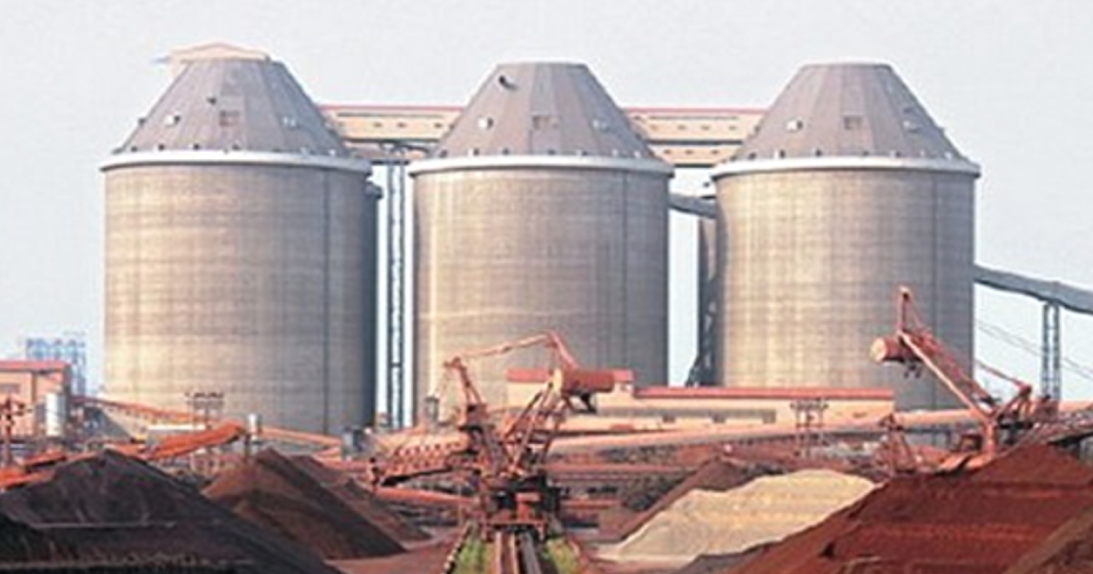
SILO using PSC concrete
In a typical silo, the stored material creates pressure on the walls, which is compounded by the weight of the material itself. The design must account for both active pressures (due to the stored material) and passive forces (such as friction and internal stresses). For this, common formulas such as Jassen's, Reimbert’s, and Airy's equations are employed to calculate the wall pressures, with these calculations modified by factors such as wall geometry, material properties, and hopper design.
Additionally, the choice of wall thickness, reinforcement design, and tendon placement in PSC silos is governed by various engineering standards, such as ACI-313-97, which provides guidelines for silo wall design and reinforcement in post-tensioned concrete structures.
2. Methods for Designing PSC Concrete Silo
The design of PSC concrete silos follows a systematic process, focusing on wall thickness, reinforcement placement, and overall structural stability. The main steps are as follows:
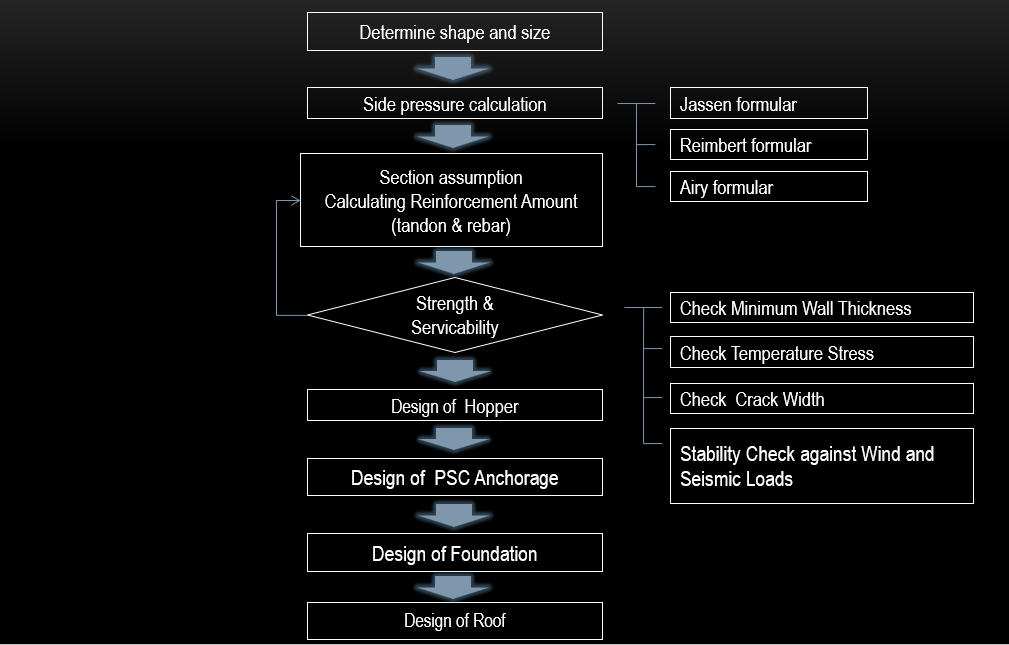 SILO Design Flow
Shape and Size Determination
The shape of the silo is typically cylindrical, although variations like square or rectangular silos are also used. The choice of shape affects the calculation of pressures and the distribution of forces on the walls. Cylindrical silos are the most common due to their efficient load distribution properties. The size is determined based on the required storage capacity, with considerations for the material's flow characteristics.
Pressure Calculations
The vertical and horizontal pressures exerted by the stored material are calculated using established formulas such as Jassen's or Reimbert’s. These formulas take into account parameters such as the material’s angle of repose (ρ), hopper angle (θ), and the hydraulic radius (R). Vertical pressure, typically denoted as q, is calculated by integrating the material's depth, while horizontal pressure (p) is assessed based on the friction between the material and the silo wall.
Reinforcement and Tendon Placement
PSC silos use both conventional reinforcement and post-tensioning tendons to manage the stresses generated by the material. The vertical reinforcement bars must be sized and spaced appropriately to handle the vertical loads. For tendons, the minimum spacing and cover are dictated by the silo's wall thickness and the duct diameter. Post-tensioning is essential for ensuring the silo walls can withstand the internal pressure without excessive deformation.
Stability and Serviceability Checks
A silo’s design must undergo various checks to ensure its serviceability and stability:
Minimum Wall Thickness: The walls should have a minimum thickness to prevent cracking or excessive deformation.
Temperature Stress: Given that temperature gradients across the silo can induce significant stress, it’s important to account for thermal effects in the design.
Wind and Seismic Loads: The silo must be designed to resist lateral forces from wind and seismic activity.
Crack Width: The design ensures that cracks do not exceed allowable limits, ensuring the structural integrity of the silo.
3. Key Considerations in PSC Concrete Silo Design
Several important factors must be considered to ensure the durability and safety of PSC concrete silos:
Material Flow and Hopper Design
The type of material stored significantly influences the design. For instance, materials with adhesive properties like coal dust require a larger hopper slope to prevent arching and allow smooth flow. On the other hand, non-cohesive materials may require steeper slopes to ensure free-fall and prevent clogging.
The design of the hopper, which channels the material out of the silo, must also be optimized to minimize friction and ensure smooth discharge. The angle of repose, or the angle at which the material naturally settles, must be incorporated into the hopper design to prevent uneven flow and material jamming.
Reinforcement Detailing
The spacing of reinforcement bars is a crucial consideration in ensuring the structural integrity of the silo. Vertical bars must be spaced according to guidelines, and the horizontal reinforcement in the silo walls is critical for withstanding the stresses from the internal material pressures. For large silos, double layers of reinforcement are often required to manage the higher stresses.
Temperature and Thermal Expansion
Thermal expansion of the concrete, especially at the top and bottom of the silo, must be carefully managed. Temperature-induced stresses can cause cracking and deformation if not addressed during the design phase. Therefore, the silo’s design must account for differential temperature changes, especially in climates with significant temperature variations.
Post-Tensioning and Anchor Design
Post-tensioning tendons play a critical role in controlling the tensile forces generated in the silo wall. Tendon placement must be optimized to control the moment and shear forces, and the design must account for potential losses due to friction and anchor set. Friction losses occur due to the curvature of the tendon and must be factored into the design to ensure that the required tension is maintained throughout the structure.
Seismic and Wind Resistance
A silo’s ability to resist seismic and wind forces is critical for its safety and longevity. Design codes typically require that silos be able to withstand these forces, which can cause significant lateral movement. Reinforcement design and structural stability checks ensure that the silo can perform under extreme conditions.
4. Conclusion
In conclusion, the design of PSC concrete silos is a complex process that requires careful consideration of both material behavior and structural requirements. From determining the shape and size of the silo to calculating internal pressures and designing the reinforcement and post-tensioning systems, every step in the design process contributes to the silo’s performance and durability. By following established design principles and accounting for factors such as material flow, temperature effects, and seismic loads, engineers can ensure the creation of a safe and efficient storage structure. The key to success lies in precise calculations, adherence to standards like ACI-313-97, and a thorough understanding of the forces at play within the silo.