Would you like to sign out?

Select Country

  • Afghanistan English
  • Albania English
  • Algeria English
  • American Samoa English
  • Andorra English
  • Angola English
  • Anguilla English
  • Antarctica English
  • Antigua and Barbuda English
  • Argentina Español
  • Armenia English
  • Aruba English
  • Australia English
  • Austria English
  • Azerbaijan English
  • Bahamas English
  • Bahrain English
  • Bangladesh English
  • Barbados English
  • Belarus English
  • Belgium English
  • Belize English
  • Benin English
  • Bermuda English
  • Bhutan English
  • Bolivia Español
  • Bosnia and Herzegovina English
  • Botswana English
  • Bouvet Island English
  • Brazil Español
  • British Indian Ocean Territory English
  • British Virgin Islands English
  • Brunei English
  • Bulgaria English
  • Burkina Faso English
  • Burundi English
  • Cambodia English
  • Cameroon English
  • Canada English
  • Cape Verde English
  • Caribbean Netherlands English
  • Cayman Islands English
  • Central African Republic English
  • Chad English
  • Chile Español
  • Christmas Island English
  • Cocos (Keeling) Islands English
  • Colombia Español
  • Comoros English
  • Congo English
  • Cook Islands English
  • Costa Rica Español
  • Côte d’Ivoire English
  • Croatia English
  • Cuba Español
  • Curaçao English
  • Cyprus English
  • Czech Republic English
  • Democratic Republic of the Congo English
  • Denmark English
  • Djibouti English
  • Dominica English
  • Dominican Republic Español
  • Ecuador Español
  • Egypt English
  • El Salvador Español
  • Equatorial Guinea English
  • Eritrea English
  • Estonia English
  • Ethiopia English
  • Falkland Islands English
  • Faroe Islands English
  • Fiji English
  • Finland English
  • France English
  • French Guiana Español
  • French Polynesia English
  • French Southern Territories English
  • Gabon English
  • Gambia English
  • Georgia English
  • Germany English
  • Ghana English
  • Gibraltar English
  • Greece English
  • Greenland English
  • Grenada English
  • Guadeloupe Español
  • Guam English
  • Guatemala Español
  • Guernsey English
  • Guinea English
  • Guinea-Bissau English
  • Guyana English
  • Haiti Español
  • Heard Island and McDonald Islands English
  • Honduras Español
  • Hong Kong English
  • Hungary English
  • Iceland English
  • India English
  • Indonesia English
  • Iran English
  • Iraq English
  • Ireland English
  • Isle of Man English
  • Israel English
  • Italy English
  • Jamaica English
  • Japan 日本語
  • Jersey English
  • Jordan English
  • Kazakhstan English
  • Kenya English
  • Kiribati English
  • South Korea 한국어
  • Kuwait English
  • Kyrgyzstan English
  • Laos English
  • Latvia English
  • Lebanon English
  • Lesotho English
  • Liberia English
  • Libya English
  • Liechtenstein English
  • Lithuania English
  • Luxembourg English
  • Macau English
  • Madagascar English
  • Malawi English
  • Malaysia English
  • Maldives English
  • Mali English
  • Malta English
  • Marshall Islands English
  • Martinique Español
  • Mauritania English
  • Mauritius English
  • Mayotte English
  • Mexico Español
  • Micronesia English
  • Moldova English
  • Monaco English
  • Mongolia English
  • Montenegro English
  • Montserrat English
  • Morocco English
  • Mozambique English
  • Myanmar English
  • Namibia English
  • Nauru English
  • Nepal English
  • Netherlands English
  • New Caledonia English
  • New Zealand English
  • Nicaragua Español
  • Niger English
  • Nigeria English
  • Niue English
  • Norfolk Island English
  • Northern Mariana Islands English
  • Norway English
  • Oman English
  • Pakistan English
  • Palau English
  • Palestine English
  • Panama Español
  • Papua New Guinea English
  • Paraguay Español
  • Peru Español
  • Philippines English
  • Pitcairn Islands English
  • Poland English
  • Portugal Español
  • Puerto Rico Español
  • Qatar English
  • Réunion English
  • Romania English
  • Russia English
  • Rwanda English
  • Saint Barthélemy Español
  • Saint Helena English
  • Saint Kitts and Nevis English
  • Saint Lucia English
  • Saint Martin Español
  • Saint Pierre and Miquelon English
  • Saint Vincent and the Grenadines English
  • Samoa English
  • San Marino English
  • Sao Tome and Principe English
  • Saudi Arabia English
  • Senegal English
  • Serbia English
  • Seychelles English
  • Sierra Leone English
  • Singapore English
  • Sint Maarten English
  • Slovakia English
  • Slovenia English
  • Solomon Islands English
  • Somalia English
  • South Africa English
  • South Georgia English
  • South Sudan English
  • Spain Español
  • Sri Lanka English
  • Sudan English
  • Suriname English
  • Svalbard and Jan Mayen English
  • Eswatini English
  • Sweden English
  • Switzerland English
  • Syria English
  • Taiwan English
  • Tajikistan English
  • Tanzania English
  • Thailand English
  • Togo English
  • Tokelau English
  • Tonga English
  • Trinidad and Tobago English
  • Tunisia English
  • Turkey English
  • Turkmenistan English
  • Turks and Caicos Islands English
  • Tuvalu English
  • U.S. Virgin Islands English
  • Uganda English
  • Ukraine English
  • United Arab Emirates English
  • United Kingdom English
  • United States of America English
  • U.S. Minor Outlying Islands English
  • Uruguay Español
  • Uzbekistan English
  • Vanuatu English
  • Vatican City English
  • Venezuela Español
  • Vietnam English
  • Wallis and Futuna English
  • Western Sahara English
  • Yemen English
  • Zambia English
  • Zimbabwe English
  • Åland Islands English
  • East Timor English
  • Netherlands Antilles English
  • Serbia and Montenegro English
  • North Macedonia English
  • Timor-Leste English
Geotechnical

The 3 things in FE-based Geotechnical Analysis that you should know prior to validation of results

Table of Contents Click the table of contents for details.

Finite Element Analysis and its application to Geotechnical problems


The usual dilemma in soil as an engineering material is  its inconsistent parameters.  That is why the Finite Element Method application in geotechnical problems has been a requirement for almost all soil-related projects. Its development through the years, together with the advancement of computing packages, has evolved this option from a research tool into a daily engineering tool. 


FEA results, although colorful and eye-catching, also have significant drawbacks. Limiting these to a minimum is subjective yet controllable. Here are 3 things that you should consider prior to hopping into Finite Element-based Geotechnical Analysis.
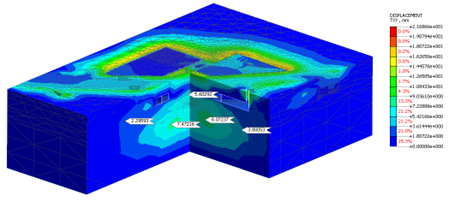
 
Figure 1: Simulation of Seepage phenomena in Embankment dam using FEA.


Figure 2 Visual results of stresses in an FE model.Figure 2: Visual results of stresses in an FE model


1. MODEL SIMPLIFICATIONS


The idea of using computing packages to simulate a real-life phenomenon still requires a sound theoretical understanding of its underlying mechanics. Since a computer model is used to represent a reality, the conceptual model of it must be validated and verified by mathematical and numerical models. These verification models incorporate the mathematical formulation of the process in your conceptual model (differential equations describing equilibrium in a continuum model, stress-strain relationship describing the soil deformation behavior, etc.).


The implementation of the numerical schemes in the software is incorporated by the developers who made prior series of mathematical verifications.
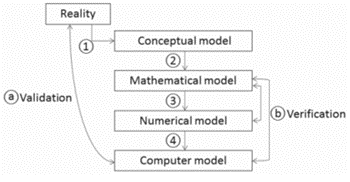
 
Figure 3 Simplified Modeling process from Reality to Computer Model Figure 3: Simplified Modeling process from Reality to Computer Model
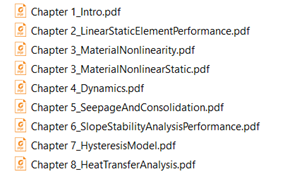
 

Figure 4 Sample Verification files compiled by developers of a computing packageFigure 4: Sample Verification files compiled by developers of a computing package


*Verification files of GTS NX is compiled in the installation files (see: “Benchmarks&Verification” folder. C:\Program Files\midas\GTS NX\Manual\Benchmarks&Verification)


Depending on the package used, model simplification comes in a lot of ways.


●    Geometrical simplification
●    Limit and boundaries assignment
●    Definite Material behavior
●    Simplifications in the construction process


2. MESH SIZING


In Finite Element analysis, the larger number of elements present in the model, the longer the analysis will converge. However, there are ways to optimize the package and reduce stress analysis time, apart from troubleshooting the possible hardware and software issues.


One approach is by targeting an area to apply finer mesh relative to the whole model. In areas where steep stress gradients and plastic strain localization is expected, a finer mesh size must be used. Therefore, initial models may be done as conventional beam models then refine the model in FEM.

 

Content visible until here


You can check more of these details in the download file.


3. LIMITATIONS OF ELASTICITY


CONCLUSION


REFERENCES:


“Validation of Geotechnical Finite Element Analysis”
Brinkgreve R.B.J.
Delft University of Technology & Plaxis bv, Delft, The Netherlands
“Finite element analysis in Geotechnical Engineering”
David M. Potts and Lidija Zdravkovic
Imperial College of Science, Technology and Medicine
“Introduction to FE based Geotechnical Analysis in Midas GTS.”

Advanced Geotechnical and Tunnel Analysis Systems

 

About the Editor
Mark Joseph Carino
Senior Structural Engineer SMEC PHILIPPINES

Engineer. Mark Joseph Carino is a registered civil engineer with over 5 years of experience in various engineering fields mainly in structural design of flood control structures, bridges and geotechnical engineering.


👉Learn More About the Editor (click)


※ Click on the keywords below 'Topics' to view related content.

Subscribe to Newsletter

Catch the weekly engineer news!

The 3 things in FE-based Geotechnical Analysis that you should know prior to validation of results (Full Text)

Fill out the form below to download the Full Text.

What you may
also like