Would you like to sign out?

Select Country

  • Afghanistan English
  • Albania English
  • Algeria English
  • American Samoa English
  • Andorra English
  • Angola English
  • Anguilla English
  • Antarctica English
  • Antigua and Barbuda English
  • Argentina Español
  • Armenia English
  • Aruba English
  • Australia English
  • Austria English
  • Azerbaijan English
  • Bahamas English
  • Bahrain English
  • Bangladesh English
  • Barbados English
  • Belarus English
  • Belgium English
  • Belize English
  • Benin English
  • Bermuda English
  • Bhutan English
  • Bolivia Español
  • Bosnia and Herzegovina English
  • Botswana English
  • Bouvet Island English
  • Brazil Español
  • British Indian Ocean Territory English
  • British Virgin Islands English
  • Brunei English
  • Bulgaria English
  • Burkina Faso English
  • Burundi English
  • Cambodia English
  • Cameroon English
  • Canada English
  • Cape Verde English
  • Caribbean Netherlands English
  • Cayman Islands English
  • Central African Republic English
  • Chad English
  • Chile Español
  • Christmas Island English
  • Cocos (Keeling) Islands English
  • Colombia Español
  • Comoros English
  • Congo English
  • Cook Islands English
  • Costa Rica Español
  • Côte d’Ivoire English
  • Croatia English
  • Cuba Español
  • Curaçao English
  • Cyprus English
  • Czech Republic English
  • Democratic Republic of the Congo English
  • Denmark English
  • Djibouti English
  • Dominica English
  • Dominican Republic Español
  • Ecuador Español
  • Egypt English
  • El Salvador Español
  • Equatorial Guinea English
  • Eritrea English
  • Estonia English
  • Ethiopia English
  • Falkland Islands English
  • Faroe Islands English
  • Fiji English
  • Finland English
  • France English
  • French Guiana Español
  • French Polynesia English
  • French Southern Territories English
  • Gabon English
  • Gambia English
  • Georgia English
  • Germany English
  • Ghana English
  • Gibraltar English
  • Greece English
  • Greenland English
  • Grenada English
  • Guadeloupe Español
  • Guam English
  • Guatemala Español
  • Guernsey English
  • Guinea English
  • Guinea-Bissau English
  • Guyana English
  • Haiti Español
  • Heard Island and McDonald Islands English
  • Honduras Español
  • Hong Kong English
  • Hungary English
  • Iceland English
  • India English
  • Indonesia English
  • Iran English
  • Iraq English
  • Ireland English
  • Isle of Man English
  • Israel English
  • Italy English
  • Jamaica English
  • Japan 日本語
  • Jersey English
  • Jordan English
  • Kazakhstan English
  • Kenya English
  • Kiribati English
  • South Korea 한국어
  • Kuwait English
  • Kyrgyzstan English
  • Laos English
  • Latvia English
  • Lebanon English
  • Lesotho English
  • Liberia English
  • Libya English
  • Liechtenstein English
  • Lithuania English
  • Luxembourg English
  • Macau English
  • Madagascar English
  • Malawi English
  • Malaysia English
  • Maldives English
  • Mali English
  • Malta English
  • Marshall Islands English
  • Martinique Español
  • Mauritania English
  • Mauritius English
  • Mayotte English
  • Mexico Español
  • Micronesia English
  • Moldova English
  • Monaco English
  • Mongolia English
  • Montenegro English
  • Montserrat English
  • Morocco English
  • Mozambique English
  • Myanmar English
  • Namibia English
  • Nauru English
  • Nepal English
  • Netherlands English
  • New Caledonia English
  • New Zealand English
  • Nicaragua Español
  • Niger English
  • Nigeria English
  • Niue English
  • Norfolk Island English
  • Northern Mariana Islands English
  • Norway English
  • Oman English
  • Pakistan English
  • Palau English
  • Palestine English
  • Panama Español
  • Papua New Guinea English
  • Paraguay Español
  • Peru Español
  • Philippines English
  • Pitcairn Islands English
  • Poland English
  • Portugal Español
  • Puerto Rico Español
  • Qatar English
  • Réunion English
  • Romania English
  • Russia English
  • Rwanda English
  • Saint Barthélemy Español
  • Saint Helena English
  • Saint Kitts and Nevis English
  • Saint Lucia English
  • Saint Martin Español
  • Saint Pierre and Miquelon English
  • Saint Vincent and the Grenadines English
  • Samoa English
  • San Marino English
  • Sao Tome and Principe English
  • Saudi Arabia English
  • Senegal English
  • Serbia English
  • Seychelles English
  • Sierra Leone English
  • Singapore English
  • Sint Maarten English
  • Slovakia English
  • Slovenia English
  • Solomon Islands English
  • Somalia English
  • South Africa English
  • South Georgia English
  • South Sudan English
  • Spain Español
  • Sri Lanka English
  • Sudan English
  • Suriname English
  • Svalbard and Jan Mayen English
  • Eswatini English
  • Sweden English
  • Switzerland English
  • Syria English
  • Taiwan English
  • Tajikistan English
  • Tanzania English
  • Thailand English
  • Togo English
  • Tokelau English
  • Tonga English
  • Trinidad and Tobago English
  • Tunisia English
  • Turkey English
  • Turkmenistan English
  • Turks and Caicos Islands English
  • Tuvalu English
  • U.S. Virgin Islands English
  • Uganda English
  • Ukraine English
  • United Arab Emirates English
  • United Kingdom English
  • United States of America English
  • U.S. Minor Outlying Islands English
  • Uruguay Español
  • Uzbekistan English
  • Vanuatu English
  • Vatican City English
  • Venezuela Español
  • Vietnam English
  • Wallis and Futuna English
  • Western Sahara English
  • Yemen English
  • Zambia English
  • Zimbabwe English
  • Åland Islands English
  • East Timor English
  • Netherlands Antilles English
  • Serbia and Montenegro English
  • North Macedonia English
  • Timor-Leste English
Bridge

Unlocking Advanced Structural Analysis: Warping Stress in Midas

Table of Contents Click the table of contents for details.

In typical engineering practices, engineers are used to having six degrees of freedom (DOFs) for modeling and analysis, three for rotations and three for translation. However, additional advanced beam elements can include other DOFs to represent the warping of an open thin-walled cross section. Such elements are not commonly available in professional software. (Article 1.2.6, G13.1 Guidelines for Steel Girder Bridge Analysis, AASHTO/NSBA, 2014). This has required engineers to model flanges as plates in order to obtain warping stresses. Midas Civil on the other hand has the 7th DOF warping feature which should save engineers a lot of time and effort and can grant warping related results directly from frame elements. 


Understanding Warping: 


Bridge elements undergoes the usual flexure and shear forces, as well as vertical deflections, and major axis bending rotations. According to Article 3.1.2 of G13.1 Guidelines for Steel Girder Bridge Analysis, the behavior of curved and skewed steel girder bridges can be broadly divided into two categories:


The Basics - Curved or skewed steel girder bridges, or both, experience the same effects of gravity loading (dead load and live load) as straight girder bridges (as described in Article 3.1.1)


Curvature and Skew Effects - Torsional St. Venant shear and warping normal stresses, flange lateral bending, load shifting, and twisting deformations. 


In a curved girder, the torsion arises due to gravity loads are applied along the length of the girder and these loads are offset from a chord line drawn between the supports of that span. Due to this offset of the loading, a net torsional reaction is required at the supports to satisfy overall equilibrium of the span. And because I-shaped girders have low St. Venant torsional stiffness given the low torsional rigidity of sections, they carry torsion primarily by means of warping, unlike thin-walled closed cross sections where torsion is mainly resisted by a set of shear stresses distributed around the cross section. (Article 3.1.2.1) Torsion is caused not only by curvature but by overhang loads, eccentrically located live loads, and construction loads. 
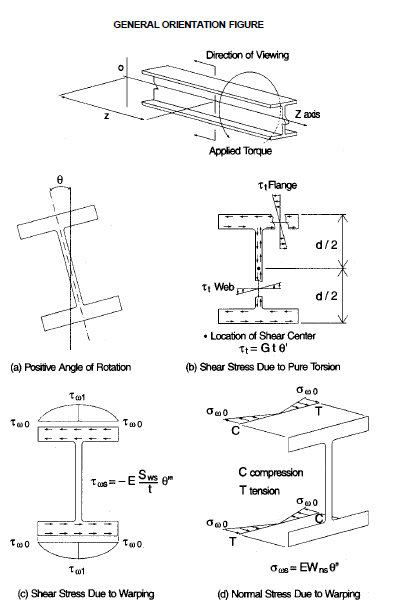
Figure 4.1 in AISC Steel Design Guide - Torsional Analysis of Structural Steel Members

Figure 4.1 in AISC Steel Design Guide - Torsional Analysis of Structural Steel Members


Figure 3.1.2.1-1 of (G13.1 Guidelines for Steel Girder Bridge Analysis, 2nd Ed.)

Figure 3.1.2.1-1 of (G13.1 Guidelines for Steel Girder Bridge Analysis, 2nd Ed.) Illustration of the general I-girder normal stresses, which can occur in a curved or skewed I-shaped girder.


Is Warping Calculated by Midas Civil Reliable? 


In order to have this checked, a sample calculation of a 15' fixed end cantilever (fixed for translation and rotations in all 6 DOF's in addition to the 7th DOF for warping) with a 6" eccentric end force of 15 kips was applied on W14x53. Warping was calculated using both midas and hand calculated utilizing the NZS 3404 Design for torsion chapter. Results were then compared. 


Hand Calculation: 
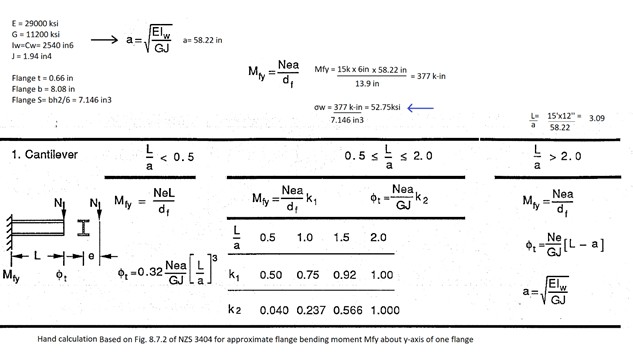
Hand Calculation: 


Midas: 

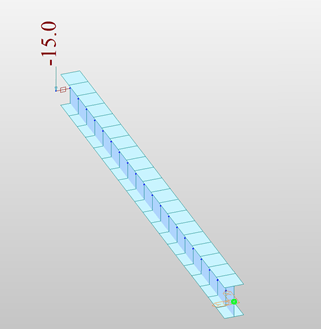
A 15' frame element with fixed ends and eccentric load of 15 kips

A 15' frame element with fixed ends and eccentric load of 15 kips


Torsion Diagram (kips-in)[1]

Torsion Diagram (kips-in)[2]

Torsion Diagram (kips-in)


Warping Stress Diagram (ksi)

Warping Stress Diagram (ksi)


Midas reported warping stress = 52.6 ksi Vs 52.75 ksi in hand calculations
Error = 0.3%
This concludes that warping stress results in midas Civil are reliable. 



About the Editor
Yazeed Abuhassan, P.E.
Structural Engineer at Bergmann PC (Rochester, NY)

He has Infrastructure structural engineer experience in both structural designs of bridges and dams, with both a bachelor's and master's degrees in civil engineering, emphasizing structural engineering. He is skilled in bridge design, dams experience, and curved and skewed steel bridges with complex geometries. He has spent a great deal of time trying to understand the engineering behind the results and the analysis performed on such bridges. He has worked on such bridges to perform construction stage analysis, static analysis, and load rating with moving load analysis using girders as frames with eccentric deck plates. He has also worked on different steel bridges (truss bridges, tied-arch bridges, and simple steel haunched bridges.

Subscribe to Newsletter

Catch the weekly engineer news!

What you may
also like