
Intro
Among the beautiful structures that exist worldwide, there are some really ancient ones. How were they designed to still stand today? How could such structures be built without complex mathematical formulas, before the development of science? Let's explore the answers through the examples of Göbekli Tepe, built 12,000 years ago, and Sainte-Chapelle, built in the 13th century.
*This blog post was inspired by the video "Building a Cathedral without Science or Mathematics" from the YouTube channel "engineerguy," operated by Bill Hammack.
Göbekli Tepe, built 12,000 years ago
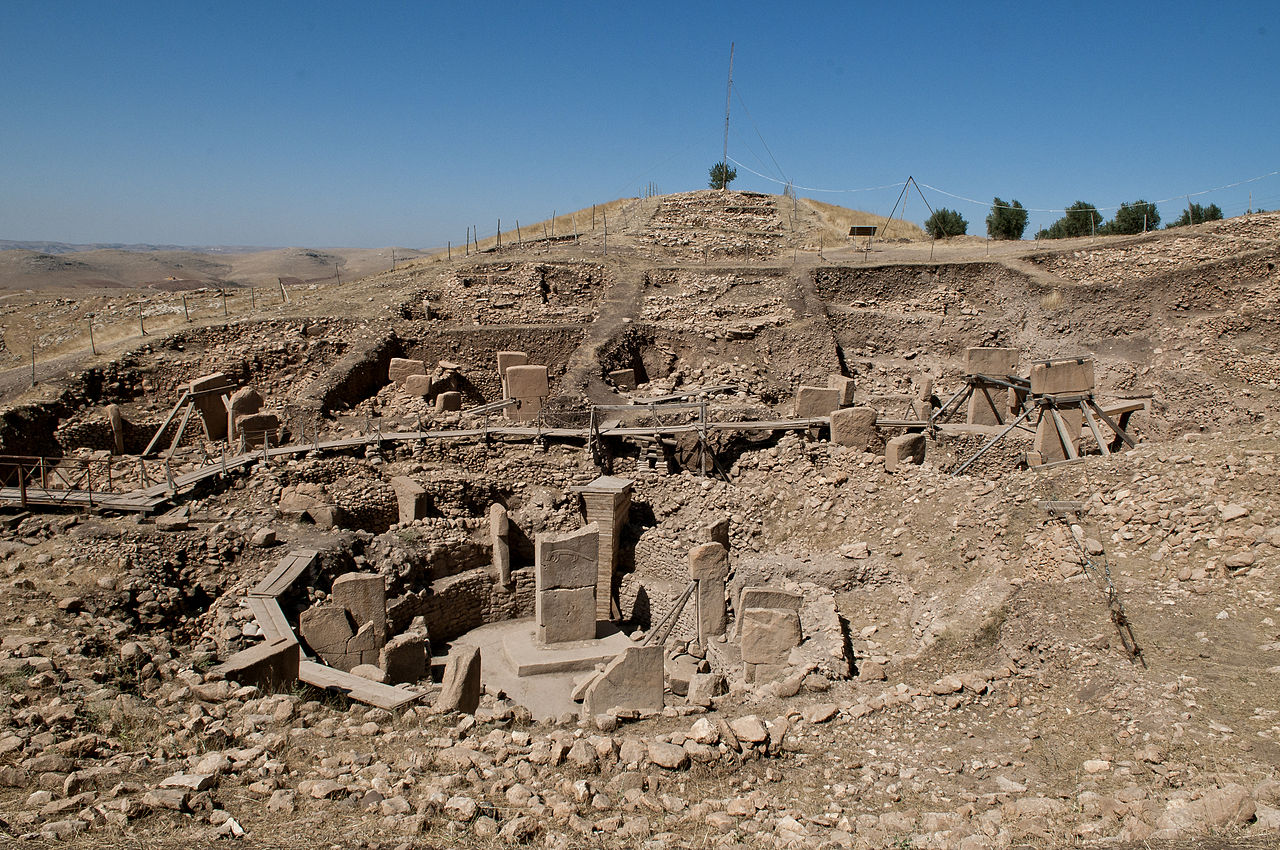 Göbekli Tepe, UNESCO World Heritage (c)Teomancimit
Göbekli Tepe, built around 9,000 BCE, is located in southeastern Türkiye and predates Stonehenge by 6,000 years and the first pyramid by 5,000 years. The massive T-shaped pillars are adorned with carvings of animals such as lions, bears, wild boars, lizards, spiders, and surprisingly, ducks. It is still unclear whether such decorations were created to worship supernatural beings or for the purpose of honoring ancestors.
One notable aspect is the precise arrangement of the rooms. When viewed from above, the pillars of two circular rooms are positioned on a line, and connecting the exact center between the pillars creates a perfect triangle. This triangle is nearly perfect with less than a 1.5% deviation. This is not a result of coincidence but rather a testament to humanity's engineering capabilities for thousands of years before the rise of science.
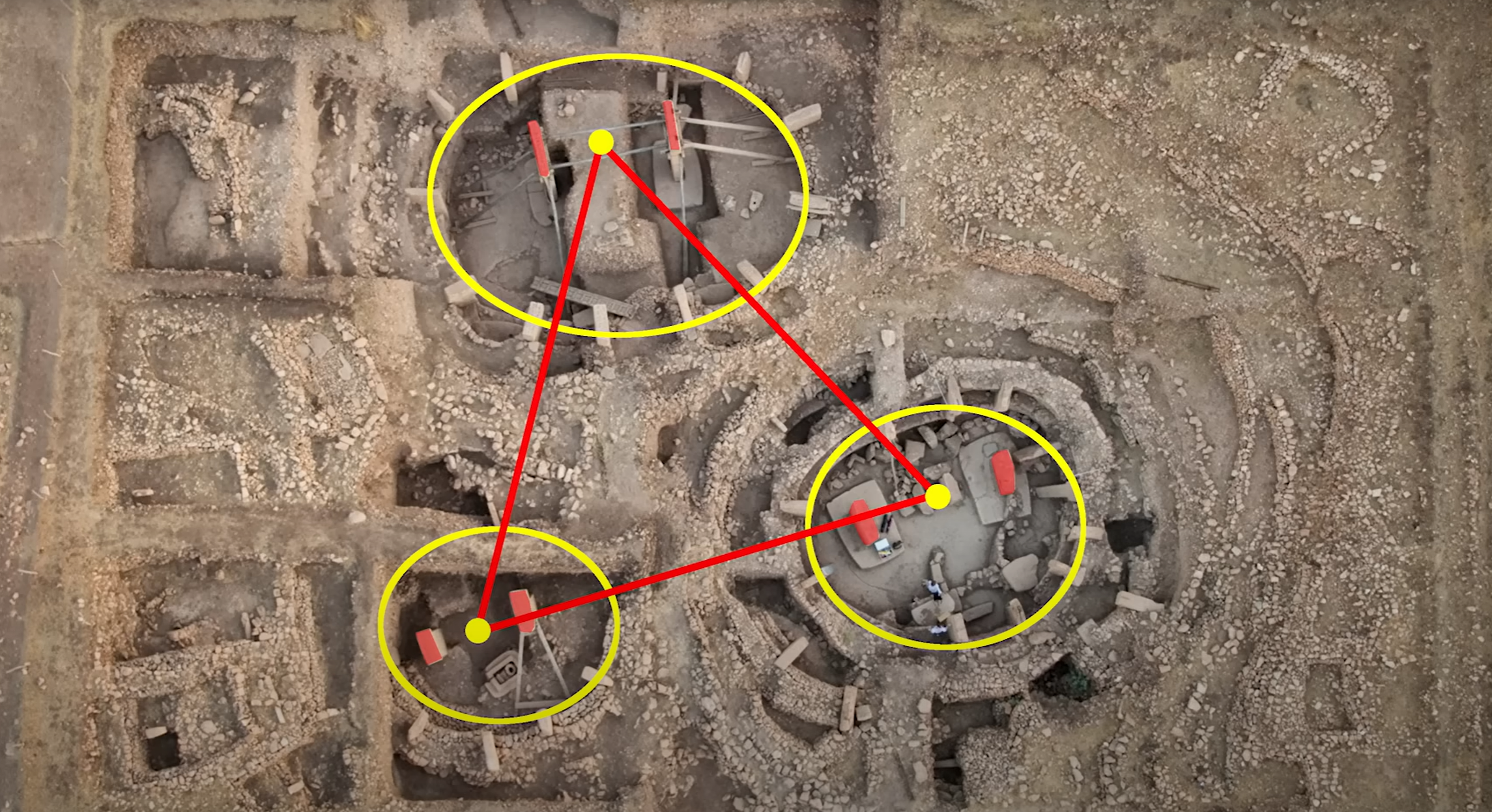 Connecting the points between the pillars of Göbekli Tepe forms an equilateral triangle.
Sainte-Chapelle, built in the 13th century
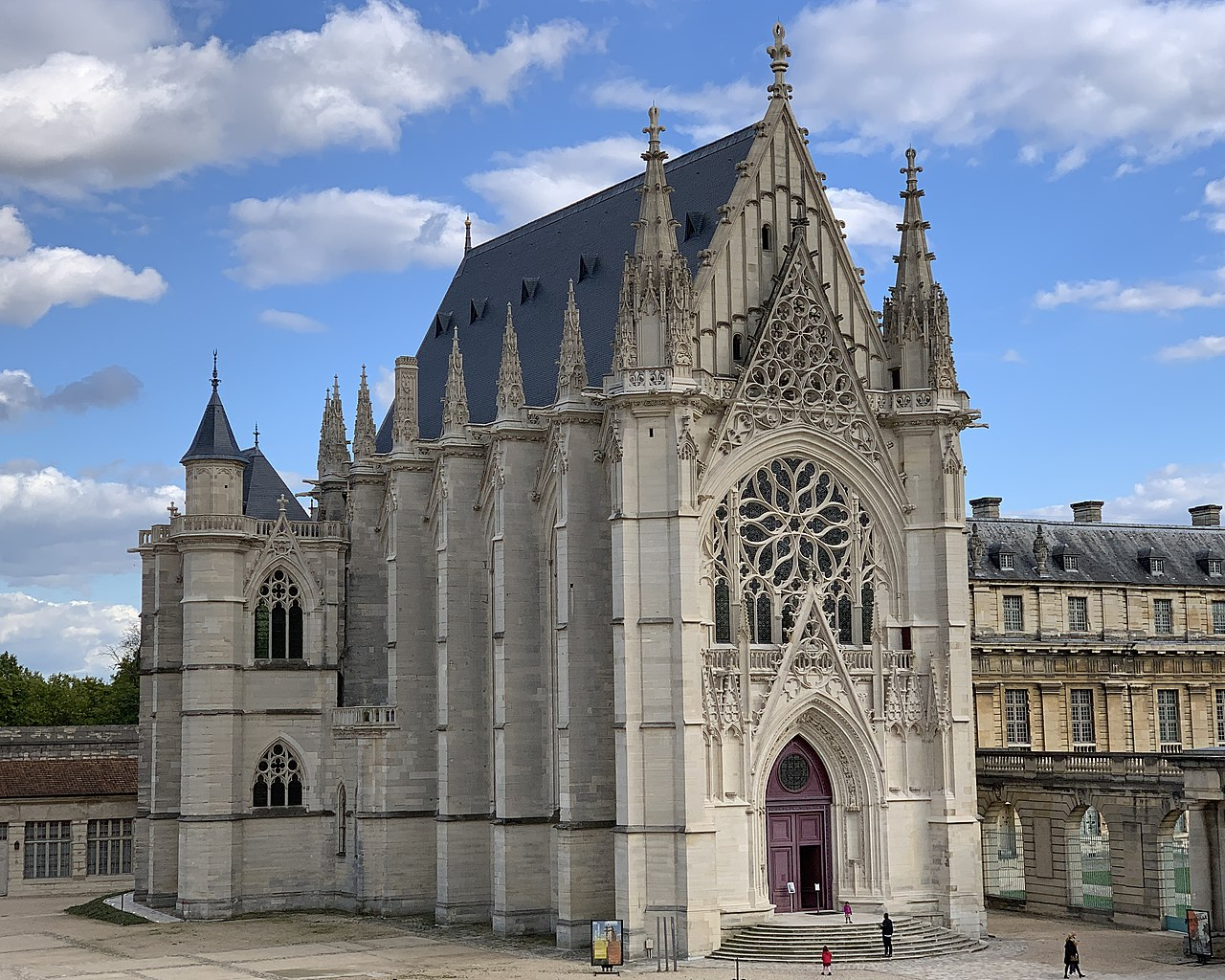 Sainte-Chapelle (C) 2020 Chabe01
Sainte-Chapelle is a prominent example of the late Gothic style with elaborate decorations. It was designed and constructed by a team without formal training in basic arithmetic or geometry. Engineers of the medieval era sought to express the spiritual realm through the stained glass windows of the building. How they created massive walls, and how did they achieve not only aesthetic beauty but also stability?
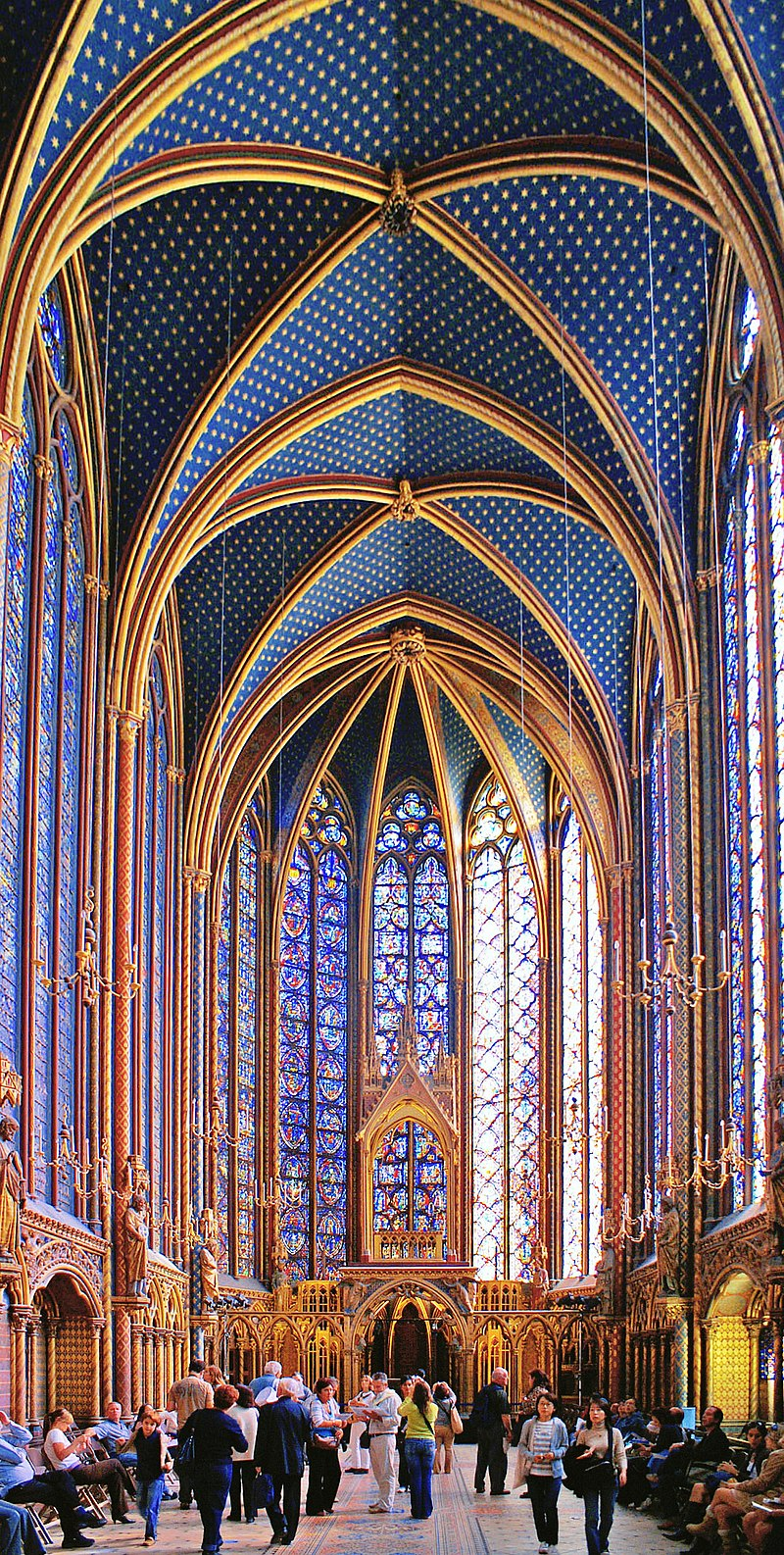 Sainte-Chapelle stained glass (c) 2005 Didier B
To support this magnificent arch, engineers of the medieval era had to correctly determine the thickness of the wall. If the wall were too thin, the weight of the arch would bend the wall, leading to the collapse of the structure. If it were too thick, it would result in wastage of stone, and the desired open space within the cathedral would be reduced. To determine the size of the wall, medieval architects used rules for creating stable arches, similar to those used in the construction of the Pantheon.
The thickness of a stable arch wall is between 1/4 and 1/5 of the arch length. In that era, masons used manual methods rather than mathematics to adjust the wall thickness. The following process allows for the determination of a stable wall thickness without mathematics.
First, create a line equal to the length of the arch and mark the 1/3 point. This divides the arch into three parts. Mark the divisions. Then, fix one end of the line at the marked point and securely fix the starting point of the arch. Extend the line straight down by the same length, and the point where it goes beyond the wall represents the thickness of the wall, which falls between 1/4 and 1/5 of the arch length. When applied to a model of the Sainte-Chapelle, it precisely matches.
You might wonder why the arch was divided into three parts to get a width from 1/4 to 1/5, but it doesn't matter how this works geometrically. What matters is that it works. Masons of that time may never have analyzed it, but it worked.
The relationship between engineering and science
Engineering and science are inseparable, but there is clearly a distinction between the two words. Science seeks to explain various phenomena occurring in nature through physical and chemical principles, while engineering focuses on creating new technologies and solving practical problems. Without science, engineering solutions cannot be proved, and without engineering, science remains confined to academic pursuit.
The above case is at the core of engineering. That rule is not the result of scientific analysis but have emerged from centuries of experience and trial and error. This is referred to as the 'Rule of Thumb' and more formally as 'heuristic.' The mason adjusted the wall's thickness in just a few minutes without understanding the basic properties of the stone. It cannot be said that what the mason did is not engineering just because he lacked a scientific background. Engineering is primarily about solving practical problems. This 'rule of thumb' allows for solving practical problems without scientific proof, but there is always a probability of failure. Therefore, we need to prove principles through science.
Conclusion
We have observed examples of engineering existing around 12,000 years ago and during the 13th century when science and mathematics were not sufficient. Today, hundreds of cathedrals built by engineering in the past still stand tall.
References
This post was inspired by the content of Bill Hammack, who operates the YouTube channel 'engineerguy,' specifically the video titled 'Building a Cathedral without Science or Mathematics: The Engineering Method Explained.' For more detailed information, please visit this link.
Boston University - Engineering Is Not Science
/Jegeon%20240_240.png)
Hello, I am Jegeon Ryu, a Project Manager responsible for developing MOTIVE for engineers dedicated to creating a safer and better world. During my two years of military service, I learned that creating a safer world is achievable through the sharing of technology and motivating each other. My goal is to contribute to the happiness of the world by creating a global platform that facilitates mutual knowledge sharing and growth.
Profile: Jegeon Ryu
※ If you click on the keywords below "Topics," you can view related contents.