Would you like to sign out?

Select Country

  • Afghanistan English
  • Albania English
  • Algeria English
  • American Samoa English
  • Andorra English
  • Angola English
  • Anguilla English
  • Antarctica English
  • Antigua and Barbuda English
  • Argentina Español
  • Armenia English
  • Aruba English
  • Australia English
  • Austria English
  • Azerbaijan English
  • Bahamas English
  • Bahrain English
  • Bangladesh English
  • Barbados English
  • Belarus English
  • Belgium English
  • Belize English
  • Benin English
  • Bermuda English
  • Bhutan English
  • Bolivia Español
  • Bosnia and Herzegovina English
  • Botswana English
  • Bouvet Island English
  • Brazil Español
  • British Indian Ocean Territory English
  • British Virgin Islands English
  • Brunei English
  • Bulgaria English
  • Burkina Faso English
  • Burundi English
  • Cambodia English
  • Cameroon English
  • Canada English
  • Cape Verde English
  • Caribbean Netherlands English
  • Cayman Islands English
  • Central African Republic English
  • Chad English
  • Chile Español
  • Christmas Island English
  • Cocos (Keeling) Islands English
  • Colombia Español
  • Comoros English
  • Congo English
  • Cook Islands English
  • Costa Rica Español
  • Côte d’Ivoire English
  • Croatia English
  • Cuba Español
  • Curaçao English
  • Cyprus English
  • Czech Republic English
  • Democratic Republic of the Congo English
  • Denmark English
  • Djibouti English
  • Dominica English
  • Dominican Republic Español
  • Ecuador Español
  • Egypt English
  • El Salvador Español
  • Equatorial Guinea English
  • Eritrea English
  • Estonia English
  • Ethiopia English
  • Falkland Islands English
  • Faroe Islands English
  • Fiji English
  • Finland English
  • France English
  • French Guiana Español
  • French Polynesia English
  • French Southern Territories English
  • Gabon English
  • Gambia English
  • Georgia English
  • Germany English
  • Ghana English
  • Gibraltar English
  • Greece English
  • Greenland English
  • Grenada English
  • Guadeloupe Español
  • Guam English
  • Guatemala Español
  • Guernsey English
  • Guinea English
  • Guinea-Bissau English
  • Guyana English
  • Haiti Español
  • Heard Island and McDonald Islands English
  • Honduras Español
  • Hong Kong English
  • Hungary English
  • Iceland English
  • India English
  • Indonesia English
  • Iran English
  • Iraq English
  • Ireland English
  • Isle of Man English
  • Israel English
  • Italy English
  • Jamaica English
  • Japan 日本語
  • Jersey English
  • Jordan English
  • Kazakhstan English
  • Kenya English
  • Kiribati English
  • South Korea 한국어
  • Kuwait English
  • Kyrgyzstan English
  • Laos English
  • Latvia English
  • Lebanon English
  • Lesotho English
  • Liberia English
  • Libya English
  • Liechtenstein English
  • Lithuania English
  • Luxembourg English
  • Macau English
  • Madagascar English
  • Malawi English
  • Malaysia English
  • Maldives English
  • Mali English
  • Malta English
  • Marshall Islands English
  • Martinique Español
  • Mauritania English
  • Mauritius English
  • Mayotte English
  • Mexico Español
  • Micronesia English
  • Moldova English
  • Monaco English
  • Mongolia English
  • Montenegro English
  • Montserrat English
  • Morocco English
  • Mozambique English
  • Myanmar English
  • Namibia English
  • Nauru English
  • Nepal English
  • Netherlands English
  • New Caledonia English
  • New Zealand English
  • Nicaragua Español
  • Niger English
  • Nigeria English
  • Niue English
  • Norfolk Island English
  • Northern Mariana Islands English
  • Norway English
  • Oman English
  • Pakistan English
  • Palau English
  • Palestine English
  • Panama Español
  • Papua New Guinea English
  • Paraguay Español
  • Peru Español
  • Philippines English
  • Pitcairn Islands English
  • Poland English
  • Portugal Español
  • Puerto Rico Español
  • Qatar English
  • Réunion English
  • Romania English
  • Russia English
  • Rwanda English
  • Saint Barthélemy Español
  • Saint Helena English
  • Saint Kitts and Nevis English
  • Saint Lucia English
  • Saint Martin Español
  • Saint Pierre and Miquelon English
  • Saint Vincent and the Grenadines English
  • Samoa English
  • San Marino English
  • Sao Tome and Principe English
  • Saudi Arabia English
  • Senegal English
  • Serbia English
  • Seychelles English
  • Sierra Leone English
  • Singapore English
  • Sint Maarten English
  • Slovakia English
  • Slovenia English
  • Solomon Islands English
  • Somalia English
  • South Africa English
  • South Georgia English
  • South Sudan English
  • Spain Español
  • Sri Lanka English
  • Sudan English
  • Suriname English
  • Svalbard and Jan Mayen English
  • Eswatini English
  • Sweden English
  • Switzerland English
  • Syria English
  • Taiwan English
  • Tajikistan English
  • Tanzania English
  • Thailand English
  • Togo English
  • Tokelau English
  • Tonga English
  • Trinidad and Tobago English
  • Tunisia English
  • Turkey English
  • Turkmenistan English
  • Turks and Caicos Islands English
  • Tuvalu English
  • U.S. Virgin Islands English
  • Uganda English
  • Ukraine English
  • United Arab Emirates English
  • United Kingdom English
  • United States of America English
  • U.S. Minor Outlying Islands English
  • Uruguay Español
  • Uzbekistan English
  • Vanuatu English
  • Vatican City English
  • Venezuela Español
  • Vietnam English
  • Wallis and Futuna English
  • Western Sahara English
  • Yemen English
  • Zambia English
  • Zimbabwe English
  • Åland Islands English
  • East Timor English
  • Netherlands Antilles English
  • Serbia and Montenegro English
  • North Macedonia English
  • Timor-Leste English
Bridge

Interesting History of Structural Engineering 1 - BC

Table of Contents Click the table of contents for details.


Intro


What is structural engineering? Before answering this question, let's first define what a structure is. The coffee shop, office building, and home you're reading this in—all of them are structures. Civil infrastructure like bridges and tunnels also fall under the category of structures. Structural engineering involves the analysis and design of structures to ensure their safety and efficiency, taking into account material properties, loading conditions, and structural stability. Therefore, structural engineering has played and will continue to play a crucial role in societal development and creating safe environments.


In this content, let's explore how structural engineering has evolved from ancient times to the present, highlighting important events, milestones, and key figures.


History of Structural Engineering Timeline 
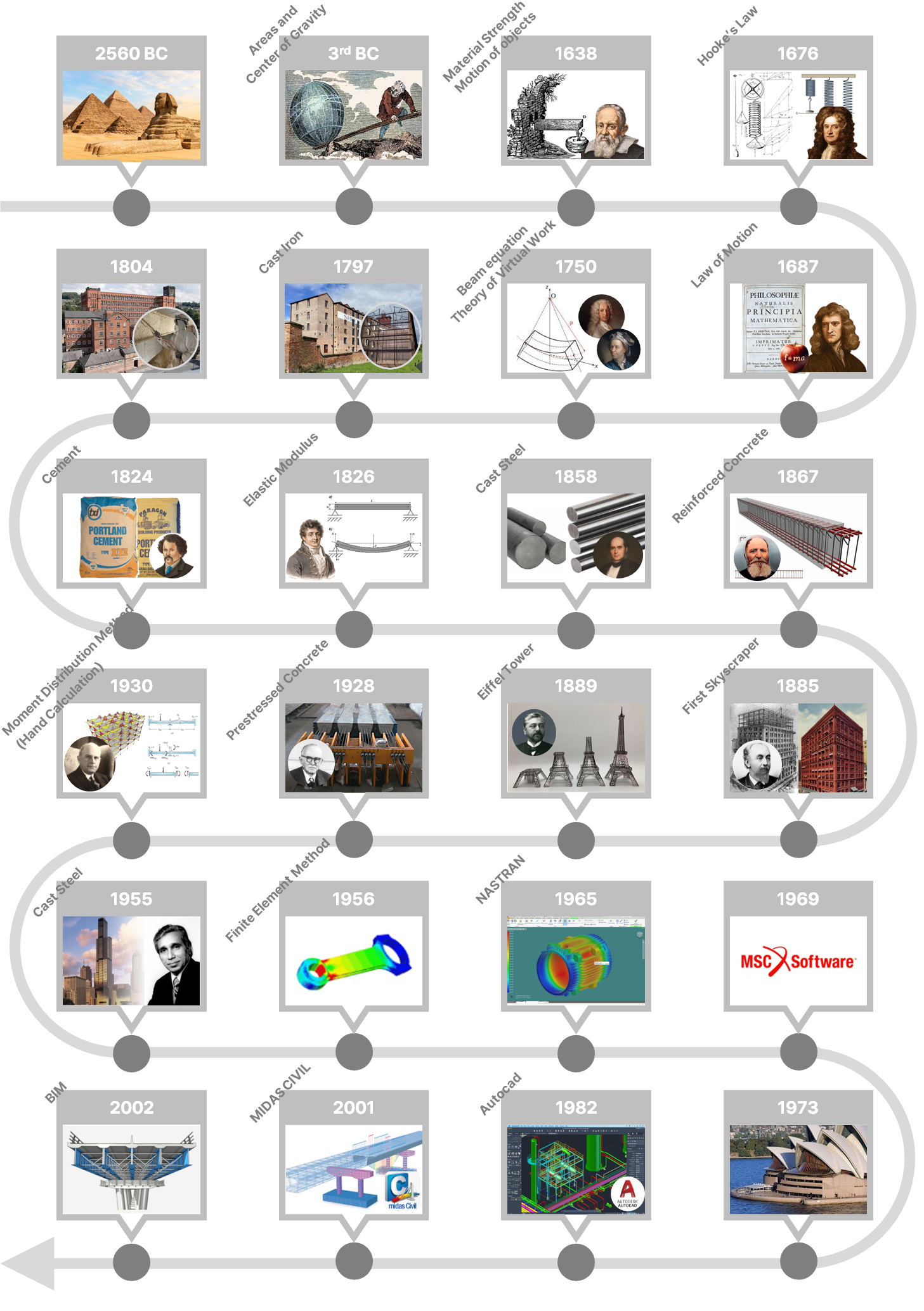
 

History of Structural Engineering Timeline History of Structural Engineering Timeline


1. BC


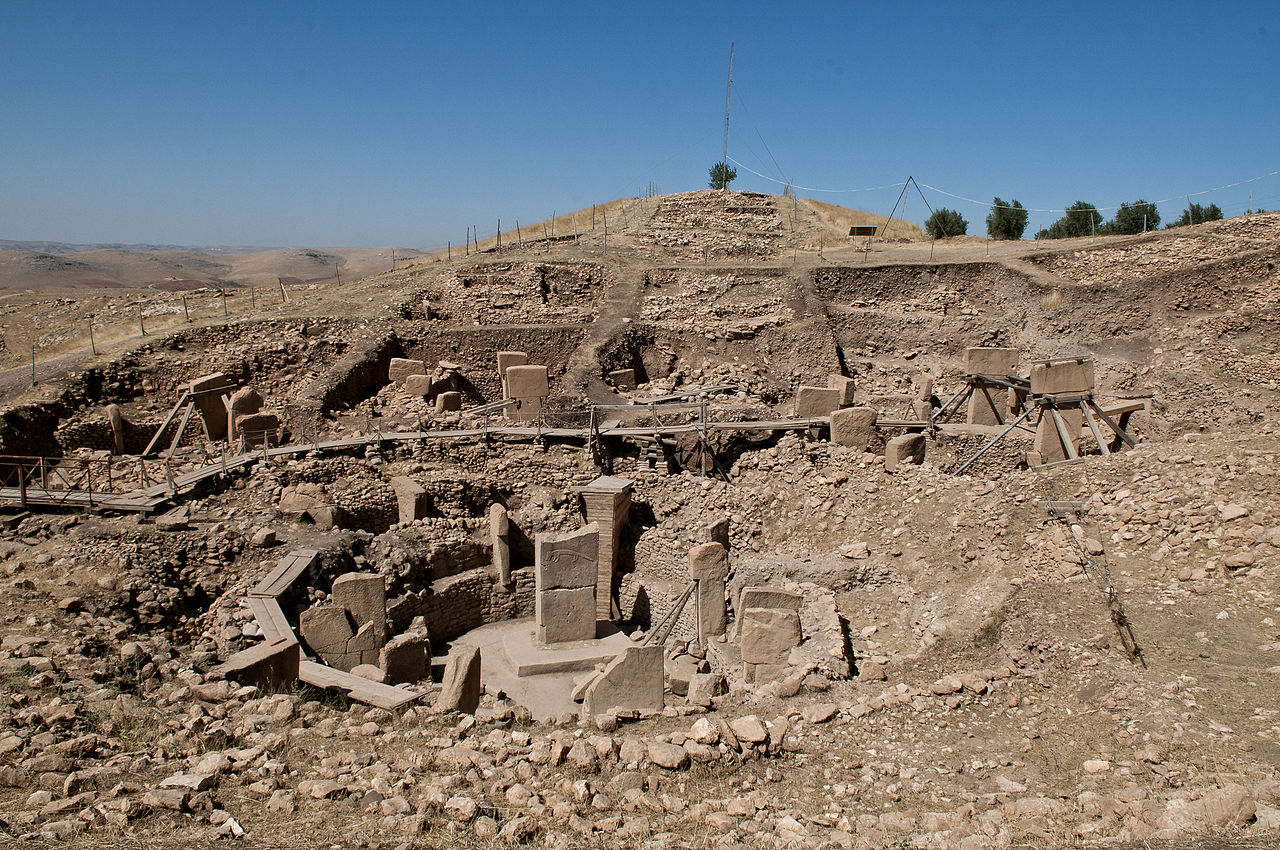
9500-8000 BC Göbekli Tepe | Türkiye
 

9500-8000 BC Göbekli Tepe

Göbekli Tepe


Göbekli Tepe is the oldest structure in the world that we have found to date, dating back to 9500-8000 BC. It's almost miraculous that anything has survived to this day. Göbekli Tepe is characterized by its stone pillars erected in circular patterns, with the tallest pillars reaching up to 5.5 meters. Each pillar weighs between 10-20 tons, and when viewed from above, the pillars form a perfect triangle, implying the existence of engineering even before the advancement of science over 12,000 years ago. For more information, refer to "Did Engineering exist before 12,000 years ago?"


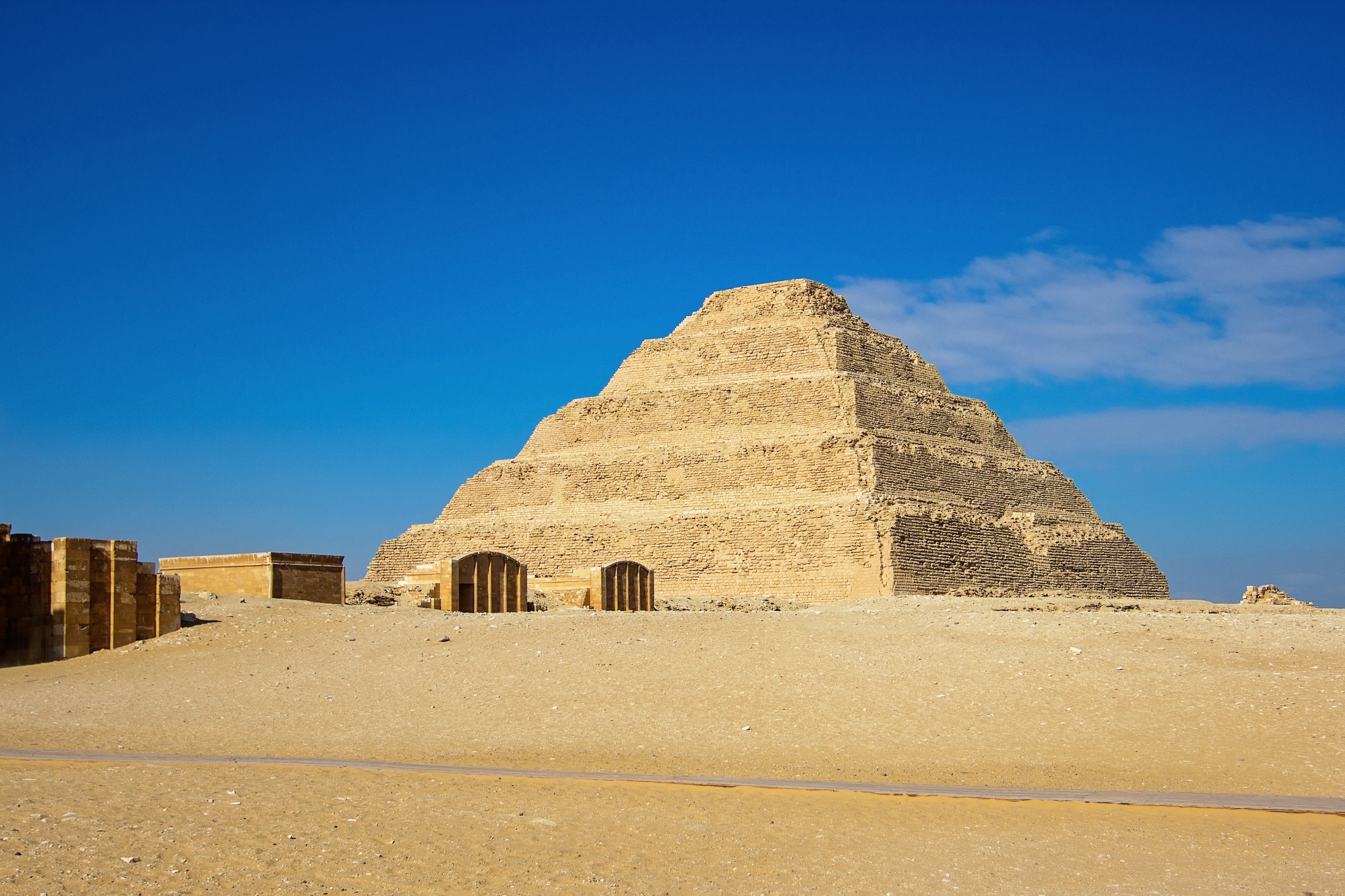
2700 BC Step Pyramid of Djoser | Imhotep
 

2700 BC Step Pyramid of Djoser

Step Pyramid of Djoser


Even if you haven't seen the pyramids in person, you've probably seen them in photos. These pyramids were built approximately 5000 years ago, and the reason you can see them in pictures or may have even visited them in person is that they were constructed very stably by Imhotep, the first-named architect in history. This pyramid is characterized by their step-like structure and are considered the oldest monumental stone structure in Egypt.


2560 BC The Great Pyramid of Giza | Hemiunu (presumed)

 

2560 BC The Great Pyramid of GizaThe Great Pyramid of Giza


Maybe this pyramid is the one we commonly know. The Great Pyramid of Giza stands as a defining symbol of Egypt and is the only Wonder that still exists among the ancient Seven Wonders of the World. The original height from the base to the peak was around 147 meters, and it It held the title of the tallest man-made structure for over 3,800 years until the construction of the Lincoln Cathedral in England in the early 14th century. Refer to this photo. It shows a comparison of the heights of major structures up to the mid-19th century.
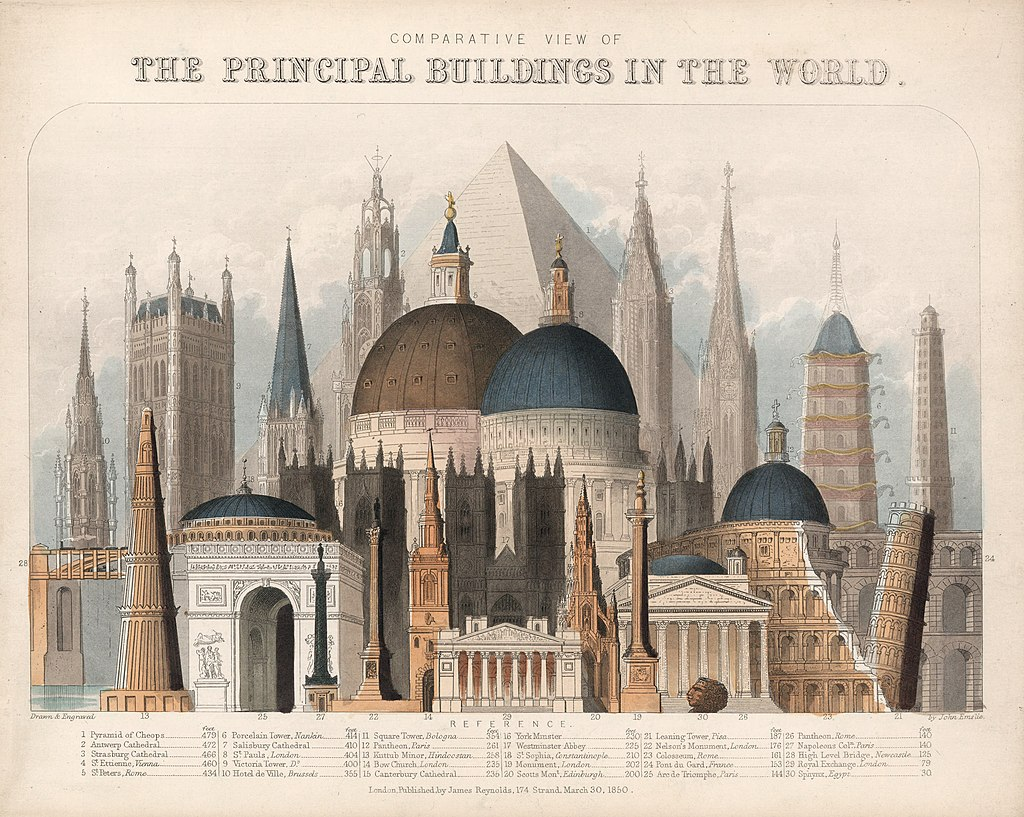
 

Comparative view of the principal buildings in the worldComparative view of the principal buildings in the world


3rd Century BC On the Equilibrium of Planes | Archimedes


3rd Century BC On the Equilibrium of Planes (c) mauritius imagesOn the Equilibrium of Planes (c) mauritius images


The understanding of the physical laws that underpin structural engineering in the Western world dates back to as early as the 3rd century BC. That's right, it's none other than the famous Archimedes. Archimedes published his work On the Equilibrium of Planes. This book includes not only the famous principle of the lever but also calculations on areas and centers of gravity of various geometric figures including triangles, paraboloids, and hemispheres, which underpin most of the mathematics and principles of structures in modern structural engineering.


1st BC De Architectura | Vitruvius
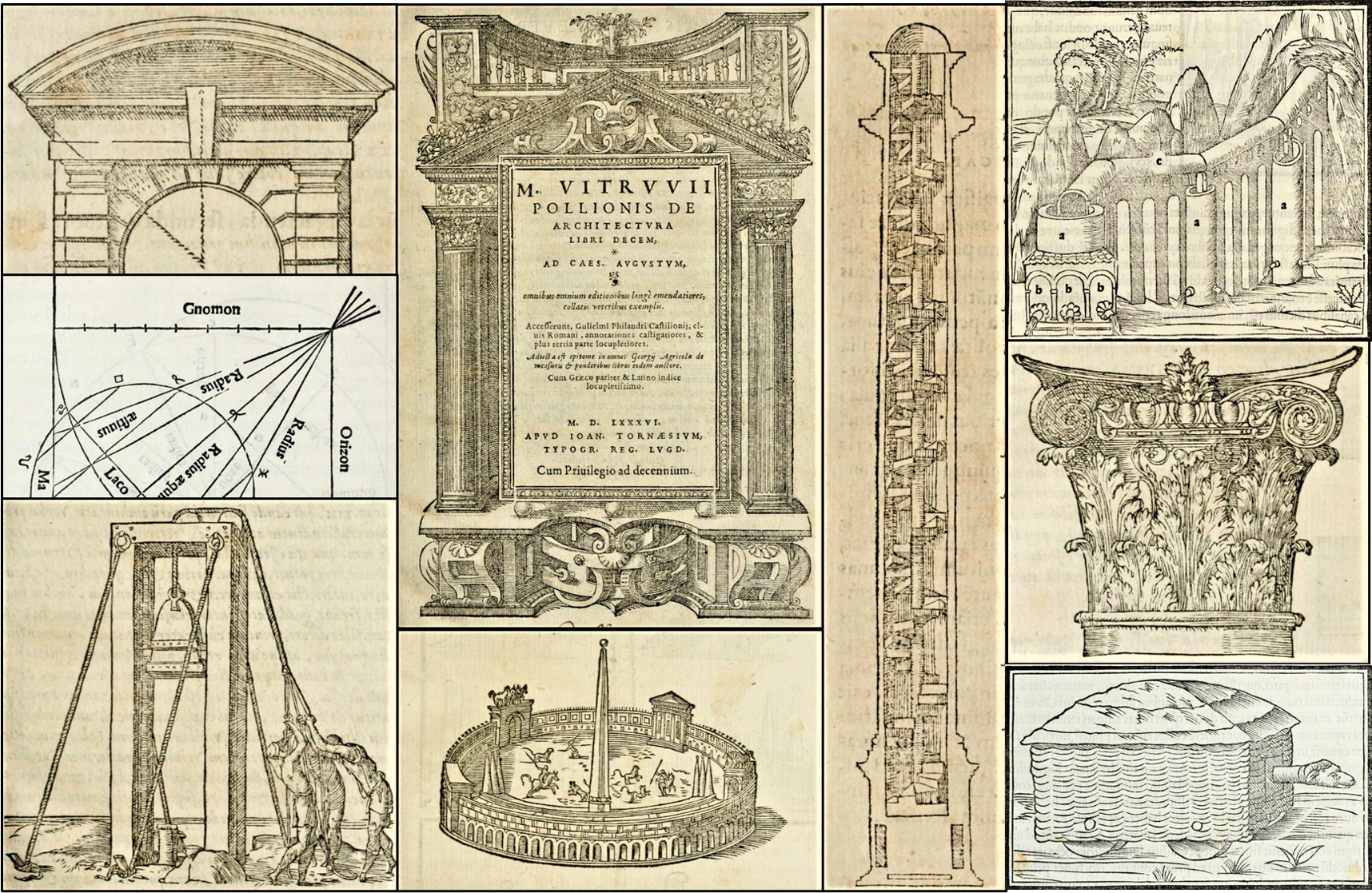
 

1st BC De ArchitecturaDe Architectura (source: Vitruvius on architecture | cabinet)


The techniques, materials, and equipment employed by the ancient Romans to construct aqueducts, thermae, columns, lighthouses, defensive walls, and harbors are documented by Vitruvius in his De Architectura. One of the most famous architectural structures is the Roman aqueduct bridge known as Pont du Gard. Thanks to the outstanding architectural technology of the time, this bridge has stood for over 2000 years without collapsing and was added to UNESCO's list of World Heritage sites in 1985.
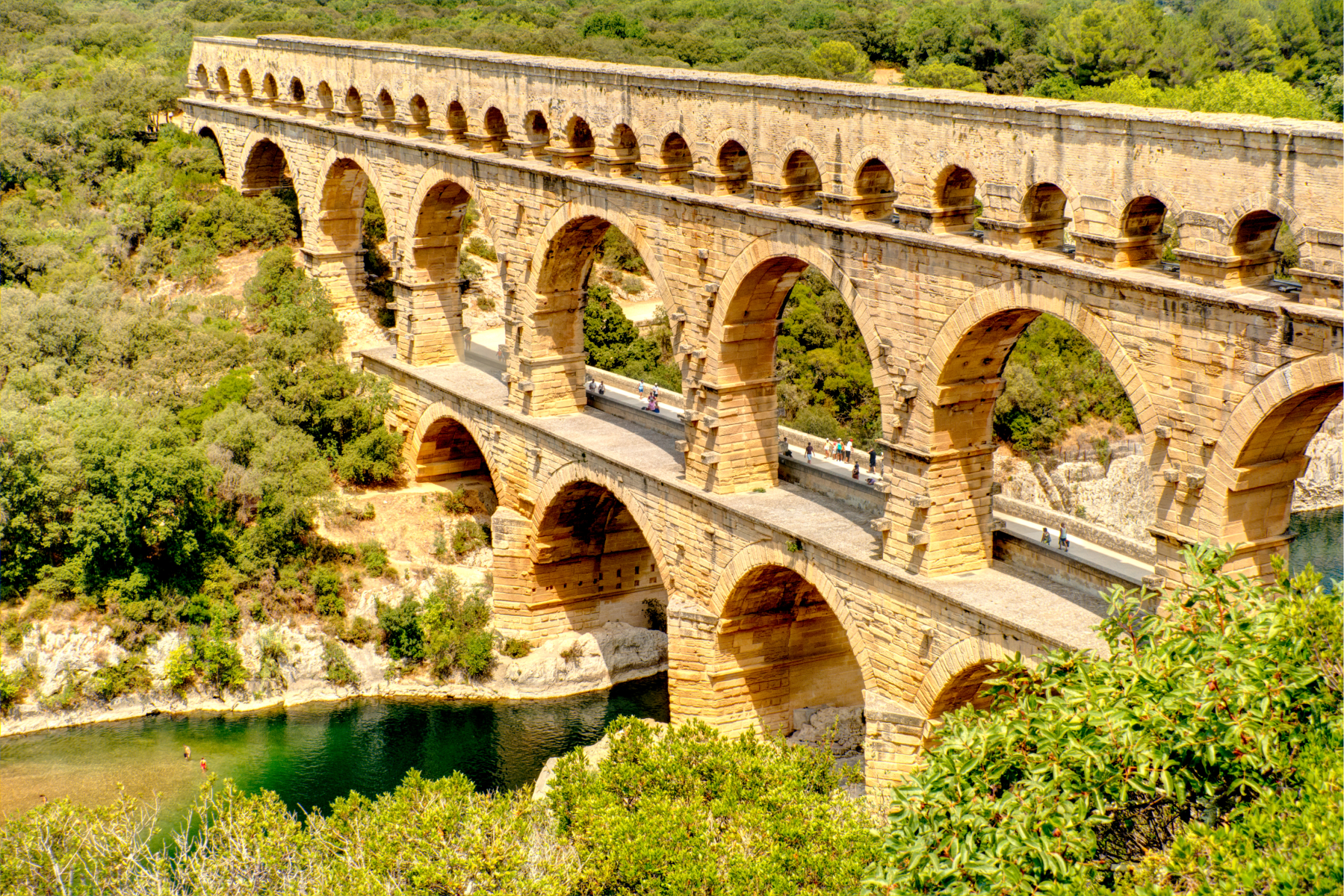
 

Pont du Gard Roman Aqueduct, France

Pont du Gard Roman Aqueduct, a notable ancient Roman engineering work constructed about 19 BCE


The post on the history of structural engineering after B.C. will be uploaded soon.


References

9500 BC Göbekli Tepe

-Dietrich, Oliver & Schmidt, Klaus. (2010). A Radiocarbon Date from the Wall Plaster of Enclosure D of Göbekli Tepe

-Did Engineering exist before 12,000 years ago?

2560 BC The Great Pyramid of Giza

-James Reynolds & John Emslie, Comparative view of the principal buildings in the world

3rd Century BC On the Equilibrium of Planes

-mauritius images, Image Number 06630196


Topics

#StructuralEngineering

#CivilEngineering

#Infrastructure

#Getmotivated


About the MOTIVATOR
Jegeon Ryu
Project Manager & Content Creator MOTIVE

Hello, I am Jegeon Ryu, a Project Manager responsible for developing MOTIVE for engineers dedicated to creating a safer and better world. During my two years of military service, I learned that creating a safer world is achievable through the sharing of technology and motivating each other. My goal is to contribute to the happiness of the world by creating a global platform that facilitates mutual knowledge sharing and growth.


Profile: Jegeon Ryu


※ Click on the keywords below 'Topics' to view related content.

Subscribe to Newsletter

Catch the weekly engineer news!

What you may
also like