Would you like to sign out?

Select Country

  • Afghanistan English
  • Albania English
  • Algeria English
  • American Samoa English
  • Andorra English
  • Angola English
  • Anguilla English
  • Antarctica English
  • Antigua and Barbuda English
  • Argentina Español
  • Armenia English
  • Aruba English
  • Australia English
  • Austria English
  • Azerbaijan English
  • Bahamas English
  • Bahrain English
  • Bangladesh English
  • Barbados English
  • Belarus English
  • Belgium English
  • Belize English
  • Benin English
  • Bermuda English
  • Bhutan English
  • Bolivia Español
  • Bosnia and Herzegovina English
  • Botswana English
  • Bouvet Island English
  • Brazil Español
  • British Indian Ocean Territory English
  • British Virgin Islands English
  • Brunei English
  • Bulgaria English
  • Burkina Faso English
  • Burundi English
  • Cambodia English
  • Cameroon English
  • Canada English
  • Cape Verde English
  • Caribbean Netherlands English
  • Cayman Islands English
  • Central African Republic English
  • Chad English
  • Chile Español
  • Christmas Island English
  • Cocos (Keeling) Islands English
  • Colombia Español
  • Comoros English
  • Congo English
  • Cook Islands English
  • Costa Rica Español
  • Côte d’Ivoire English
  • Croatia English
  • Cuba Español
  • Curaçao English
  • Cyprus English
  • Czech Republic English
  • Democratic Republic of the Congo English
  • Denmark English
  • Djibouti English
  • Dominica English
  • Dominican Republic Español
  • Ecuador Español
  • Egypt English
  • El Salvador Español
  • Equatorial Guinea English
  • Eritrea English
  • Estonia English
  • Ethiopia English
  • Falkland Islands English
  • Faroe Islands English
  • Fiji English
  • Finland English
  • France English
  • French Guiana Español
  • French Polynesia English
  • French Southern Territories English
  • Gabon English
  • Gambia English
  • Georgia English
  • Germany English
  • Ghana English
  • Gibraltar English
  • Greece English
  • Greenland English
  • Grenada English
  • Guadeloupe Español
  • Guam English
  • Guatemala Español
  • Guernsey English
  • Guinea English
  • Guinea-Bissau English
  • Guyana English
  • Haiti Español
  • Heard Island and McDonald Islands English
  • Honduras Español
  • Hong Kong English
  • Hungary English
  • Iceland English
  • India English
  • Indonesia English
  • Iran English
  • Iraq English
  • Ireland English
  • Isle of Man English
  • Israel English
  • Italy English
  • Jamaica English
  • Japan 日本語
  • Jersey English
  • Jordan English
  • Kazakhstan English
  • Kenya English
  • Kiribati English
  • South Korea 한국어
  • Kuwait English
  • Kyrgyzstan English
  • Laos English
  • Latvia English
  • Lebanon English
  • Lesotho English
  • Liberia English
  • Libya English
  • Liechtenstein English
  • Lithuania English
  • Luxembourg English
  • Macau English
  • Madagascar English
  • Malawi English
  • Malaysia English
  • Maldives English
  • Mali English
  • Malta English
  • Marshall Islands English
  • Martinique Español
  • Mauritania English
  • Mauritius English
  • Mayotte English
  • Mexico Español
  • Micronesia English
  • Moldova English
  • Monaco English
  • Mongolia English
  • Montenegro English
  • Montserrat English
  • Morocco English
  • Mozambique English
  • Myanmar English
  • Namibia English
  • Nauru English
  • Nepal English
  • Netherlands English
  • New Caledonia English
  • New Zealand English
  • Nicaragua Español
  • Niger English
  • Nigeria English
  • Niue English
  • Norfolk Island English
  • Northern Mariana Islands English
  • Norway English
  • Oman English
  • Pakistan English
  • Palau English
  • Palestine English
  • Panama Español
  • Papua New Guinea English
  • Paraguay Español
  • Peru Español
  • Philippines English
  • Pitcairn Islands English
  • Poland English
  • Portugal Español
  • Puerto Rico Español
  • Qatar English
  • Réunion English
  • Romania English
  • Russia English
  • Rwanda English
  • Saint Barthélemy Español
  • Saint Helena English
  • Saint Kitts and Nevis English
  • Saint Lucia English
  • Saint Martin Español
  • Saint Pierre and Miquelon English
  • Saint Vincent and the Grenadines English
  • Samoa English
  • San Marino English
  • Sao Tome and Principe English
  • Saudi Arabia English
  • Senegal English
  • Serbia English
  • Seychelles English
  • Sierra Leone English
  • Singapore English
  • Sint Maarten English
  • Slovakia English
  • Slovenia English
  • Solomon Islands English
  • Somalia English
  • South Africa English
  • South Georgia English
  • South Sudan English
  • Spain Español
  • Sri Lanka English
  • Sudan English
  • Suriname English
  • Svalbard and Jan Mayen English
  • Eswatini English
  • Sweden English
  • Switzerland English
  • Syria English
  • Taiwan English
  • Tajikistan English
  • Tanzania English
  • Thailand English
  • Togo English
  • Tokelau English
  • Tonga English
  • Trinidad and Tobago English
  • Tunisia English
  • Turkey English
  • Turkmenistan English
  • Turks and Caicos Islands English
  • Tuvalu English
  • U.S. Virgin Islands English
  • Uganda English
  • Ukraine English
  • United Arab Emirates English
  • United Kingdom English
  • United States of America English
  • U.S. Minor Outlying Islands English
  • Uruguay Español
  • Uzbekistan English
  • Vanuatu English
  • Vatican City English
  • Venezuela Español
  • Vietnam English
  • Wallis and Futuna English
  • Western Sahara English
  • Yemen English
  • Zambia English
  • Zimbabwe English
  • Åland Islands English
  • East Timor English
  • Netherlands Antilles English
  • Serbia and Montenegro English
  • North Macedonia English
  • Timor-Leste English
Structure

The Blue Dot Effect: Why My Project Never Ends

Table of Contents Click the table of contents for details.

Intro


Have you ever felt like your structural Engineering Projects would never end? Or have you felt anxious at the end of engineering design, even though there were no errors? Have you ever experienced discovering minor errors as your engineering project approached the final stage? As you're finding yourself nearing the end of a project, you start to think, “Is the project good enough? Have I actually done enough? Are there any problems?” The cause may be more of a psychological phenomenon rather than a defect in the structure or the project itself. Let's explore the "Blue Dot Effect," which explains this issue as a psychological phenomenon. Let's drill down on it.


Prevalence-Induced Concept Change in Human Judgment
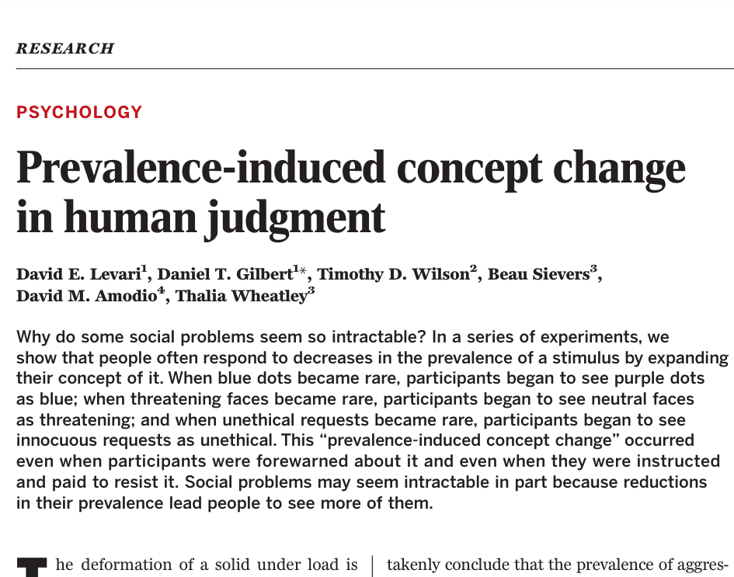
 

Abstract of the Research Prevalence-induced concept changeAbstract of the Research: Prevalence-induced concept change


A research team affiliated with Harvard University and other institutions published a paper in the scientific journal 'Science.' They revealed that the frequency at which problems arise is influenced by people's perceptions and judgments. The researchers coined the term 'Prevalence-Induced Concept Change' to describe this phenomenon, which is called the 'Blue Dot Effect' because one of the experiments conducted to demonstrate it used blue dots.


Experiment 1: Blue Dots
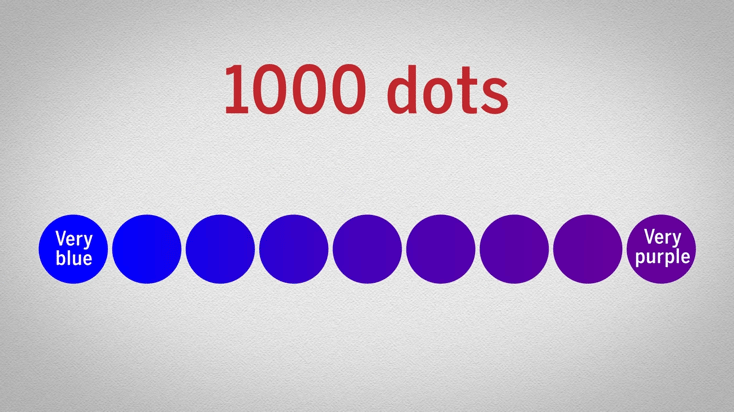
 

Are these dots purple or blueAre these dots purple or blue?


The experiment started off with a set of test subjects having to spot the number of blue dots on a page of different colors. You see, at the start, they had the equal number of dots, so it was quick and easy to spot the number of blue circles on the page. As the experiment progressed, the researchers gradually reduced the number of dots available for participants to choose from, until the number approached zero. The number of blue dots steadily dropped until the point that some participants were just shown shades of purple, not blue. Something that was counterintuitive, as the blue dots became rarer and rarer, the participants started detecting some of these shades of purple as blue, leading to a bigger and bigger error rate.


Even though the participants actually warned that the number of blue dots would drop, and they gave a $10 reward for encouraging them to detect the correct number. So, despite getting that warning and that clarification, they still detected the purple dots as blue.


Experiment 2: Mug shots


One follow-up experiment to see how it can actually affect the real world was showing people mug shots of threatening and non-threatening people. So again, starting off with an equal proportion where they made good predictions, then again warning them that the number of faces would reduce between you'd have more non-threatening people than threatening people. But over time, the same problem occurred where people's perception of what was threatening expanded with them seeing more and more error rate as the number of threatening people reduced in the series of mug shots that they were shown.


Conclusion


It's like a concrete creep. It occurs as a result of long-term exposure to high levels of stress. The Blue Dot Effect is a kind of 'concept creep.'
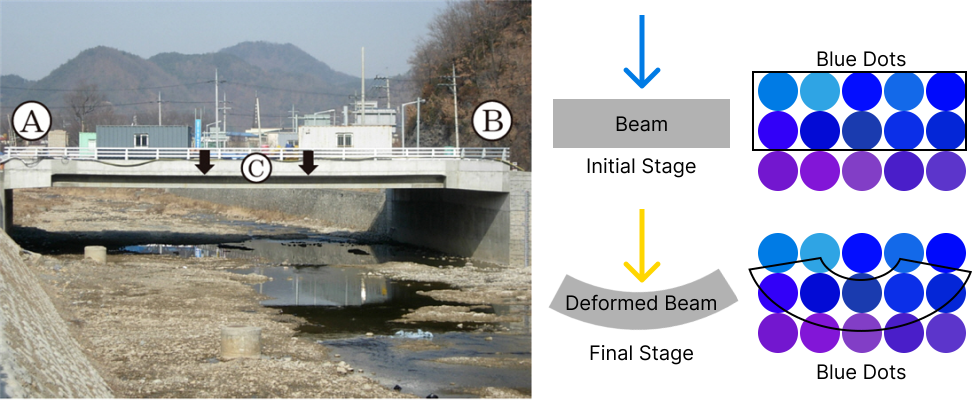
 

Concreate Creep and Concept Creep

Concrete creep and concept creep


As we're constantly trying to find things to do as the area starts to drop off, we start to see more and more things that we need to do that potentially don't even need to be done. And as experts, that's what we try to do. This is what we're trying to spot, those errors. Potentially what we're doing is spotting errors that aren't actually there and not real issues. The problem is that even though we know that the blue dots are decreasing, it's difficult for us to solve it ourselves. So, we may need objective reviews from people who haven't been exposed to this frequency.


References


This content is inspired by the YouTube content "An Endless Project: Structural Engineering Projects" by Brendan Hasty, a structural engineer with over 20 years of experience, who provides insights and motivation for structural engineers on his YouTube channel. If you'd like to check out his original youtube video, click here: An Endless Project: Structural Engineering Projects | The Issue


Science Magazine - Are these dots purple or blue? Your answer might not be as reliable as you think

Fig. Concrete creep and concept creep - www.inews365.com


Topics

#StructuralEngineering

#CivilEngineering

#Design

#Blue Dot Effect

#Getmotivated


About the MOTIVATOR
Jegeon Ryu
Project Manager & Content Creator MOTIVE

Hello, I am Jegeon Ryu, a Project Manager responsible for developing MOTIVE for engineers dedicated to creating a safer and better world. During my two years of military service, I learned that creating a safer world is achievable through the sharing of technology and motivating each other. My goal is to contribute to the happiness of the world by creating a global platform that facilitates mutual knowledge sharing and growth.


Profile: Jegeon Ryu


※ Click on the keywords below 'Topics' to view related content.

Subscribe to Newsletter

Catch the weekly engineer news!

What you may
also like