Would you like to sign out?

Select Country

  • Afghanistan English
  • Albania English
  • Algeria English
  • American Samoa English
  • Andorra English
  • Angola English
  • Anguilla English
  • Antarctica English
  • Antigua and Barbuda English
  • Argentina Español
  • Armenia English
  • Aruba English
  • Australia English
  • Austria English
  • Azerbaijan English
  • Bahamas English
  • Bahrain English
  • Bangladesh English
  • Barbados English
  • Belarus English
  • Belgium English
  • Belize English
  • Benin English
  • Bermuda English
  • Bhutan English
  • Bolivia Español
  • Bosnia and Herzegovina English
  • Botswana English
  • Bouvet Island English
  • Brazil Español
  • British Indian Ocean Territory English
  • British Virgin Islands English
  • Brunei English
  • Bulgaria English
  • Burkina Faso English
  • Burundi English
  • Cambodia English
  • Cameroon English
  • Canada English
  • Cape Verde English
  • Caribbean Netherlands English
  • Cayman Islands English
  • Central African Republic English
  • Chad English
  • Chile Español
  • Christmas Island English
  • Cocos (Keeling) Islands English
  • Colombia Español
  • Comoros English
  • Congo English
  • Cook Islands English
  • Costa Rica Español
  • Côte d’Ivoire English
  • Croatia English
  • Cuba Español
  • Curaçao English
  • Cyprus English
  • Czech Republic English
  • Democratic Republic of the Congo English
  • Denmark English
  • Djibouti English
  • Dominica English
  • Dominican Republic Español
  • Ecuador Español
  • Egypt English
  • El Salvador Español
  • Equatorial Guinea English
  • Eritrea English
  • Estonia English
  • Ethiopia English
  • Falkland Islands English
  • Faroe Islands English
  • Fiji English
  • Finland English
  • France English
  • French Guiana Español
  • French Polynesia English
  • French Southern Territories English
  • Gabon English
  • Gambia English
  • Georgia English
  • Germany English
  • Ghana English
  • Gibraltar English
  • Greece English
  • Greenland English
  • Grenada English
  • Guadeloupe Español
  • Guam English
  • Guatemala Español
  • Guernsey English
  • Guinea English
  • Guinea-Bissau English
  • Guyana English
  • Haiti Español
  • Heard Island and McDonald Islands English
  • Honduras Español
  • Hong Kong English
  • Hungary English
  • Iceland English
  • India English
  • Indonesia English
  • Iran English
  • Iraq English
  • Ireland English
  • Isle of Man English
  • Israel English
  • Italy English
  • Jamaica English
  • Japan 日本語
  • Jersey English
  • Jordan English
  • Kazakhstan English
  • Kenya English
  • Kiribati English
  • South Korea 한국어
  • Kuwait English
  • Kyrgyzstan English
  • Laos English
  • Latvia English
  • Lebanon English
  • Lesotho English
  • Liberia English
  • Libya English
  • Liechtenstein English
  • Lithuania English
  • Luxembourg English
  • Macau English
  • Madagascar English
  • Malawi English
  • Malaysia English
  • Maldives English
  • Mali English
  • Malta English
  • Marshall Islands English
  • Martinique Español
  • Mauritania English
  • Mauritius English
  • Mayotte English
  • Mexico Español
  • Micronesia English
  • Moldova English
  • Monaco English
  • Mongolia English
  • Montenegro English
  • Montserrat English
  • Morocco English
  • Mozambique English
  • Myanmar English
  • Namibia English
  • Nauru English
  • Nepal English
  • Netherlands English
  • New Caledonia English
  • New Zealand English
  • Nicaragua Español
  • Niger English
  • Nigeria English
  • Niue English
  • Norfolk Island English
  • Northern Mariana Islands English
  • Norway English
  • Oman English
  • Pakistan English
  • Palau English
  • Palestine English
  • Panama Español
  • Papua New Guinea English
  • Paraguay Español
  • Peru Español
  • Philippines English
  • Pitcairn Islands English
  • Poland English
  • Portugal Español
  • Puerto Rico Español
  • Qatar English
  • Réunion English
  • Romania English
  • Russia English
  • Rwanda English
  • Saint Barthélemy Español
  • Saint Helena English
  • Saint Kitts and Nevis English
  • Saint Lucia English
  • Saint Martin Español
  • Saint Pierre and Miquelon English
  • Saint Vincent and the Grenadines English
  • Samoa English
  • San Marino English
  • Sao Tome and Principe English
  • Saudi Arabia English
  • Senegal English
  • Serbia English
  • Seychelles English
  • Sierra Leone English
  • Singapore English
  • Sint Maarten English
  • Slovakia English
  • Slovenia English
  • Solomon Islands English
  • Somalia English
  • South Africa English
  • South Georgia English
  • South Sudan English
  • Spain Español
  • Sri Lanka English
  • Sudan English
  • Suriname English
  • Svalbard and Jan Mayen English
  • Eswatini English
  • Sweden English
  • Switzerland English
  • Syria English
  • Taiwan English
  • Tajikistan English
  • Tanzania English
  • Thailand English
  • Togo English
  • Tokelau English
  • Tonga English
  • Trinidad and Tobago English
  • Tunisia English
  • Turkey English
  • Turkmenistan English
  • Turks and Caicos Islands English
  • Tuvalu English
  • U.S. Virgin Islands English
  • Uganda English
  • Ukraine English
  • United Arab Emirates English
  • United Kingdom English
  • United States of America English
  • U.S. Minor Outlying Islands English
  • Uruguay Español
  • Uzbekistan English
  • Vanuatu English
  • Vatican City English
  • Venezuela Español
  • Vietnam English
  • Wallis and Futuna English
  • Western Sahara English
  • Yemen English
  • Zambia English
  • Zimbabwe English
  • Åland Islands English
  • East Timor English
  • Netherlands Antilles English
  • Serbia and Montenegro English
  • North Macedonia English
  • Timor-Leste English
Structure

3D Printer builds House

Table of Contents Click the table of contents for details.

Intro


When was the first 3D Printer invented? The first 3D printer patent was submitted to Denmark on July 12, 1967, by American graduate student Wyn Kelly Swainson. 3D printed construction technology has been advancing, reaching a point where it is now possible to construct buildings exceeding 1,000 square meters. In this content, I aim to introduce cases of construction using 3D printers and the trends in technological development in this field.


2 Types of 3D Concrete Printing Methods


The concrete used in 3D printing differs from conventional concrete in that it possesses a high point density and a pseudo-solid nature with minimal flowability. This characteristic allows it to maintain the shape coming out of the nozzle through extrusion, enabling the stacking of layers. Two representative types of 3D printers that implement this process are as follows.


1. Gantry Printer

 

Gantry 3D Concrete PrinterGantry 3D Concrete Printer


The most popular type of 3D concrete printing robots are gantry robots, which are made up of a mobile gantry system with mixing and deposition equipment. These can be large-scale printers for printing full components or buildings, or they can be small lab models. Although these printers are usually only able to print vertical extrusions, they have the advantage of being quite stable and easily scalable for larger projects.


2. Robotic Arm
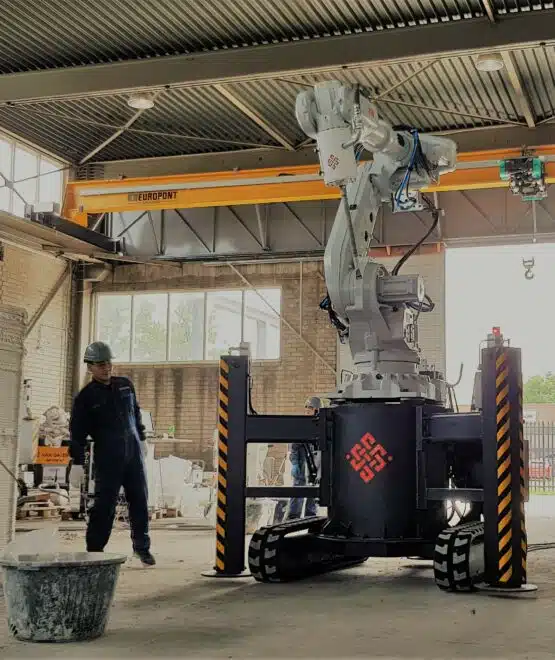
 

Robotic Arm 3D Concrete PrinterRobotic Arm 3D Concrete Printer (Source : www.cybe.eu)


This type of printer is more suitable for printing complicated shapes due to its higher degree of freedom. However, its drawback lies in its limited range, making it most commonly used for small-scale applications.


Now, let's explore cases where 3D concrete printing has been applied in construction, in chronological order. Through this, we can observe the initial implementations and the current developed state.


2015 World's first 3D printed apartment building
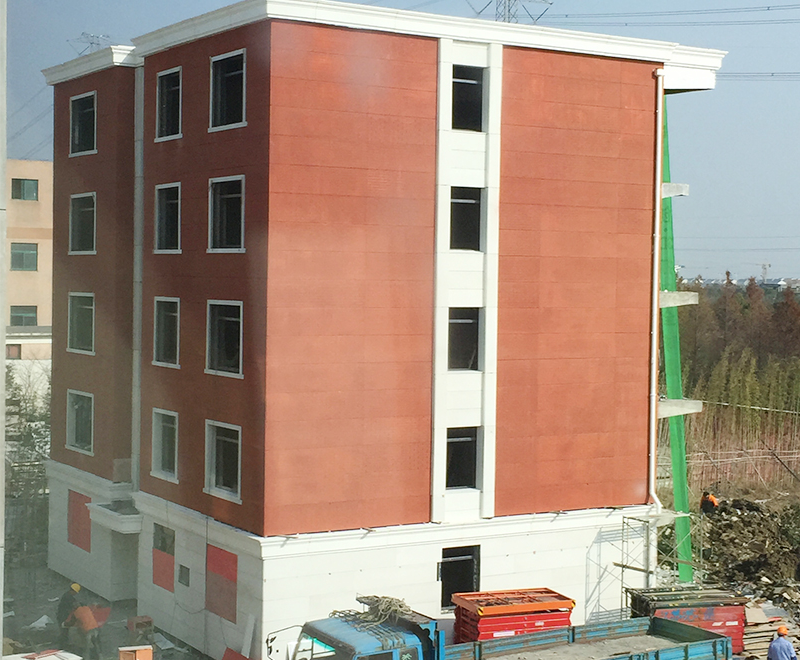
 

Worlds first 3D-printed apartment buildingWorld's first 3D printed apartment building (Source : www.winsun3d.com)


In 2015, the Chinese company WinSun successfully constructed a 3D printed 5-story apartment building. Unlike contemporary method of 3D concrete printing, which is continuous construction without assembly, this building was constructed in an assembly form, where each component was 3D printed and then assembled. According to WinSun's claims, 3D printing construction can save between 30 and 60 percent of construction materials, reduce construction time by 50 to 70 percent, and cut labor costs by 50 up to even 80 percent. However, it is important to note that these claims lack supporting evidence, so they should be considered for reference only.


2016 World's first 3D printed Office building

 

Worlds first 3D-printed Office buildingWorld's first 3D printed Office building (Source : www.guinnessworldrecords.com)


The first 3D printed commercial building was achieved by Dubai Future Foundation. The construction of the 36.57 meters (120 feet) long building took only 17 days.The government of Dubai declared that 3D printing, which is more environmentally friendly, will be used in the upcoming construction. Dubai has announced plans to construct 25% of its new buildings with 3D printing by 2030.


2017 World’s largest 3D printed two-story building
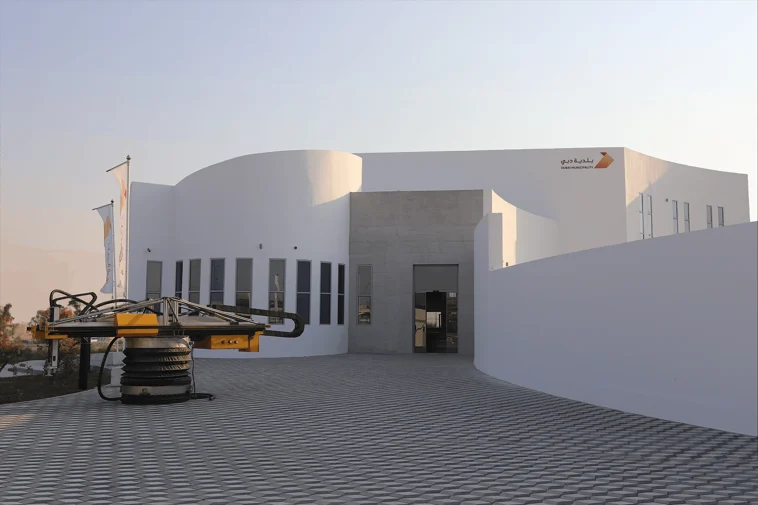
 

Worlds largest 3D printed two-story buildingWorld's largest 3D printed two-story building (Source : www.apis-cor.com)


The government of Dubai achieved another milestone for 3D printing in construction. The building spans 640 square meters and has a height of 9.5 meters. Apis Cor's robotic arm like-3D printer is used for the construction of this building.


2024 Europe's largest 3D printed building is completed
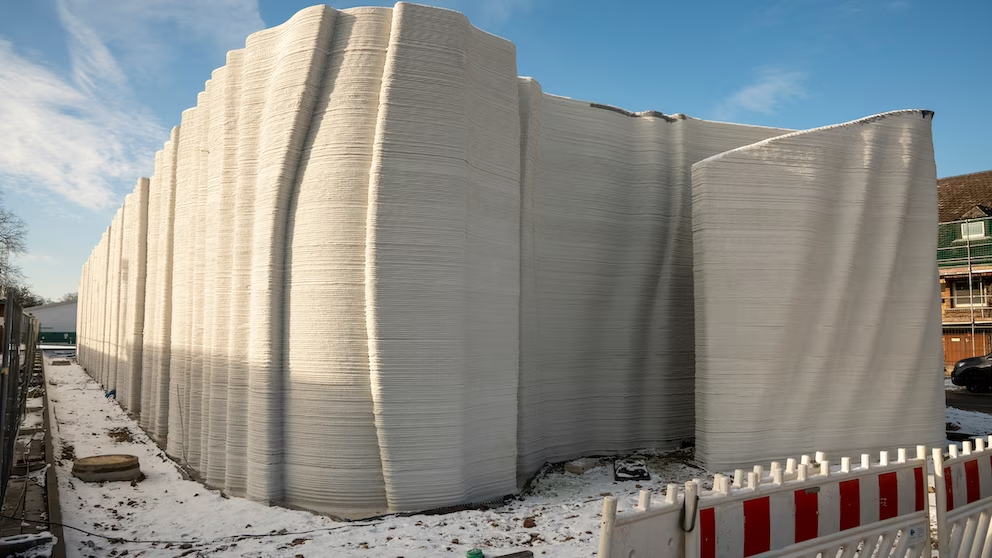
 

Europes largest 3D printed building

Europe's largest 3D printed building (Source : www.myhomebook.de)


One of COBOD's 3D printers can build 4 square meters of wall per hour. That's how Europe's largest 3D printed building is fully constructed. Not only is the procedure quicker, but it also requires less labor and materials and is cleaner than traditional building sites. It’s three times faster than conventional building. The construction process started in March 2023. The building is 54 meters long, 11 meters wide, and 9 meters high.


Advantages of a 3D Printed House


As seen in the above examples, 3D printers have advantages such as reducing construction time, minimizing industrial waste, and offering flexibility in design. However, the widespread adoption of 3D printing technology is hindered by high initial costs. The expense of purchasing or renting a 3D printer can be very substantial.

I think we will see more and more construction of buildings with 3D printers. It is rapidly moving out of the experimental phase and into the commercial market. In order to house the projected 3 billion people who will require access to appropriate housing by 2030, the UN Habitat estimates that 96,000 new affordable homes must be built worldwide each day. Maybe 3D printer can be a solution.


References


First 3D-printing patent | Guinness World Records

EUROPE’S LARGEST 3D PRINTED BUILDING IS BEING CONSTRUCTED IN GERMANY | COBOD

How Europe's biggest 3D-printed building is being constructed | DW

Yes, that 3D-printed mansion is safe to live in | The Washington Post


About the MOTIVATOR
Jegeon Ryu
Project Manager & Content Creator MOTIVE

Hello, I am Jegeon Ryu, a Project Manager responsible for developing MOTIVE for engineers dedicated to creating a safer and better world. During my two years of military service, I learned that creating a safer world is achievable through the sharing of technology and motivating each other. My goal is to contribute to the happiness of the world by creating a global platform that facilitates mutual knowledge sharing and growth.


Profile: Jegeon Ryu


※ If you click on the keywords below "Topics," you can view related contents.

Subscribe to Newsletter

Catch the weekly engineer news!

What you may
also like