Preview ended
Fill out the form to keep watching

Having trouble viewing the video?
Some regions or networks may restrict Vimeo playback.
AI Summary
- A MIDAS webinar session on the strengthening and retrofitting of existing masonry buildings, presented by Dr. Oğuz Uzdil.
- It follows a retrofit from deficiency assessment to FRP and TRM strengthening, then compares original and strengthened models to verify the intervention.
Chapters
Your submission has been
successfully received
If you meet the certification criteria,
Your Certificate of Completion will be sent to your email.
If you need urgent support, contact us via
here.
We truly appreciate your participation!

Open Access Has Ended
The open access period has ended.
If you have a MIDAS account, sign in
and complete the access form to watch this session.
Full access is one step away 👀
Complete a short form to continue
Benefit

Free Trial License
Official GEN NX License

Certificate
Issued upon session completion
Speaker
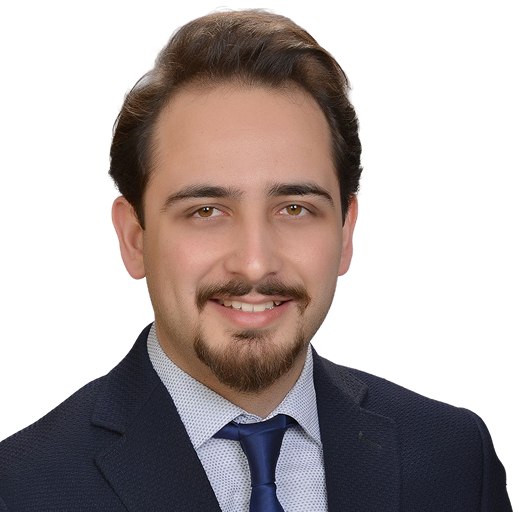
Oğuz Uzdil
Civil Engineer and Lecturer
Istanbul University
Dr. Oguz Uzdil is a civil engineer and lecturer at Istanbul Aydın University in Istanbul, Türkiye. He holds a PhD in Civil Engineering from Istanbul University. His research focuses on the seismic assessment and strengthening of masonry and historic structures, with particular expertise in finite-element modelling, performance-based evaluation, and linear and nonlinear structural analysis.
He has published extensively in international Q1 and Q2 journals, as well as in book chapters and conference proceedings. His work combines modal, response-spectrum and pushover analyses with practical numerical modelling, including case studies of traditional masonry buildings, historic schools, mosques, and timber–masonry structures.
He has published extensively in international Q1 and Q2 journals, as well as in book chapters and conference proceedings. His work combines modal, response-spectrum and pushover analyses with practical numerical modelling, including case studies of traditional masonry buildings, historic schools, mosques, and timber–masonry structures.
