Deep Urban Excavation Analysis and
Optimization in MIDAS GTS NX
Watch how a 24-profile staged excavation analysis in MIDAS GTS NX
validated and optimized a retaining system next to degraded neighboring structures —
cutting pile length by 23% and temporary steel by more than half, without relaxing a single deformation limit.
Deep excavation modelling, from a validated case study to a full 3D workflow
A residential complex in a dense urban area required a deep excavation immediately next to existing buildings already showing cracks, settlement and long-term degradation. This live session opens with how that retaining system was validated and optimized against strict deformation limits — 10 mm maximum horizontal displacement, 14 mm maximum settlement, 7 mm relative settlement — across 24 representative staged-construction profiles in MIDAS GTS NX.
The second part of the session builds on that foundation with a full 3D deep excavation workflow: geometry and ground conditions, staged construction, retaining wall and support modelling, and interpretation of deformation, stress, structural force and stability results.
WHO IT'S FOR
Geotechnical and structural engineers working on urban excavations near sensitive or vulnerable existing structures
FORMAT
Live technical webinar in two parts, with Q&A after each
SOFTWARE SHOWN
MIDAS GTS NX — 2D staged-construction and full 3D excavation analysis
FOCUS
Validating and optimizing a retaining system, then building and interpreting a complete 3D excavation model
What you'll take away
By the end of this live session, you'll understand how to validate, optimize and build deep excavation models in MIDAS GTS NX, with live Q&A after each speaker.
Reading deformation results against expert-assessment limits
Check horizontal pile displacement, ground settlement and relative settlement of neighboring foundations at every construction stage, not only the final configuration.
Turning validation results into an optimized design
See how profile-by-profile results were used to reduce pile length, concrete volume, reinforcement and temporary steel while keeping every deformation criterion satisfied.
Building an efficient 3D deep excavation model
Select appropriate soil and structural elements, and apply realistic boundary and groundwater conditions in a full 3D model.
Simulating and interpreting a full 3D excavation
Model retaining walls and support systems through construction-stage analysis, then interpret deformation, stress, structural force and stability results.
3 Highlights From The Model
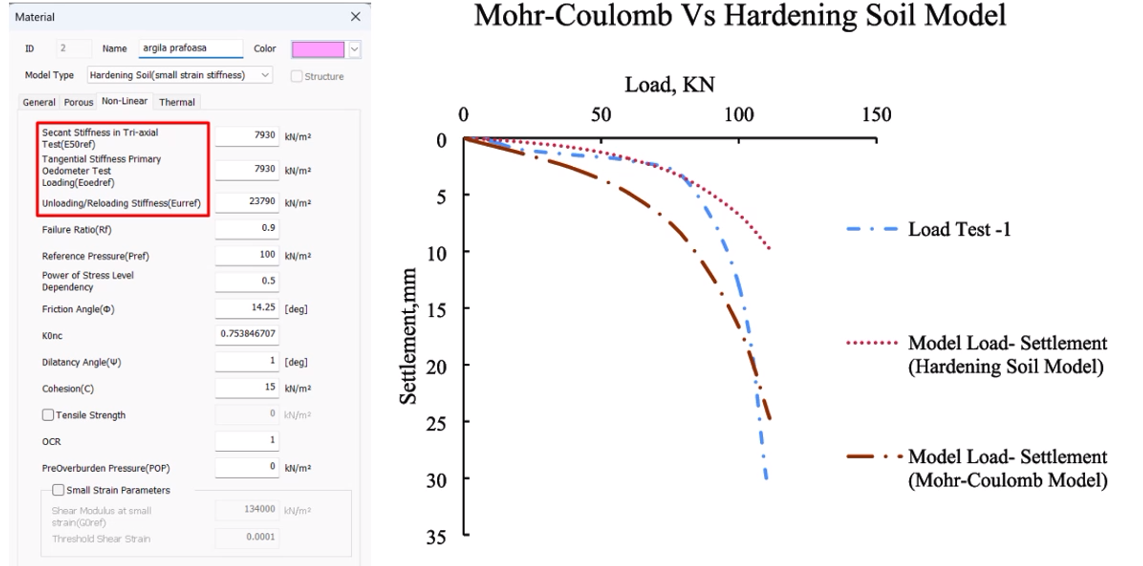
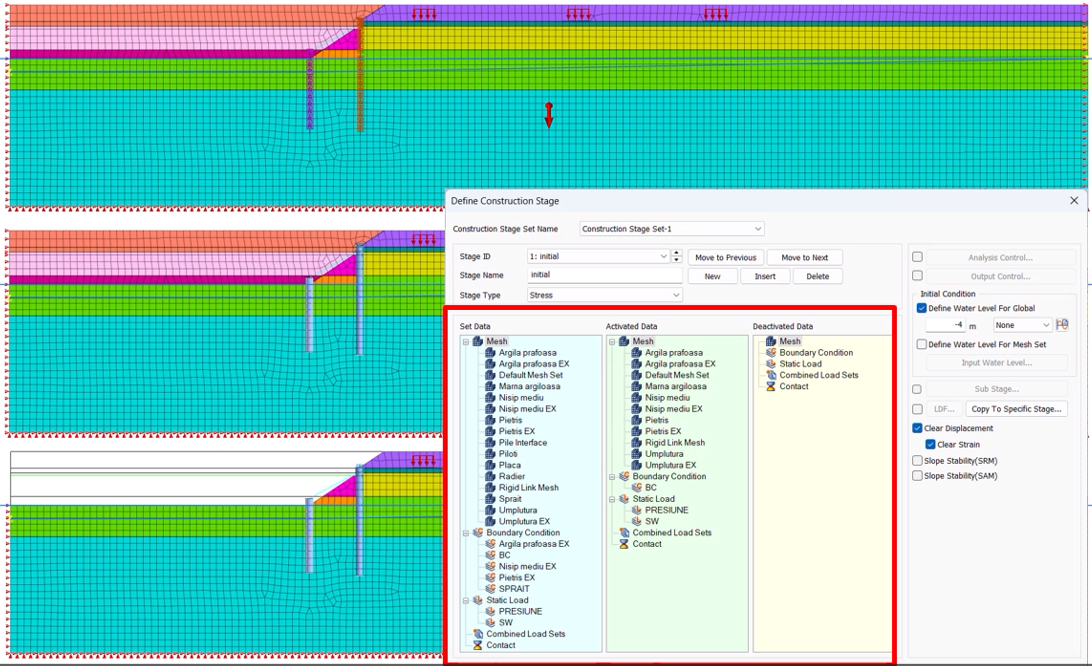
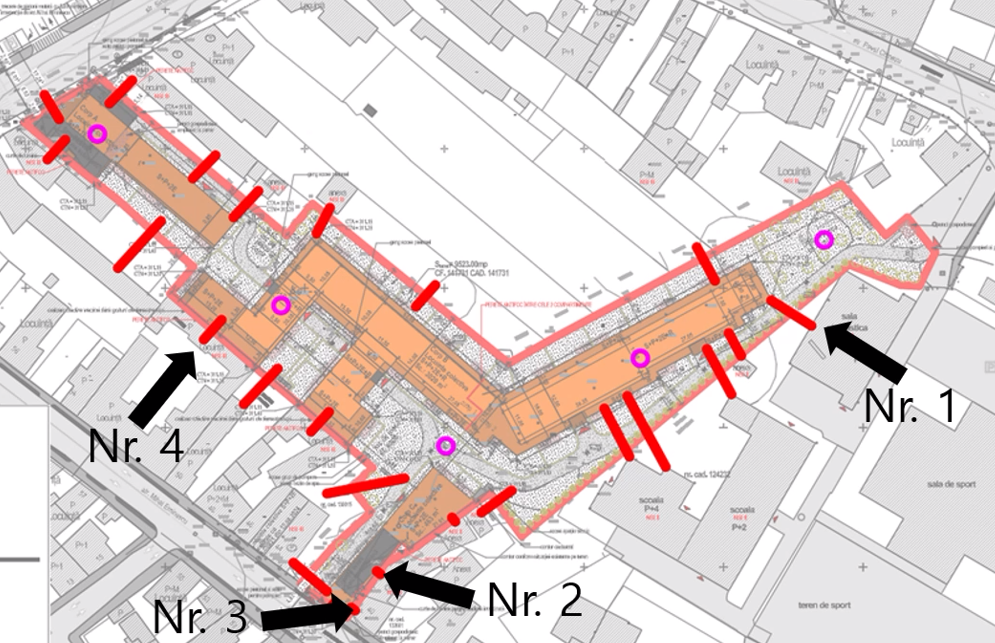
Multi-Profile Staged Modelling
24 distinct 2D profiles along the excavation perimeter, each reproducing its own soil stratification, groundwater level and neighboring geometry.
Soil-Structure Interaction & Dewatering
Interface elements between soil and retaining piles, combined with staged groundwater lowering, to capture the real transfer of stresses through each phase.
Design Optimization
Comparing the conservative initial retaining scheme against the staged-analysis result: 23% less pile length and over 55% less temporary steel, all within the imposed deformation limits.
Meet your speakers
%20Ionut.jpeg)
Ionuț Emil Iancu
Ionuț Emil Iancu is a structural engineer with extensive experience in the design and coordination of complex structural projects. He has contributed to the development of numerous projects across various sectors, including residential buildings, office buildings, public facilities, multi-purpose halls, swimming pools, and hospitals.
He holds a PhD in Civil Engineering, and his expertise focuses on reinforced concrete structures and geotechnical works, including special foundations, deep excavations, and retaining systems.

Rohith Swaminathan
Rohith is the Senior Geotechnical Engineer at MIDAS IT Europe. He has more than 3 years of experience in the geotechnical engineering industry, specialising in finite element modelling and analysis. Rohith brings a balanced perspective combining software expertise with industry experience in engineered ground solutions, enabling practical and technically robust modelling strategies.
As part of the technical team at MIDAS, Rohith has been involved in the continuous advancement of MIDAS GTS NX by translating complex engineering problems into efficient computational workflows and supporting consultants, contractors and researchers in delivering reliable and optimized design.
Two speakers, back to back
One continuous live session, run in two parts, with Q&A after each.
Deep Urban Excavation Analysis and Optimization in MIDAS GTS NX
A staged-construction case study validating and optimizing a retaining system next to structurally vulnerable neighboring buildings, across 24 representative profiles.
Ionuț Emil IancuQuestions on Session 1
3D Modelling and Analysis of Deep Excavation in MIDAS GTS NX
A comprehensive 3D finite element model of a deep excavation, from geometry and ground conditions through staged construction and interpretation of results.
Rohith SwaminathanQuestions on Session 2 & closing remarks
Save your seat for the live session
Join Ionuț Emil Iancu and Rohith Swaminathan for two live sessions on deep excavation analysis and 3D modelling in MIDAS GTS NX, on September 2, 2026.
