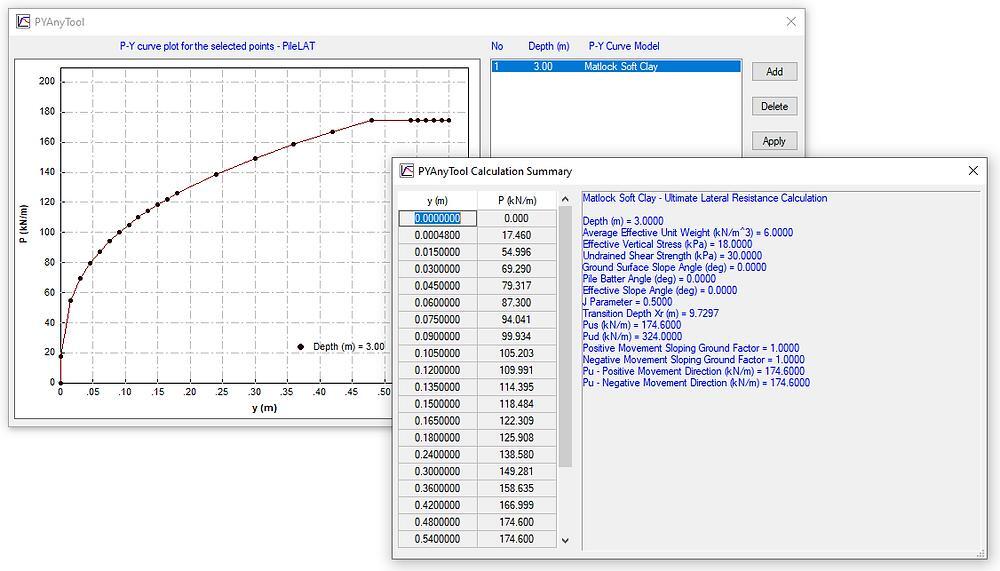
 Step 1
Build P–Y Springs
Build P–Y springs directly from borelog information and prepare them for use in the seismic analysis workflow.
Automate the iterative process of P–Y spring updates and seismic analysis with MIDAS CIVIL NX.
Automate the iterative process of P–Y spring updates and seismic analysis with MIDAS CIVIL NX.
Response spectrum analysis with nonlinear springs traditionally requires repeated manual iterations.
Engineers must run the analysis, review the resulting displacements, update each spring by hand,
and repeat the process until the solution converges.
CIVIL NX now automates this iterative workflow. Set a convergence tolerance and let CIVIL NX handle the iteration automatically. The software recalculates the secant stiffness from the P–Y curve and continues the response spectrum analysis until the change falls within the specified tolerance.
During this live session, see how P–Y springs can be built directly from borelog information, followed by an iterative response spectrum analysis that automatically updates spring stiffness as the solution converges.
The converged stiffness will also be checked against a hand iteration, providing a clear step-by-step comparison between the automated and traditional workflows.
Follow the complete workflow from P–Y spring generation to automated seismic analysis.
Step 1
Build P–Y springs directly from borelog information and prepare them for use in the seismic analysis workflow.
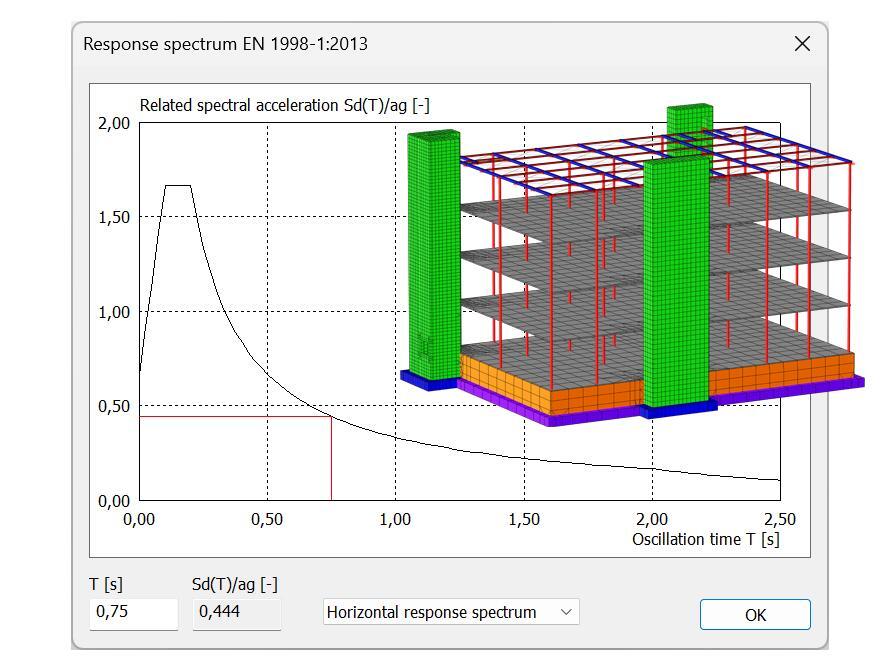 Step 2
Run the response spectrum analysis while CIVIL NX automatically recalculates secant stiffness and continues the iteration toward convergence.
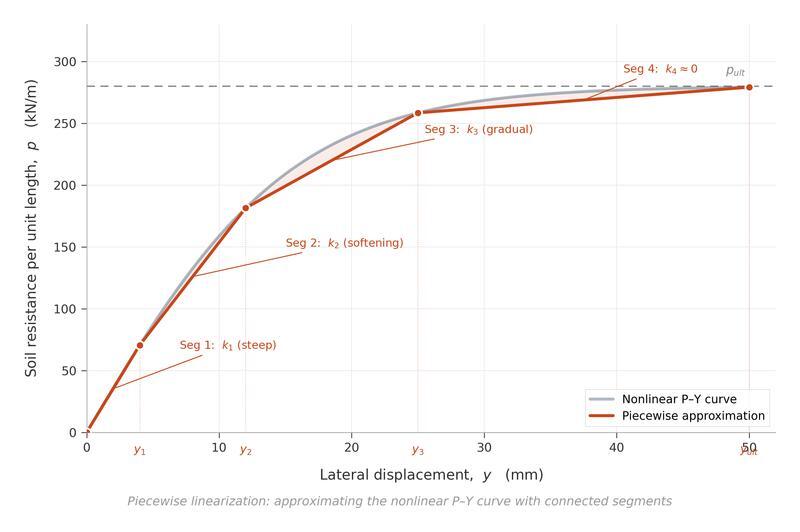 Step 3
Compare the converged stiffness from CIVIL NX against a hand iteration, step for step, to verify the automated result.
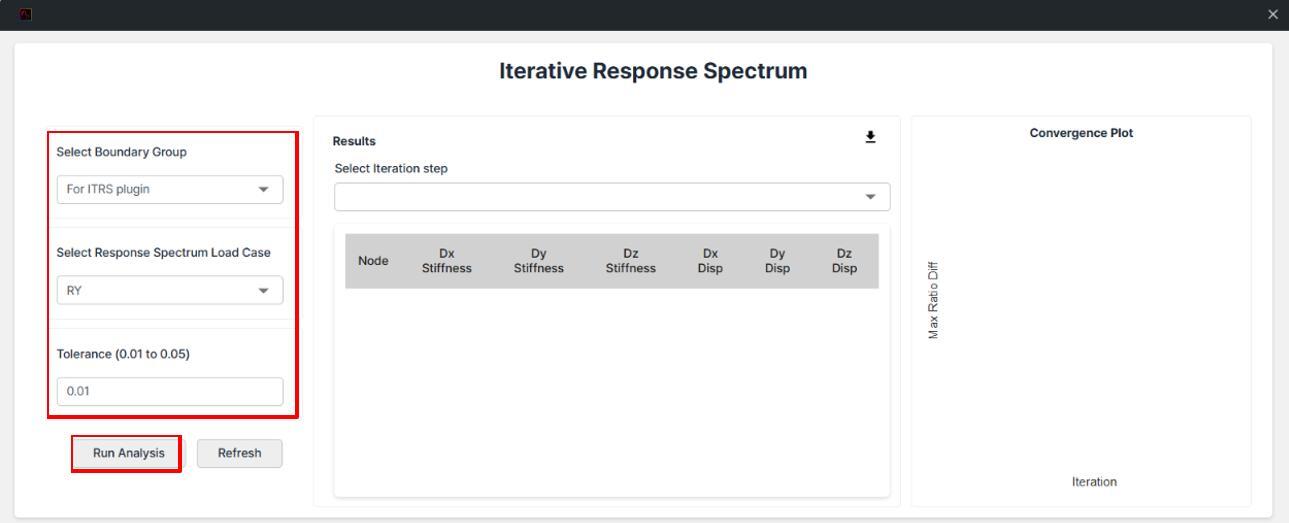
Set a convergence tolerance and let CIVIL NX automatically update the secant stiffness from the P–Y curve until the response spectrum solution reaches the specified tolerance.
By the end of the webinar, you will understand how CIVIL NX can automate the iterative response spectrum analysis workflow for nonlinear P–Y springs.
See how CIVIL NX streamlines the complete P–Y spring and iterative seismic analysis workflow.
Build P–Y springs directly from borelog information and use them within the seismic analysis workflow.
Set a convergence tolerance and let CIVIL NX automatically manage the repeated analysis and spring updates.
CIVIL NX recalculates the secant stiffness from the P–Y curve as the response spectrum analysis progresses toward convergence.
Check the converged stiffness against a hand iteration to clearly compare the automated and traditional approaches.
Follow the complete workflow from borelog-based P–Y spring generation through converged seismic analysis.
Build P–Y springs directly from borelog information and prepare them for the seismic analysis workflow.
Run the response spectrum analysis while CIVIL NX automatically recalculates secant stiffness and continues the iteration.
Compare the converged CIVIL NX result against a hand iteration, step for step, to verify the automated workflow.
The automated iterative workflow is already available in MIDAS CIVIL NX, with no add-on module and no separate license required.
50 minutes of presentation and live demo, followed by 10 minutes of open Q&A.
Learn directly from an engineering expert working with advanced structural analysis and seismic modelling workflows.

Dev holds a Master's degree in Structural Engineering from SVNIT Surat and brings valuable experience from working on a wide range of bridge and building projects. His background includes both design and on-site execution, giving him a well-rounded perspective of structural systems. Dev is particularly enthusiastic about addressing complex engineering challenges and enhancing structural safety and efficiency.
Have questions about the webinar or registration? Get in touch with us.