
Temporary Works in Construction
Please fill out the Download Section (Click here) below the Comment Section to download the Complete Guide to Composite Sections
Table of Contents
3. Temporary works in Bridge Construction
1. What are Temporary Works?
Hello readers.. Let’s learn something about temporary works today. Starting with the first question coming up in our mind, What are temporary works?
Temporary works can be defined as any temporary construction that may be necessary to allow the permanent works to be carried out.
Thinking just for a moment about the definition of temporary works, we can easily realise the works and activities included inside is vast. And yes!! they are. It ranges from a simple formwork to highly complex crane structures used to transport whole girders.
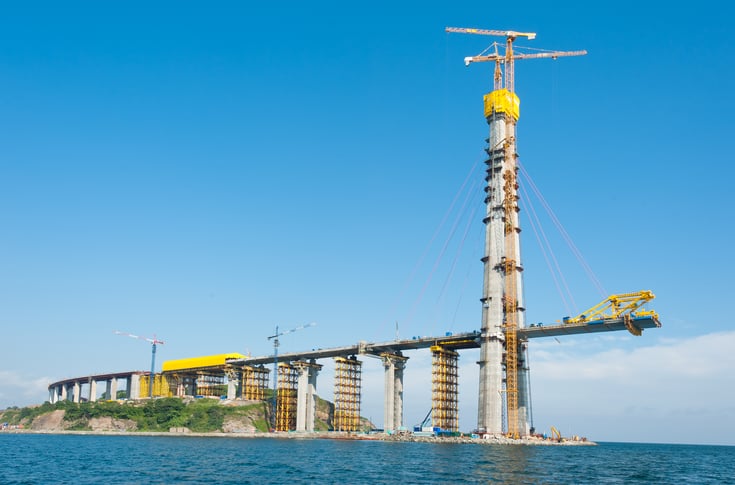
All construction, to a greater or lesser degree, will involve the need for the temporary works. They are usually removed after the construction is finished, however, they maybe left behind as a part of permanent structure.
By now, you must have understood that Temporary works act as an interface between design and construction. Sometimes the design of temporary works is more challenging than the actual structure. They have a huge impact on the construction process as well as the cost of the project.
2. Why we need them
You must have a vague idea that we need these temporary works but let’s see why…
- The first and most important of the reasons is the safety. Using temporary works provides safety to the manpower involved in construction.
- It provides support to members to achieve adequate strength. As concrete takes time to gain strength, using props the structural members are held into place till the desired strength is reached.
- It provides access to areas where construction is going on. This you must have all seen this, workers using shuttering to reach areas where access is not possible.
Temporary works can impact construction projects in many ways. But just as successful temporary works can enhance project outcomes; inadequate, poorly planned or poorly executed temporary works solutions can have a detrimental effect on projects – often with significant consequences.
3. Temporary works for Bridge Construction
These may include, depending on the type of bridge, temporary supports for precast girders or beams, box structures, and temporary staging for cast in-situ construction of the deck, and may also involve specialist operations for complex forms of bridge, e.g., post-tensioning.
Let’s deal with them one by one.
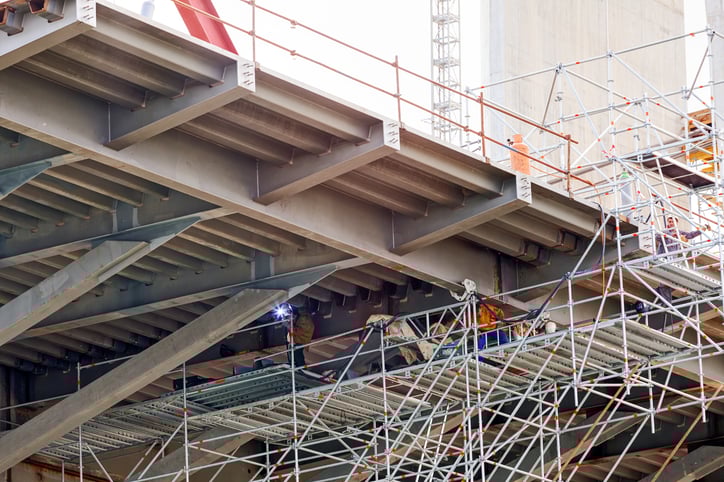
- Scaffolding
Also known as scaffold or staging, is a temporary framework used to support a work crew and supplies to assist during the construction, maintenance, and repair of buildings, bridges, and every other man-made structure.
Scaffolds are frequently utilised on construction sites to get access to heights and challenging-to-reach places.
The basic components of scaffolding are tubes, couplers and boards.
- Formwork
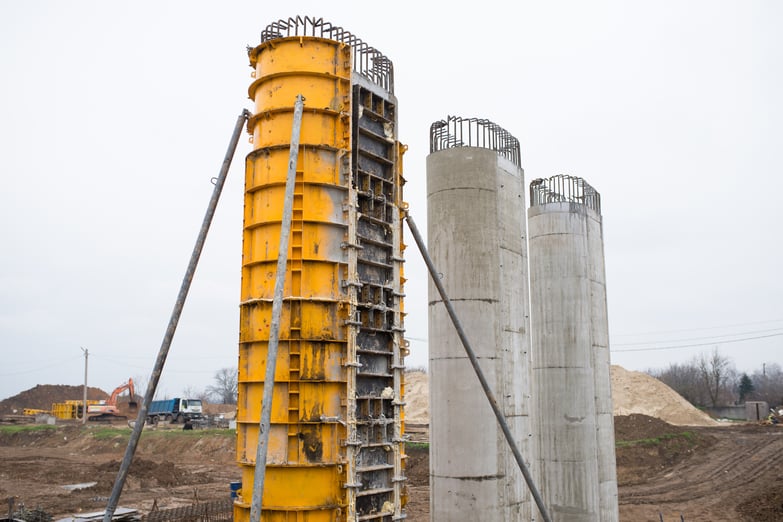
Basically, Formwork is the mold used to form concrete into structural shapes (beams, columns, slabs, shells) for buildings or bridges, or any other structure.
Wood, metal, plastic, or composite materials can all be used to make formwork.
To prevent the concrete from adhering to the mould, the inside surface is treated with a bond breaker (plastic or oil).
- False work
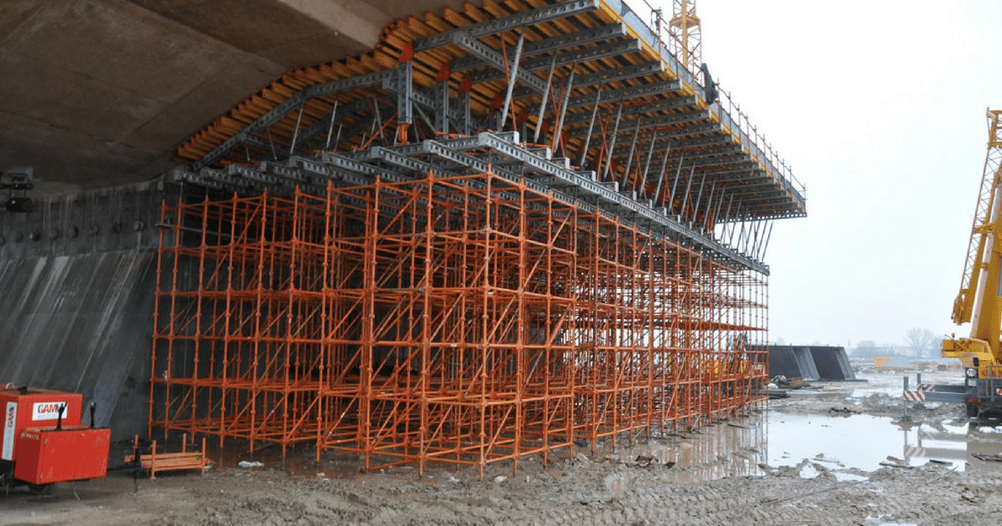
Falsework is the term for temporary structure used during construction to hold up a permanent structure while it is being built up to the point where it can stand alone. This is specially referred to as centering for arches. Falsework includes temporary supports for formwork that is used to shape concrete during the construction of elevated roads, bridges, and buildings.
- Shoring
Shoring is a temporary structure used to prevent the collapse of the main under-construction structure. Generally, it is necessary to protect surrounding structures, stabilise the construction pit walls, and prevent water from entering the pit.
Shoring is primarily necessary in construction to support a deep excavation in order to prevent the retained earth from toppling over and ultimately leading to a project disaster. The amount of support needed depends on the soil types and whether there is at least a 1.20 meter change in levels from ground level in an excavation.
.jpg?width=724&height=482&name=shutterstock_1417201262%20(1).jpg)
- Cranes
These are construction equipments used to place bridge superstructure and substructure. Cranes can also serves as bridge helping to place concrete in areas unreachable.
There are several types of crane equipment:
- Floating Crane
- Bridge Crane or Overhead crane
- Gantry Crane
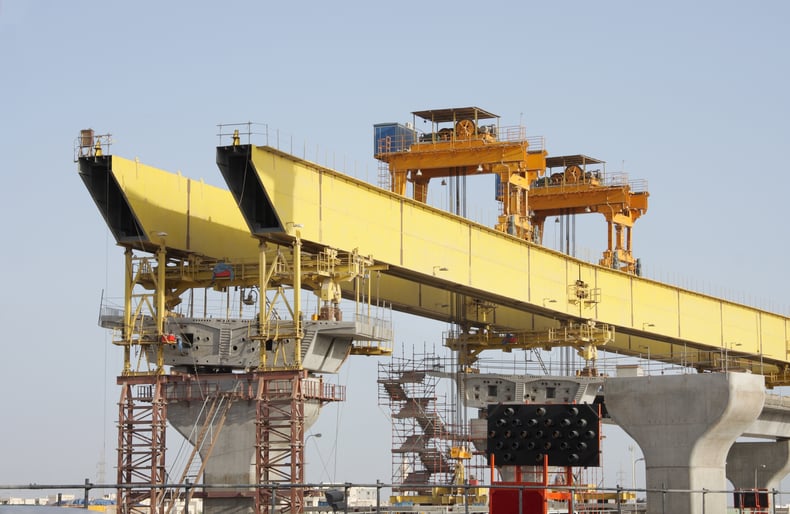
Gantry Crane
Overall sequence of managing temporary works usually involves these steps:
- Planning
- Design and Design checking
- Installation
- Inspection
- Use
- Modification and dismantling
4. Challenges
In most of cases, the temporary works are dismantled after construction. Because of this, their proper design is often neglected. A poor planning of temporary works can cause structures to fail, injuries to the manpower, and temporary works failure resulting in project delays. According to figures published by Health and Safety Executive(HSE), 30 deaths were reported in construction sector between April 2021 to March 2022. The construction sector had highest rate of fatal injuries among other industries.
With ever growing world, the space is limited for construction. It is not uncommon to come across railways, buildings, underground utilities, electricity lines. All of the above are called Third-party assets. The temporary works required must be able to cope up with the surroundings. You can read more about the use of Temporary works near third-party assets here.
5. Standards
Finally, some of the international provisions and standards are listed which are used when constructing temporary structures.
Health and Safety Executive
HSG65 Managing for health and safety
British Standards
BS 5975:2019, Code of practice for temporary works procedures and the permissible stress design of falsework
EN 1004:2004, Mobile access and working towers made of prefabricated elements
BS EN 13377:2002 – Prefabricated Timber formwork
BS EN 12811-1:2003 – Scaffolds- performance requirement and general design
BS EN 12812:2008, Falsework - Performance requirements and general design
BS EN 17293:2020, Temporary works equipment — Execution — Requirements for manufacturing
BS 5975:2019, Code of practice for temporary works procedures and the permissible stress design of falsework
National Access & Scaffolding Confederation(NASC)
SG4:15 – Preventing falls in scaffolding operations
SG6:15 – Management and Manual handling in scaffolding industry
SG9:15 - Use, Inspection & Maintenance of Lifting Equipment




.png)