Would you like to sign out?

Select Country

  • Afghanistan English
  • Albania English
  • Algeria English
  • American Samoa English
  • Andorra English
  • Angola English
  • Anguilla English
  • Antarctica English
  • Antigua and Barbuda English
  • Argentina Español
  • Armenia English
  • Aruba English
  • Australia English
  • Austria English
  • Azerbaijan English
  • Bahamas English
  • Bahrain English
  • Bangladesh English
  • Barbados English
  • Belarus English
  • Belgium English
  • Belize English
  • Benin English
  • Bermuda English
  • Bhutan English
  • Bolivia Español
  • Bosnia and Herzegovina English
  • Botswana English
  • Bouvet Island English
  • Brazil English
  • British Indian Ocean Territory English
  • British Virgin Islands English
  • Brunei English
  • Bulgaria English
  • Burkina Faso English
  • Burundi English
  • Cambodia English
  • Cameroon English
  • Canada English
  • Cape Verde English
  • Caribbean Netherlands English
  • Cayman Islands English
  • Central African Republic English
  • Chad English
  • Chile Español
  • Christmas Island English
  • Cocos (Keeling) Islands English
  • Colombia Español
  • Comoros English
  • Congo English
  • Cook Islands English
  • Costa Rica Español
  • Côte d’Ivoire English
  • Croatia English
  • Cuba Español
  • Curaçao English
  • Cyprus English
  • Czech Republic English
  • Democratic Republic of the Congo English
  • Denmark English
  • Djibouti English
  • Dominica English
  • Dominican Republic Español
  • Ecuador Español
  • Egypt English
  • El Salvador Español
  • Equatorial Guinea English
  • Eritrea English
  • Estonia English
  • Ethiopia English
  • Falkland Islands English
  • Faroe Islands English
  • Fiji English
  • Finland English
  • France English
  • French Guiana Español
  • French Polynesia English
  • French Southern Territories English
  • Gabon English
  • Gambia English
  • Georgia English
  • Germany English
  • Ghana English
  • Gibraltar English
  • Greece English
  • Greenland English
  • Grenada English
  • Guadeloupe Español
  • Guam English
  • Guatemala Español
  • Guernsey English
  • Guinea English
  • Guinea-Bissau English
  • Guyana English
  • Haiti Español
  • Heard Island and McDonald Islands English
  • Honduras Español
  • Hong Kong English
  • Hungary English
  • Iceland English
  • India English
  • Indonesia English
  • Iran English
  • Iraq English
  • Ireland English
  • Isle of Man English
  • Israel English
  • Italy English
  • Jamaica English
  • Japan 日本語
  • Jersey English
  • Jordan English
  • Kazakhstan English
  • Kenya English
  • Kiribati English
  • South Korea 한국어
  • Kuwait English
  • Kyrgyzstan English
  • Laos English
  • Latvia English
  • Lebanon English
  • Lesotho English
  • Liberia English
  • Libya English
  • Liechtenstein English
  • Lithuania English
  • Luxembourg English
  • Macau English
  • Madagascar English
  • Malawi English
  • Malaysia English
  • Maldives English
  • Mali English
  • Malta English
  • Marshall Islands English
  • Martinique English
  • Mauritania English
  • Mauritius English
  • Mayotte English
  • Mexico Español
  • Micronesia English
  • Moldova English
  • Monaco English
  • Mongolia English
  • Montenegro English
  • Montserrat English
  • Morocco English
  • Mozambique English
  • Myanmar English
  • Namibia English
  • Nauru English
  • Nepal English
  • Netherlands English
  • New Caledonia English
  • New Zealand English
  • Nicaragua Español
  • Niger English
  • Nigeria English
  • Niue English
  • Norfolk Island English
  • Northern Mariana Islands English
  • Norway English
  • Oman English
  • Pakistan English
  • Palau English
  • Palestine English
  • Panama Español
  • Papua New Guinea English
  • Paraguay Español
  • Peru Español
  • Philippines English
  • Pitcairn Islands English
  • Poland English
  • Portugal Español
  • Puerto Rico Español
  • Qatar English
  • Réunion English
  • Romania English
  • Russia English
  • Rwanda English
  • Saint Barthélemy Español
  • Saint Helena English
  • Saint Kitts and Nevis English
  • Saint Lucia English
  • Saint Martin Español
  • Saint Pierre and Miquelon English
  • Saint Vincent and the Grenadines English
  • Samoa English
  • San Marino English
  • São Tomé and Príncipe English
  • Saudi Arabia English
  • Senegal English
  • Serbia English
  • Seychelles English
  • Sierra Leone English
  • Singapore English
  • Sint Maarten English
  • Slovakia English
  • Slovenia English
  • Solomon Islands English
  • Somalia English
  • South Africa English
  • South Georgia English
  • South Sudan English
  • Spain English
  • Sri Lanka English
  • Sudan English
  • Suriname English
  • Svalbard and Jan Mayen English
  • Eswatini English
  • Sweden English
  • Switzerland English
  • Syria English
  • Taiwan English
  • Tajikistan English
  • Tanzania English
  • Thailand English
  • Togo English
  • Tokelau English
  • Tonga English
  • Trinidad and Tobago English
  • Tunisia English
  • Turkey English
  • Turkmenistan English
  • Turks and Caicos Islands English
  • Tuvalu English
  • U.S. Virgin Islands English
  • Uganda English
  • Ukraine English
  • United Arab Emirates English
  • United Kingdom English
  • United States English
  • U.S. Minor Outlying Islands English
  • Uruguay Español
  • Uzbekistan English
  • Vanuatu English
  • Vatican City English
  • Venezuela Español
  • Vietnam English
  • Wallis and Futuna English
  • Western Sahara English
  • Yemen English
  • Zambia English
  • Zimbabwe English
  • Åland Islands English
  • East Timor English
  • Netherlands Antilles English
  • Serbia and Montenegro English
  • North Macedonia English
  • Timor-Leste English

[Free Download] The importance of API and its use

August 12, 2024
BLOG BRIDGE INSIGHT
[Free Download] The importance of API and its use
1:40

What is Application Programming Interface (API)?


The first thought that will come into your mind is exactly what is this API? and why a civil engineer like me needs to know about this techno-sounding topic.

An application programming interface (API) is a program that helps connect different applications. What it means to engineers like us is with the help of this API, we can create Midas CIM models directly by specifying dimensions in Excel, analyze them in Midas Civil, take drawings from Midas Drafter, and in the end, compile the Report in Excel, in just a couple of clicks.


application programming interface (API)


Having an API allows engineers to create templates that integrate with their workflow. These features will help reduce civil and structural engineers' time and effort to design similar structures. And utilize pre-designed models built with 3D modeling software (which offers API) with Midas structural analysis software. Significantly, post-processing, such as calling the result tables or taking analyzed result diagrams, will reduce repeating the work process and help make a better decision.


Current Scenario


Before rushing to the usual next step, why we need API, we must know the current stage of the construction industry. The construction industry is highly fragmented, and this leads to inefficiency. Each part of the construction process is handled by different firms using corresponding software solutions which have minimal to zero interoperability with each other. For example, design firms typically use Excel sheets for the load calculations, midas Civil or any other analysis application for the analysis, and a CAD package like Midas CAD for drawing generation. The construction firm then uses these drawings to manufacture the segments. Each of the processes is interdependent on the other. A change in one requires everything to be redone or reworked. Thus, most of the time is spent on reworking. Advances are already being made with the deployment of BIM.


There are two main problems engineers struggle with the most:

  • Repetitive work
  • Lack of interoperability between software solutions

The introduction of API in the process can easily solve these problems.


Why do we need APIs?


Now coming to why we need this and why engineers call this technology the future.

Let's start with a simple case scenario. We have a bridge, created all the models, and finally have the drawings and report. But, at the last minute, a change was made in the section. This slight modification requires changing the section for the analytical model. We must reanalyze the model and create a report out of this. Such a scenario is common in all design firms.


One of the main advantages of implementing an API is the ability to build a repository of templates.


The process of constructing a bridge starts with the Planning stage. At this stage, sometimes the client needs clarification on which type of bridge is required. Using the prebuilt templates, quick modeling of the bridge can be done. This helps in determining the initial quantity and cost estimation.


In the Designing phase, the design firm takes the DPR submitted and starts designing the section, span length, and other parameters. This is then submitted to an external consultant for proof-checking. Sometimes the site constraints also need revisions in the model.



integration of API


By utilizing APIs, we can increase productivity in several ways. For example, we can automate the process of updating your construction information modeling (CIM) model. This allows us to update and improve your model on the fly, so there are no delays or wait times for others to see the changes. Other productivity boosters include real-time scheduling and resource management.


You can create a centralized hub for scheduling and resource management by integrating your project management software with your communications software.


Use case examples


Visual learning is the easiest way to learn something new. Below are a few of the use cases of API, but with slight modifications, they can be adapted to any workflow requirements.


Automatic Model, Drawing, and Report generation


We can create analytical models using Excel sheets with structure and loading data.

An existing template of an FSM Single Cell Box bridge is shown in the example shown. The Excel file has all information for generating an analysis model and BIM modeling using CIM.

Excel and Civil transfer the data using JSON format.
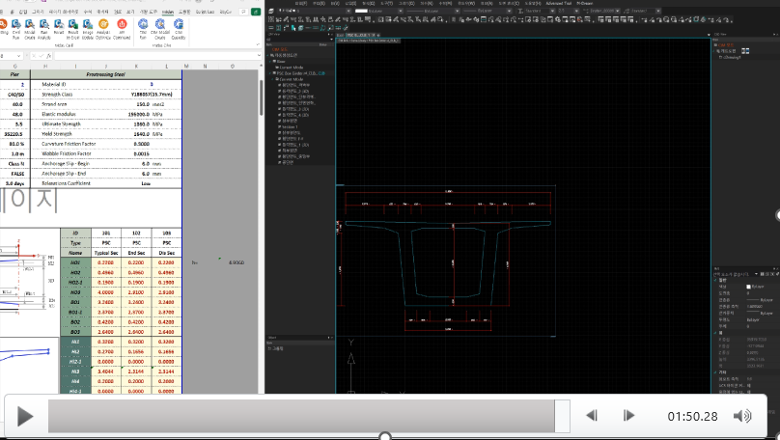
 

Automatic Model, Drawing, and Report generation


Cross application interaction


Using a simple Python API interface, Grasshopper can be connected directly to Midas Civil. All the geometry data, as well as loading, can be imported with a single click. Since the model is generated through Grasshopper, it is parametric and highly customizable.

 

Content visible until here


You can check more of these details in the download file.

 

Susbcribe
MIDAS Newsletter

Thank you, See you soon!
Share
Comments

[E-book] The importance of API and its use

Fill out the below form to download the Full Contents.