Introduction
Until a few decades ago, footbridges or pedestrian bridges were constructed as simple steel truss bridges to function as elevated crossings over roads and rivers. Recently, however, footbridges have been designed to be architectural landmarks that complement or even transform the aesthetics of their environment. But as architects push for more lightweight and slender forms, bridge engineers face the challenge of ensuring that the footbridges meet the stability and comfort criteria under pedestrian-induced vibrations.
When the London Millennium Bridge was opened to the public in 2000, the bridge began to wobble sideways, forcing the authorities to close the bridge. This phenomenon was first identified as synchronous lateral excitation or “lateral lock-in” but later confirmed to be due to the negative damping applied by the pedestrians, as they tried to steady themselves. Two years later, the re-engineering consultant, Arup, retrofitted the bridge using fluid-viscous and tuned mass dampers.
This article will cover the workflow adopted for the dynamic analysis of footbridges as per Eurocode standards. Initially, we will perform a free vibration analysis of a steel Pratt truss bridge modelled in CIVILNX, calculate the pedestrian loading based on the attached Excel file, and perform time history analysis to get the maximum acceleration response. We will also explore practical vibration mitigation techniques to control the dynamic responses of footbridges.
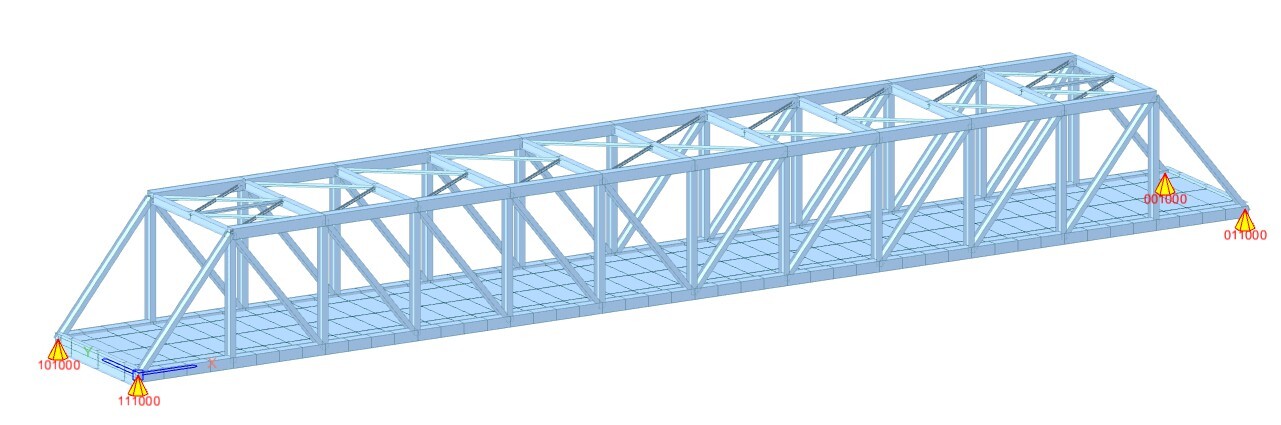
Figure 1: Isometric View of the Steel Pratt Truss with POT-PTFE Bearings
The NA.2.44.3 to BS EN 1991-2:2003 provides guidelines for assessing the maximum vertical acceleration under walking, jogging and crowded conditions. To demonstrate how to perform dynamic analysis in CIVILNX in accordance with Eurocode, we will consider the following example.
Problem Statement
The effective span of the steel Pratt truss bridge is 48 m, with a deck width of 6 m and a 2 m tributary width for each stringer beam. For this steel truss bridge, we assumed a structural damping of 0.6%, in accordance with Table 1.3 of Setra’s Technical Guide for Footbridges - Assessment of vibrational behaviour of footbridges under pedestrian loading.
The bridge is classified as Class C as per Table NA.7, assuming that it is located along an urban route. Centre-centre section offset is assigned to the diagonals and bracings defined using “truss” elements, and the other “beam” elements.
Eigenvalue Analysis
Before performing free vibration analysis, switch on the “Convert Self-Weight into Masses” option from the Project > Structure Type tab. For better accuracy, opt for “Consistent Mass” instead of “Lumped Mass”.
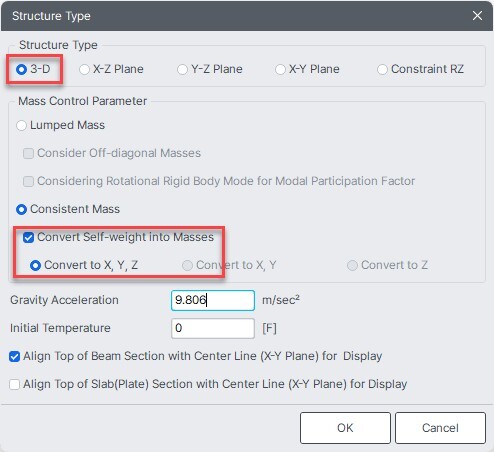
Figure 2: Convert Self-Weight into Masses along X, Y & Z directions
In the Eigenvalue analysis control tab, select “Lanczos” type eigen vectors and input n = 50 to achieve mass participation above 90 % in all three directions.
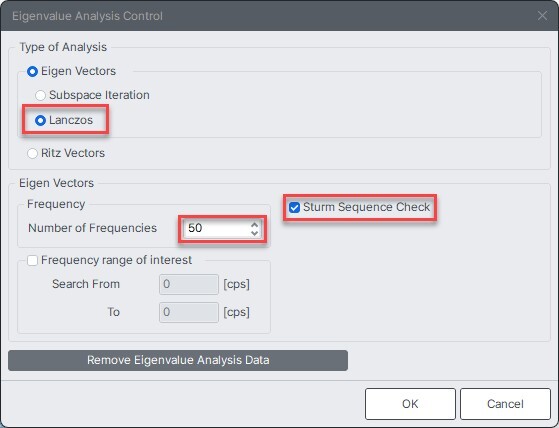
Figure 3: Eigenvalue Analysis Control Data
Modes of Vibration
The frequencies of the first vertical and lateral modes can be obtained from Results > Result Tables > Vibration Mode Shape table.
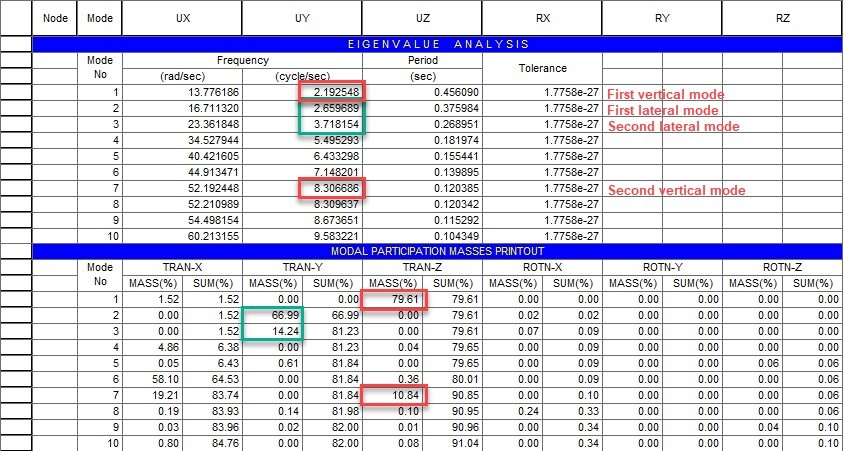
Figure 4: Vibration Mode Frequencies
The frequency of the first vertical mode of vibration, f_v is 2.193 Hz. The arrival time is thus equivalent to the period of the vertical mode of vibration, i.e., 1/f_v = 0.456 seconds.
Cl. A.2.4.3.2 of BS EN 1990:2002+A1:2005 stipulates that comfort criteria must be verified if the natural frequency for vertical vibration is less than 5 Hz. Since the lateral mode of vibration exceeds 2.5 Hz, only comfort criteria in the vertical direction need to be checked.
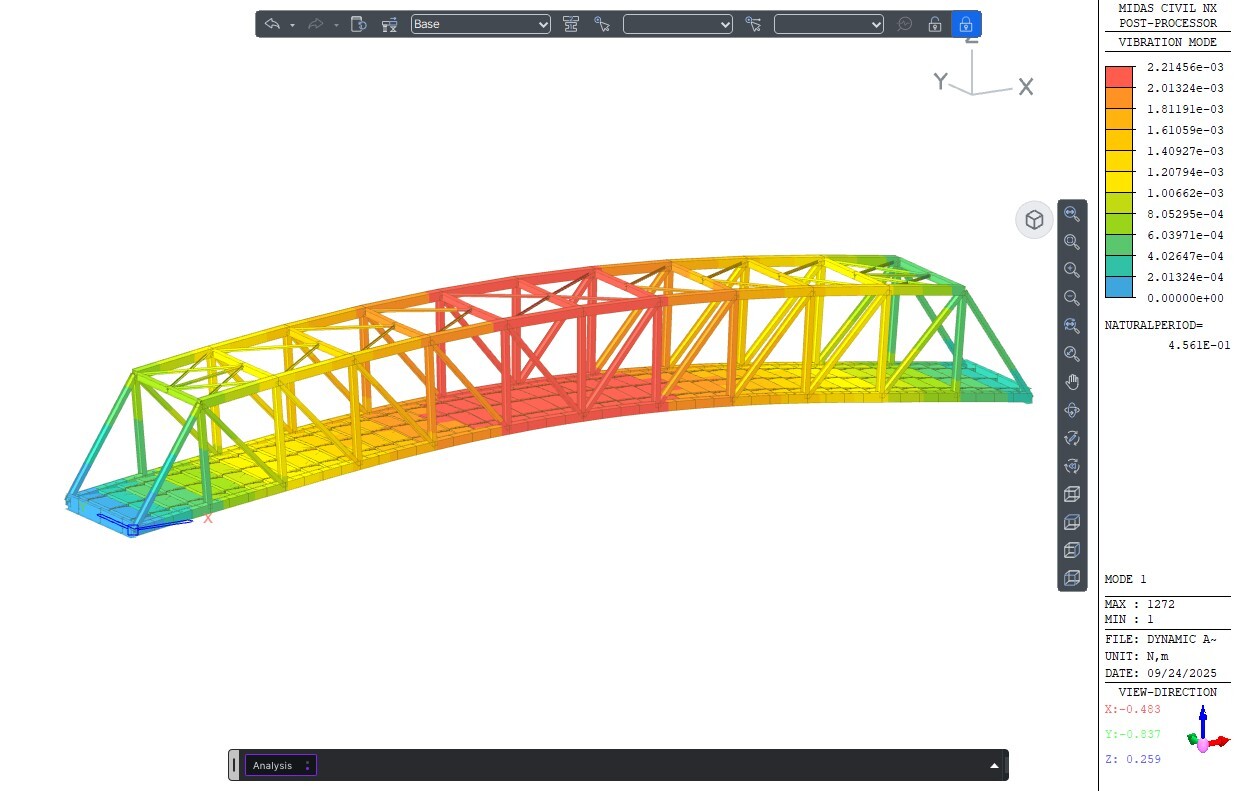
Figure 5: First Vertical Mode of Vibration
Author