Wiroj Lichanatien in Thailand, Anand Sudhakar in India and Hsiao Tien-Jen in Taiwan each found a repetitive step in their modelling work and automated it. This story is about where the saved time went, and why each of them chose to spend it on engineering judgment.
In their own words.
01
Wiroj Lichanatien
Senior Structure Engineer · WIROJ ENGINEER DESIGN (Co., Ltd.) · Thailand
"I firmly believe that the best structural design is not just a model that passes computer simulations, but a structure that can be constructed safely and to the highest standards in the real world."
Theory has to become buildable detailing
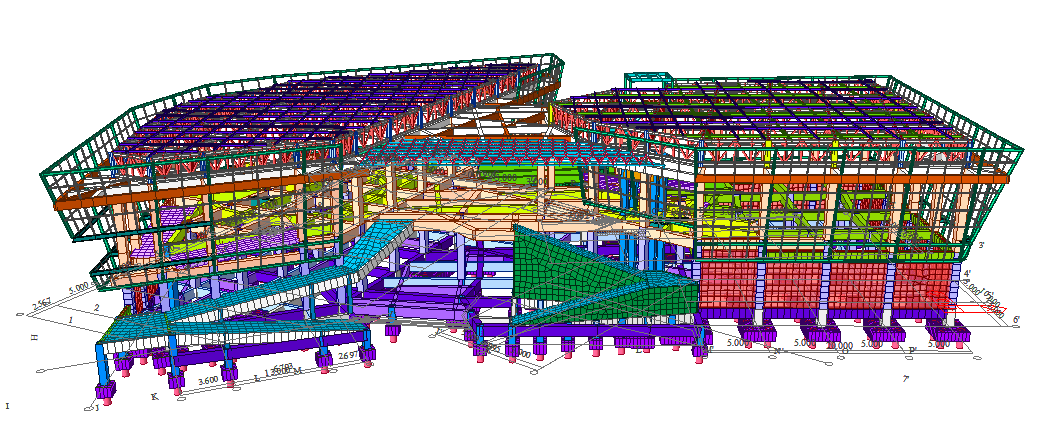
For me, 'right' is ensuring no practical detail is overlooked. Working with Midas Gen NX gives me a clear overview of the forces acting on a building. However, what I will carry forward is the practice of translating those theoretical results into practical reinforced concrete detailing that contractors can actually build. Good theory must work in practice. I always cross-reference data from structural analysis software with real-world conditions.
Q. What did the API integration actually free you up to do?
The API integration gave me back the time to focus on an engineer's most critical role: applying engineering judgment. Instead of spending hours on repetitive data entry, I could dedicate my time to deeply analyzing the structural behavior differences between Seismic Zone 2 and Zone 3 for my Master's research.
Previously, extracting internal forces from a seismic model to design reinforcement detailing was a time-consuming process highly susceptible to human error. Once I applied API automation with MIDAS, the entire workflow became seamless, and the massive amount of data generated from non-linear Pushover Analysis was transferred directly and accurately into the design phase in an instant.
02
Anand Sudhakar
Structural Engineer · CDM Smith Global Services India LLP · India
"I believe good engineers stay curious, question assumptions, and continuously learn to improve their solutions."
Less model preparation, more engineering decisions
We recognized that modeling large bridge structures element by element was time-consuming and repetitive. To improve the process, our team used spreadsheets to automate section generation and MCT command creation, while leveraging AutoLISP tools to ensure proper alignment and geometry extraction. This streamlined model development, reduced errors and rework, and significantly improved both efficiency and consistency without compromising quality.
Because large bridge models became easy to update, we could focus more on engineering decisions rather than model preparation. My experience with MIDAS reinforced the value of understanding the fundamentals behind every analysis, helping me become a more confident and responsible engineer.
03
Hsiao Tien-Jen
Structural Engineering Manager · T.Y. Lin Engineering Consulting Co., Ltd · Taiwan
"Structural stability without compromising aesthetics."
I am an innovative engineer who overcomes the structural limitations of special bridges. For landmark bridges with complex alignments, my goal is to find the optimal analysis solutions that ensure maximum safety.
Sharing the method with the whole team
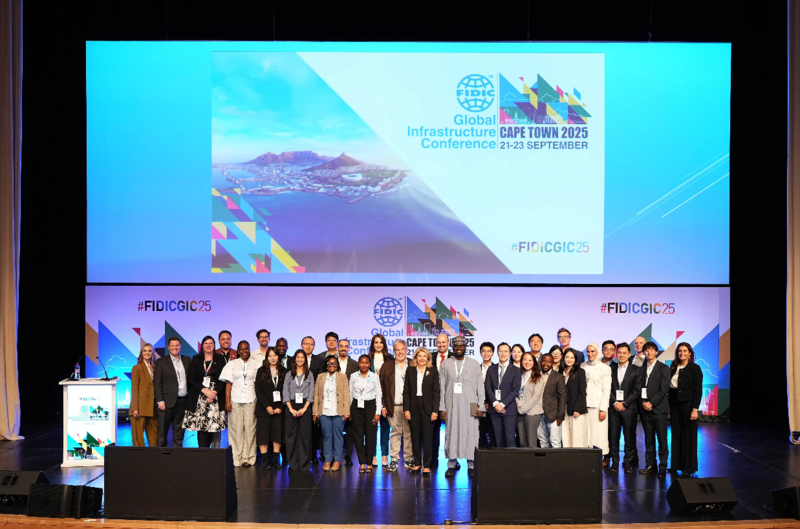
On these bridges, I noticed my peers struggling with the endless repetitive manual adjustments that complex alignments require. To help them, I organized an internal workshop on integrating API automation into our structural analysis workflow. By sharing this computational approach, I helped my colleagues drastically reduce their modeling time. This sparked a positive shift in our team's culture, giving engineers more time to focus on creative problem-solving rather than tedious data entry.
Q. Was there a bridge where the aesthetic and the seismic requirement looked irreconcilable?
For me, it was during the design of a highly asymmetrical complex bridge. Balancing the architect's bold aesthetic vision with strict seismic requirements initially felt impossible. However, the advanced nonlinear analysis capabilities of MIDAS allowed us to simulate the complex behaviors perfectly and optimize the design without losing the original shape.
Automation can carry data from an analysis model into design without a transcription error. Deciding what the structure is actually doing is still the engineer's work. Each of these engineers automated the first so there would be more time for the second, and in one office the method was handed on so that a whole team got that time back. Which repetitive step in your own week would you hand to a script first?