Expertise · Bandi Consultants
In Kuwait, the design habits Changyong Han had relied on in Korea were not enough to win over the client. Changyong Han, an Executive Director at Bandi Consultants, explains what it took to get past that on a first overseas project and why the lesson stuck.
In Changyong Han's own words.
"A structurally sound design is the bare minimum. Whether it can actually be built on site and finished safely matters just as much, and an engineer has to work that out too."
I design structures, and I also think about how they'll actually get built. I don't like settling for familiar methods or answers everyone already knows. What I find most rewarding is taking a second look and solving the problems nobody saw coming.
A first overseas design
My first overseas design was the Subiyah Causeway (Main Link) in Kuwait. We designed an irregular cable-stayed bridge with a composite girder to AASHTO LRFD, a code most Korean engineers didn't know well at the time. It taught me a lot about overseas codes and how projects are run abroad.
The client's engineer reviewed our design documents closely, and answering those comments was a lesson in itself. The design habits we'd brought from Korea weren't enough to convince them on technical grounds. For every item, I had to go back to the code and the reasoning behind it and work through each issue from first principles.
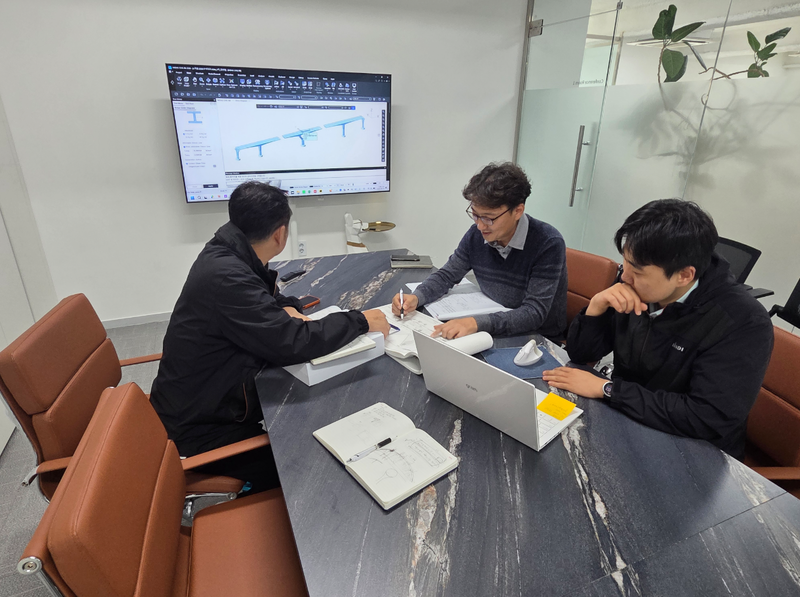
Explaining with a basis, not a habit
That's where I learned that design isn't just applying past experience or habit. It's about explaining why a design is right and proving it with clear codes and sound logic.
Since then, even with methods I know well, I check the code and the numbers one more time. I ask myself whether I've missed anything. Instead of doing things the way they've always been done, I go back to first principles so the result is something people can trust.
Q. Looking back on years of using MIDAS, what has impressed you most?
Seeing the suggestions I'd made show up, little by little, in actual program updates. I could talk openly with the development team, in meetings or through the online Q&A, about the improvements I wanted and the things that got in the way of my daily work.
Watching that happen, I could tell MIDAS doesn't stop at building and shipping software. It keeps listening to the engineers who use it and keeps working to make it better. I still send feedback whenever something could be better, and I hope it keeps helping the program grow, even a little.
Going back to the code and the reasoning, item by item, on the Subiyah Causeway became a habit Changyong Han never dropped. Check once more, especially when the method feels familiar. It comes from refusing to stop at "Why won't it work?" and pushing on to "How can we make it work?"