Ho Thai Hung in Vietnam, Francisco Rodriguez Salas in the United Kingdom and Chang Chao-Hua in Taiwan all check an important result a second way before trusting it. This story is about how they keep that habit going on demanding bridge and infrastructure projects.
In their own words.
01
Ho Thai Hung
General Director · Chodai Kiso-Jiban VietNam · Vietnam
"A number is not ready to be trusted until it has been reproduced another way."
I work from evidence over intuition, with every number traced back to a source I can point to. And I put feasibility over elegance, because the design has to survive the real site and a 100-year service life, not just the load combination.
Learning from the gap between two models
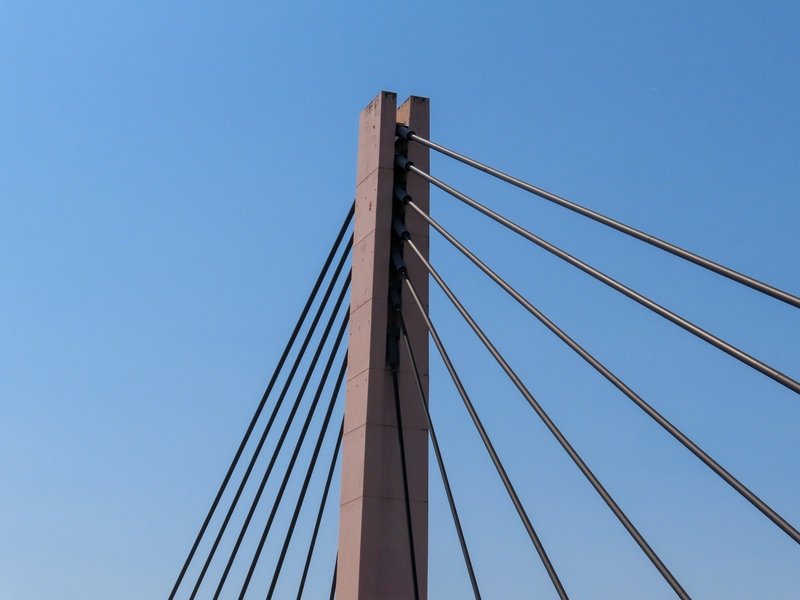
On our railway cable-stayed bridge project, we learned again and again that a model only tells you what its assumptions let it tell you. Change one assumption and the governing forces can shift enough to matter.
So what I keep upholding is to state every modelling assumption openly, question the ones that drive the result, and confirm the critical cases with a second, independent method before they go onto a drawing. We build the primary model in MIDAS Civil and re-check the governing cases in another solver. When the two disagree, that gap is the most useful information we get that day.
Q. When two engineers in your team model the same structure and get different answers. What happens next?
When engineers model a structure in MIDAS Civil and reach different results, we dissect the difference instead of choosing sides, because that is where the real understanding is. We welcome different approaches to the same problem. The principle we pass on is simple: for every result MIDAS gives you, ask why, and keep asking until you reach the actual mechanism behind it, not a comfortable explanation. Several younger engineers now treat a clean output as the beginning of the check, not the end, and have taken that habit into their own work.
02
Francisco Rodriguez Salas
Senior Bridge Engineer · Arup · United Kingdom
"I never rely solely on software outputs. It is my responsibility to understand the engineering behind the results, challenge assumptions, and ensure that what works in a model will work in reality."
Judgement alongside detailed models
Throughout my career, I have learned that the most valuable contribution an engineer can make is not producing results, but understanding them. On several complex bridge projects, including major cable-stayed bridge developments, I have used advanced finite element analysis to investigate structural behaviour, verify critical details, and challenge design assumptions.
By combining detailed modelling with engineering judgement and independent checks, I have been able to resolve complex technical issues, improve confidence in design decisions, and deliver solutions that are both safe and practical.
Q. Your most memorable MIDAS experiences are about people rather than features. Why is that?
Having direct access to engineers who understood both the software and the underlying structural behaviour helped us make better-informed decisions and increased our confidence when tackling difficult technical challenges. On several challenging projects, MIDAS engineers worked closely with us to understand the problem, discuss the most appropriate analysis approach, and guide us through capabilities that we were not fully aware of. These interactions reinforced an important lesson for me: advanced analysis is not just about having powerful software, but about understanding how to apply it correctly.
03
Chang Chao-Hua
Deputy Structural Engineering Manager · CECI Engineering Consultants, Inc., Taiwan · Taiwan
"As an APEC structural engineer handling large-scale infrastructure, my top priority is strictly verifying every result against international standards before on-site application."
Finding weak points before construction
During a complex infrastructure project, the structure's unique geometry made it difficult to accurately capture local stress concentrations using standard methods. Knowing that minor errors could lead to major safety risks on-site, I insisted on uncompromising cross-validation.
I led my team to use multiple analytical models and integrated API automation to process massive load combinations efficiently. Consequently, we identified and reinforced potential weak points before construction began, preventing major risks and elevating the project's overall safety.
I used to spend endless hours manually checking massive load combinations. Using MIDAS to automate this data extraction and validation was a game-changer. It didn't just save time, it eliminated human error and completely shifted my focus from tedious manual checking to higher-level structural optimization.
Ho Thai Hung treats the gap between two models as the most useful information of the day. Francisco Rodriguez Salas takes responsibility for the engineering behind every output. Chang Chao-Hua verifies a result before it ever reaches the site. We share their view that a number is only ready once it has been checked another way.