Contribution · DCCD Engineering Corporation
Francis Domingo is an Associate at DCCD Engineering Corporation in the Philippines. What started for Francis Domingo on a cable-stayed bridge in Vietnam now reaches younger engineers through lectures and mentoring on major projects. The goal is engineers who think with the software, not only who use it well.
In Francis Domingo's own words.
"I am a fundamentals-first engineer who believes that every engineering decision must have a clear technical basis."
A good design must not only work in analysis. It must also be safe, buildable, economical and appropriate for actual site conditions. Above all, I value accountability. As engineers, the decisions we make ultimately affect public safety and the long-term performance of the infrastructure we help create.
Q. When did analysis software become more than a calculation tool for you?
It was during the Nguyen Van Troi–Tran Thi Ly Cable-Stayed Bridge project in Vietnam, where I was first introduced to MIDAS Civil. Seeing how construction-stage analysis, cable forces, and structural response in the model related to what we were actually observing during stay-cable installation and stressing changed the way I viewed structural analysis software.
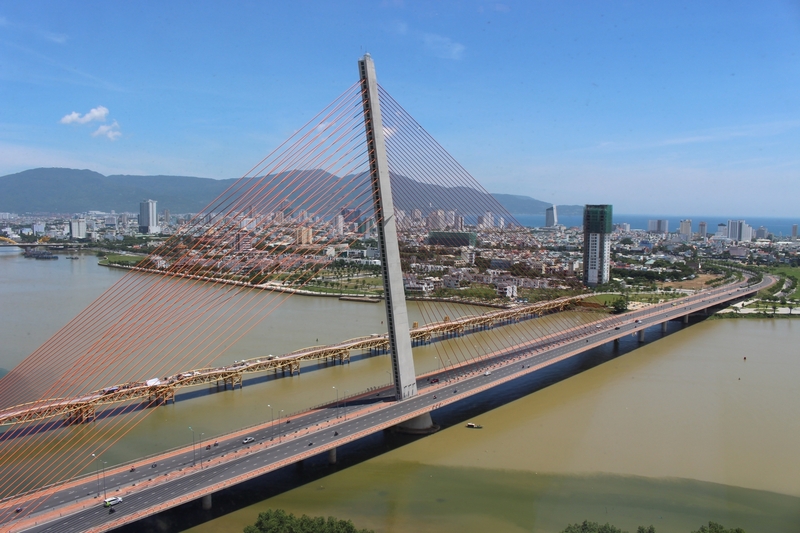
MIDAS became a way to better understand how a bridge behaves through each stage of construction. That experience shaped how I have used MIDAS ever since.
From early user to lecturer and mentor
I was one of the early users of MIDAS Civil in the Philippines. Over the years, I believe I have contributed to its growing adoption through project applications, technical sharing and mentoring. I share practical lessons on structural modeling, bridge behavior, design judgment and interpretation of results. I do this through the MIDAS FGD Expert Series and my work as a Bridge Engineering lecturer at De La Salle University. I also mentor younger engineers directly on the major projects I have been involved in.
Whatever the setting, the lesson comes back to the same point. I believe an engineer should never accept a result simply because the model says it is correct. I always go back to fundamentals, question whether the behavior makes physical sense, and check whether the assumptions reflect actual site and construction conditions.
For me, the most meaningful contribution is helping younger engineers become not only better MIDAS users, but better engineering thinkers who can apply technology with sound judgment and confidence.
The cable-stayed bridge in Vietnam showed Francis Domingo how a model and a structure under construction relate. That understanding now goes to younger engineers. He puts the aim in one line: to use technology without losing sight of fundamentals, reality, and responsibility.