With rapid development of new technologies and materials, there has been major changes in how bridges are designed. In the past, engineers did not have the tools or software to provide accurate models or detailed analysis of bridges. However, with today’s advancement in technology, new advanced construction methods, materials, tools, and software are now available for bridge engineers.
In this post, we have listed up the Top 5 New advanced technologies for Bridge design and Construction. We hope this information is rewarding and entertaining for you. Enjoy reading!
1. Building Information Modeling (BIM)
Building Information Modeling (BIM) is referred to as a process that connects architects, engineers, and construction (AEC) professionals more efficiently in the various stages of construction. With BIM technology, engineers and designers create 3-D models that include data ranging from the physical characteristics all the way to the functional characteristics of a building. This information engages architects, engineers, and construction professionals in a multi-disciplinary collaboration for better insight into the project they are working on.
For bridge design and construction, MIDAS CIM (CIVIL Information Management System) provides the world’s first BIM (Bridge Information Modeling). This BIM technology generates instant and accurate outcomes for all phases of the project. Furthermore, it provides an integrated platform that connects modelers, constructors, drafters, designers, and engineers in one single model. Lastly, it is currently the only solution that can effectively reduce inefficiencies in cost, time, and communication discrepancies caused by design changes.
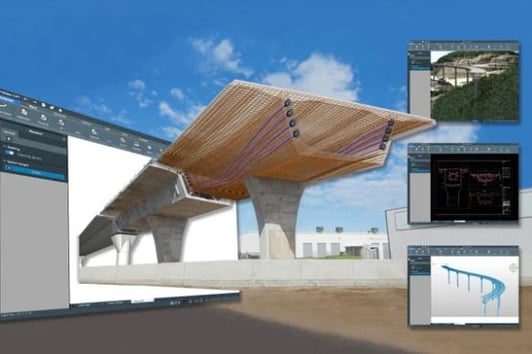
MIDAS CIM
2. Innovative new construction materials for bridges
New construction materials are emerging in the field of CIVIL engineering. One of the most innovative construction materials considered today for bridge design is self-healing concrete. Through the life-cycle of concrete and due to the various loads occurring in bridges, concrete is prone to cracking. However, new concrete mixtures that include limestone-producing bacteria are being developed which fill the cracks as they form. This new innovative technology can prevent costly damages that can occur if cracks in concrete are not filled or repaired.
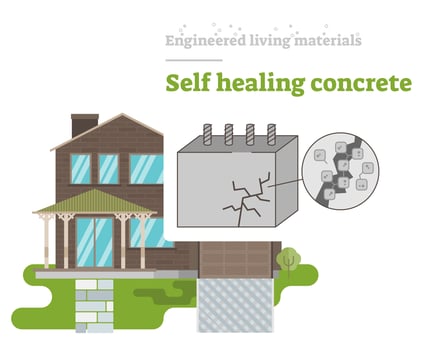
Innovative new construction materials for bridges
Furthermore, natural disasters, such as earthquakes and tornados, are one of the most important factors to consider when designing bridges. The damages generated by these seismic and wind loads create irreversible damages to the different structural elements of bridges, which in the future require very costly repairs. However, new construction materials are now being used in order to avoid such issues. One of these materials is Superelastic Reinforcement. This material, also known as a shape memory alloy (SMAs), is used in replacement of the original steel reinforcement commonly used in reinforced concrete. When steel reinforcement in concrete is subject to stresses causing it to deform beyond its yield point, it will become permanently deformed and will not return to its original shape. On the other hand, superelastic SMAs return to their original shape even after being subjected to high stresses.