Would you like to sign out?

Select Country

  • Afghanistan English
  • Albania English
  • Algeria English
  • American Samoa English
  • Andorra English
  • Angola English
  • Anguilla English
  • Antarctica English
  • Antigua and Barbuda English
  • Argentina Español
  • Armenia English
  • Aruba English
  • Australia English
  • Austria English
  • Azerbaijan English
  • Bahamas English
  • Bahrain English
  • Bangladesh English
  • Barbados English
  • Belarus English
  • Belgium English
  • Belize English
  • Benin English
  • Bermuda English
  • Bhutan English
  • Bolivia Español
  • Bosnia and Herzegovina English
  • Botswana English
  • Bouvet Island English
  • Brazil English
  • British Indian Ocean Territory English
  • British Virgin Islands English
  • Brunei English
  • Bulgaria English
  • Burkina Faso English
  • Burundi English
  • Cambodia English
  • Cameroon English
  • Canada English
  • Cape Verde English
  • Caribbean Netherlands English
  • Cayman Islands English
  • Central African Republic English
  • Chad English
  • Chile Español
  • Christmas Island English
  • Cocos (Keeling) Islands English
  • Colombia Español
  • Comoros English
  • Congo English
  • Cook Islands English
  • Costa Rica Español
  • Côte d’Ivoire English
  • Croatia English
  • Cuba Español
  • Curaçao English
  • Cyprus English
  • Czech Republic English
  • Democratic Republic of the Congo English
  • Denmark English
  • Djibouti English
  • Dominica English
  • Dominican Republic Español
  • Ecuador Español
  • Egypt English
  • El Salvador Español
  • Equatorial Guinea English
  • Eritrea English
  • Estonia English
  • Ethiopia English
  • Falkland Islands English
  • Faroe Islands English
  • Fiji English
  • Finland English
  • France English
  • French Guiana Español
  • French Polynesia English
  • French Southern Territories English
  • Gabon English
  • Gambia English
  • Georgia English
  • Germany English
  • Ghana English
  • Gibraltar English
  • Greece English
  • Greenland English
  • Grenada English
  • Guadeloupe Español
  • Guam English
  • Guatemala Español
  • Guernsey English
  • Guinea English
  • Guinea-Bissau English
  • Guyana English
  • Haiti Español
  • Heard Island and McDonald Islands English
  • Honduras Español
  • Hong Kong English
  • Hungary English
  • Iceland English
  • India English
  • Indonesia English
  • Iran English
  • Iraq English
  • Ireland English
  • Isle of Man English
  • Israel English
  • Italy English
  • Jamaica English
  • Japan 日本語
  • Jersey English
  • Jordan English
  • Kazakhstan English
  • Kenya English
  • Kiribati English
  • South Korea 한국어
  • Kuwait English
  • Kyrgyzstan English
  • Laos English
  • Latvia English
  • Lebanon English
  • Lesotho English
  • Liberia English
  • Libya English
  • Liechtenstein English
  • Lithuania English
  • Luxembourg English
  • Macau English
  • Madagascar English
  • Malawi English
  • Malaysia English
  • Maldives English
  • Mali English
  • Malta English
  • Marshall Islands English
  • Martinique English
  • Mauritania English
  • Mauritius English
  • Mayotte English
  • Mexico Español
  • Micronesia English
  • Moldova English
  • Monaco English
  • Mongolia English
  • Montenegro English
  • Montserrat English
  • Morocco English
  • Mozambique English
  • Myanmar English
  • Namibia English
  • Nauru English
  • Nepal English
  • Netherlands English
  • New Caledonia English
  • New Zealand English
  • Nicaragua Español
  • Niger English
  • Nigeria English
  • Niue English
  • Norfolk Island English
  • Northern Mariana Islands English
  • Norway English
  • Oman English
  • Pakistan English
  • Palau English
  • Palestine English
  • Panama Español
  • Papua New Guinea English
  • Paraguay Español
  • Peru Español
  • Philippines English
  • Pitcairn Islands English
  • Poland English
  • Portugal Español
  • Puerto Rico Español
  • Qatar English
  • Réunion English
  • Romania English
  • Russia English
  • Rwanda English
  • Saint Barthélemy Español
  • Saint Helena English
  • Saint Kitts and Nevis English
  • Saint Lucia English
  • Saint Martin Español
  • Saint Pierre and Miquelon English
  • Saint Vincent and the Grenadines English
  • Samoa English
  • San Marino English
  • São Tomé and Príncipe English
  • Saudi Arabia English
  • Senegal English
  • Serbia English
  • Seychelles English
  • Sierra Leone English
  • Singapore English
  • Sint Maarten English
  • Slovakia English
  • Slovenia English
  • Solomon Islands English
  • Somalia English
  • South Africa English
  • South Georgia English
  • South Sudan English
  • Spain English
  • Sri Lanka English
  • Sudan English
  • Suriname English
  • Svalbard and Jan Mayen English
  • Eswatini English
  • Sweden English
  • Switzerland English
  • Syria English
  • Taiwan English
  • Tajikistan English
  • Tanzania English
  • Thailand English
  • Togo English
  • Tokelau English
  • Tonga English
  • Trinidad and Tobago English
  • Tunisia English
  • Turkey English
  • Turkmenistan English
  • Turks and Caicos Islands English
  • Tuvalu English
  • U.S. Virgin Islands English
  • Uganda English
  • Ukraine English
  • United Arab Emirates English
  • United Kingdom English
  • United States English
  • U.S. Minor Outlying Islands English
  • Uruguay Español
  • Uzbekistan English
  • Vanuatu English
  • Vatican City English
  • Venezuela Español
  • Vietnam English
  • Wallis and Futuna English
  • Western Sahara English
  • Yemen English
  • Zambia English
  • Zimbabwe English
  • Åland Islands English
  • East Timor English
  • Netherlands Antilles English
  • Serbia and Montenegro English
  • North Macedonia English
  • Timor-Leste English

Creating Global and Detailed Analysis Models for Arch Bridges (+PDF)

May 25, 2023
BLOG BRIDGE INSIGHT

🗂️ Download Now

Please fill out the Download Section below the Comment Section to download the Guide for modeling a simple arch bridge.

Buttons_Download Now


Bridges come in various forms; among them, Arch Bridges↗ are known for their beautiful aesthetics and excellent safety. In the previous content (click↗), we introduced the design considerations related to Arch Bridges and various examples of constructed Arch Bridges.


Today, we will discuss a method to simplify the generation of structural analysis models required for Arch Bridge design, building on the previous content. This content is based on the webinar "The Synergy between MIDAS CIVIL and MIDAS FEA NX," which was held internationally on May 3rd. If you are interested in the details of creating global structural analysis models and detailed analysis models for Arch Bridges, please follow the link below to access the webinar.


1. Overview

When designing structures, there are various types of structural analysis models required. However, the essential models can be summarized as follows:


1) Global Analysis Model

2) Detailed Analysis Model


The global analysis model is used to analyze the behavior of the entire structure. Typically, for bridges, a 1D beam (frame) element, as shown in Figure 1, is used to analyze forces, moments, and deformations.
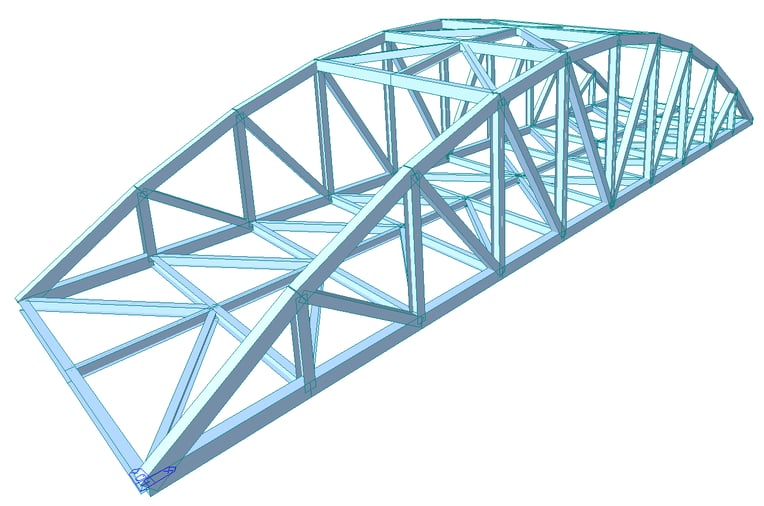
 

figure 1.Figure 1. Arch bridge model using 1D beam elements in MIDAS CIVIL


On the other hand, the detailed analysis model is focused on specific locations where loads are concentrated, such as joints and connections. 


To examine stress distributions more accurately, 2D plate elements or 3D solid elements, as shown in Figure 2, are employed. 
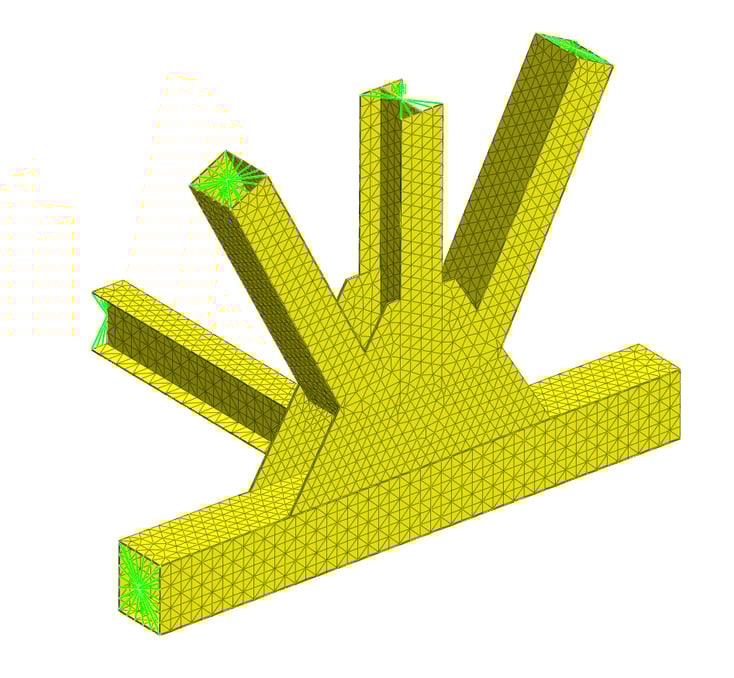


figure 2.Figure 2. Detailed joint model of an arch bridge using 3D solid elements in FEA NX


These two types of modeling, for global and detailed analysis, have differences in the elements used and the modeling scope. Consequently, practitioners often face difficulties in performing separate modeling for each analysis.


If it is possible to create a detailed analysis model based on the global analysis model, it can greatly enhance work efficiency.


2. Global Analysis Model 

The global analysis model of an arch bridge can be conveniently created using the Arch Wizard provided in MIDAS CIVIL.


Firstly, the key dimensions of the arch bridge used in the modeling are its height, width, and length, as shown in Figure 3.
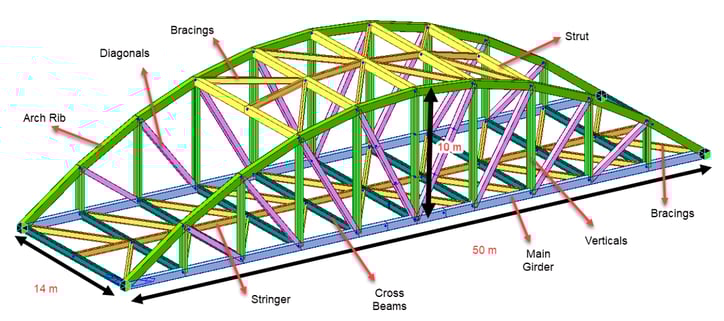
 

figure 3.Figure 3. Key dimensions and nomenclature of an arch bridge


The process of modeling using the Arch Wizard in MIDAS CIVIL can be observed in Video 1.


Video 1. Modeling of an arch bridge using the Arch Wizard for 1D beam elements


By utilizing the Wizard feature for modeling the arch section, which is the most time-consuming part of arch bridge modeling, the process can be completed more easily and efficiently.


3. Detailed Analysis Model for Junctions

Modeling the junctions of an arch bridge can be a challenging task when using 3D solid elements due to the diagonal members installed in multiple directions. It requires a careful coordinate setup to consider the orientation of each member. However, by utilizing the "Frame to Solid" feature in MIDAS CIVIL and linking the global analysis model to FEA NX, the modeling process can be made somewhat easier as the modeling takes into account the direction of each member. While the modeling of localized components such as gusset plates that cannot be fully considered in the global analysis needs to be done separately, significant time can be saved compared to directly starting with 3D solid element modeling.


The process of linking the global analysis model from MIDAS CIVIL to FEA NX using the "Frame to Solid" feature can be seen in Video 2.


Video 2: Modeling of an arch bridge using the "Frame to Solid" feature in MIDAS CIVIL


The resulting junction model can then undergo a 3D finite element analysis using FEA NX to examine stress and deformation.


When conducting a detailed analysis of a specific part within the global analysis model, careful consideration of boundary conditions and applied loads is crucial. Typically, the analysis is performed in MIDAS CIVIL by importing the load values or displacement values at the desired location. However, since the 3D solid elements generated in FEA NX can be imported into MIDAS CIVIL, it is also possible to include the detailed analysis within the global analysis model, as shown in Figure 4.


In this case, there is no need to separately consider boundaries and loads for the detailed analysis model, allowing for a more convenient and integrated analysis.


figure 4.

Figure 4: MIDAS CIVIL modeling including a 3D solid detailed analysis model


4. Conclusion

The process of creating geometric shapes using 2D drawings for detailed analysis using 3D solid elements is a time-consuming and error-prone task that requires careful verification of the consistency and correlation with the global analysis model. In particular, constructing the geometric shape in 3D solid element-based finite element analysis is one of the most time-consuming tasks, especially for structures with complex shapes or slopes, requiring even more time.


By using MIDAS CIVIL and FEA NX together, it becomes easier to generate the modeling for detailed analysis of specific parts within the global analysis model. This saves time that would otherwise be spent on verifying the consistency and correlation with a separate global analysis model.


While the content shown today focused on modeling an arch bridge, the same approach can be applied to other structures such as jacket structures, monopile structures, plant structures, and various types of steel bridge junction modeling using 1D beam elements for analysis.


Try utilizing the "Frame to Solid" feature provided by MIDAS CIVIL to perform detailed analysis modeling of complex junctions in FEA NX.


Susbcribe
MIDAS Newsletter

Thank you, See you soon!
Share
About the author
Sung Youl Ha | Professional Engineer | MIDAS IT

Sung-Youl is a Product Content Team within MIDAS IT. He has over 15+ years of experience in the Harbor & Offshore Structural Engineering & Consulting.


Comments

Download the E-book

Please fill out the below form to
to download the Guide for Modeling a Simple Arch Bridge