Would you like to sign out?

  • Afghanistan English
  • Albania English
  • Algeria English
  • American Samoa English
  • Andorra English
  • Angola English
  • Anguilla English
  • Antarctica English
  • Antigua and Barbuda English
  • Argentina Español
  • Armenia English
  • Aruba English
  • Australia English
  • Austria English
  • Azerbaijan English
  • Bahamas English
  • Bahrain English
  • Bangladesh English
  • Barbados English
  • Belarus English
  • Belgium English
  • Belize English
  • Benin English
  • Bermuda English
  • Bhutan English
  • Bolivia Español
  • Bosnia and Herzegovina English
  • Botswana English
  • Bouvet Island English
  • Brazil English
  • British Indian Ocean Territory English
  • British Virgin Islands English
  • Brunei English
  • Bulgaria English
  • Burkina Faso English
  • Burundi English
  • Cambodia English
  • Cameroon English
  • Canada English
  • Cape Verde English
  • Caribbean Netherlands English
  • Cayman Islands English
  • Central African Republic English
  • Chad English
  • Chile Español
  • Christmas Island English
  • Cocos (Keeling) Islands English
  • Colombia Español
  • Comoros English
  • Congo English
  • Cook Islands English
  • Costa Rica Español
  • Côte d’Ivoire English
  • Croatia English
  • Cuba Español
  • Curaçao English
  • Cyprus English
  • Czech Republic English
  • Democratic Republic of the Congo English
  • Denmark English
  • Djibouti English
  • Dominica English
  • Dominican Republic Español
  • Ecuador Español
  • Egypt English
  • El Salvador Español
  • Equatorial Guinea English
  • Eritrea English
  • Estonia English
  • Ethiopia English
  • Falkland Islands English
  • Faroe Islands English
  • Fiji English
  • Finland English
  • France English
  • French Guiana Español
  • French Polynesia English
  • French Southern Territories English
  • Gabon English
  • Gambia English
  • Georgia English
  • Germany English
  • Ghana English
  • Gibraltar English
  • Greece English
  • Greenland English
  • Grenada English
  • Guadeloupe Español
  • Guam English
  • Guatemala Español
  • Guernsey English
  • Guinea English
  • Guinea-Bissau English
  • Guyana English
  • Haiti Español
  • Heard Island and McDonald Islands English
  • Honduras Español
  • Hong Kong English
  • Hungary English
  • Iceland English
  • India English
  • Indonesia English
  • Iran English
  • Iraq English
  • Ireland English
  • Isle of Man English
  • Israel English
  • Italy English
  • Jamaica English
  • Japan 日本語
  • Jersey English
  • Jordan English
  • Kazakhstan English
  • Kenya English
  • Kiribati English
  • South Korea 한국어
  • Kuwait English
  • Kyrgyzstan English
  • Laos English
  • Latvia English
  • Lebanon English
  • Lesotho English
  • Liberia English
  • Libya English
  • Liechtenstein English
  • Lithuania English
  • Luxembourg English
  • Macau English
  • Madagascar English
  • Malawi English
  • Malaysia English
  • Maldives English
  • Mali English
  • Malta English
  • Marshall Islands English
  • Martinique English
  • Mauritania English
  • Mauritius English
  • Mayotte English
  • Mexico Español
  • Micronesia English
  • Moldova English
  • Monaco English
  • Mongolia English
  • Montenegro English
  • Montserrat English
  • Morocco English
  • Mozambique English
  • Myanmar English
  • Namibia English
  • Nauru English
  • Nepal English
  • Netherlands English
  • New Caledonia English
  • New Zealand English
  • Nicaragua Español
  • Niger English
  • Nigeria English
  • Niue English
  • Norfolk Island English
  • Northern Mariana Islands English
  • Norway English
  • Oman English
  • Pakistan English
  • Palau English
  • Palestine English
  • Panama Español
  • Papua New Guinea English
  • Paraguay Español
  • Peru Español
  • Philippines English
  • Pitcairn Islands English
  • Poland English
  • Portugal Español
  • Puerto Rico Español
  • Qatar English
  • Réunion English
  • Romania English
  • Russia English
  • Rwanda English
  • Saint Barthélemy Español
  • Saint Helena English
  • Saint Kitts and Nevis English
  • Saint Lucia English
  • Saint Martin Español
  • Saint Pierre and Miquelon English
  • Saint Vincent and the Grenadines English
  • Samoa English
  • San Marino English
  • São Tomé and Príncipe English
  • Saudi Arabia English
  • Senegal English
  • Serbia English
  • Seychelles English
  • Sierra Leone English
  • Singapore English
  • Sint Maarten English
  • Slovakia English
  • Slovenia English
  • Solomon Islands English
  • Somalia English
  • South Africa English
  • South Georgia English
  • South Sudan English
  • Spain English
  • Sri Lanka English
  • Sudan English
  • Suriname English
  • Svalbard and Jan Mayen English
  • Eswatini English
  • Sweden English
  • Switzerland English
  • Syria English
  • Taiwan English
  • Tajikistan English
  • Tanzania English
  • Thailand English
  • Togo English
  • Tokelau English
  • Tonga English
  • Trinidad and Tobago English
  • Tunisia English
  • Turkey English
  • Turkmenistan English
  • Turks and Caicos Islands English
  • Tuvalu English
  • U.S. Virgin Islands English
  • Uganda English
  • Ukraine English
  • United Arab Emirates English
  • United Kingdom English
  • United States English
  • U.S. Minor Outlying Islands English
  • Uruguay Español
  • Uzbekistan English
  • Vanuatu English
  • Vatican City English
  • Venezuela Español
  • Vietnam English
  • Wallis and Futuna English
  • Western Sahara English
  • Yemen English
  • Zambia English
  • Zimbabwe English
  • Åland Islands English
  • East Timor English
  • Netherlands Antilles English
  • Serbia and Montenegro English
  • North Macedonia English
  • Timor-Leste English

MIDAS API Plug-in: Inertial Forces Controller

February 13, 2024
BLOG BRIDGE INSIGHT

1. The usual method for calculating inertial force

   For curved and skew bridges, when the overall coordinate system (Global Coordinate System) and the diagonals/orthogonals of the piers are not parallel in the analysis, users need to consider the seismic inertial forces in the horizontal direction acting on the entire pier in the "most unfavorable direction.”

Therefore, in practical applications, for each pier, the out-of-plane/in-plane directions are determined as the inertial force direction. The final load direction is then chosen as the "most unfavorable result," and the corresponding results are adopted for review.

   In this case, as the inertial force direction needs to be considered for each pier, the number of load cases and the corresponding load review cases must be generated accordingly.


2. Here's an easier way to input the inertial force of curved bridges


💡 Highlights

  • You can input the inertial force acting on the curved bridge piers using a simple method.
  • You can generate the inertial forces in the global coordinate system for different rotation angles of the piers in bulk.


   The current program defines the load application direction in the Global Coordinate System, causing the inconvenience of manually calculating and inputting inertial forces for each pier in curved bridges.

This plugin has been developed to simplify the application of inertial forces for curved bridges by allowing users to input the direction rotated by a specific angle concerning the horizontal direction along the Z-axis of the global coordinate system when the inertial force direction does not align with the global coordinate system for the entire pier.


Figure1. Review direction for the application of inertial forces in curved bridges

Figure1. Review direction for the application of inertial forces in curved bridges


3. Plugin manual for the Inertial Forces Controller


   This part will explain the operating steps and each component in detail.


1. Open MIDAS CIVIL NX → Connect API → Open Plug-in Marketplace → Run Inertial Forces Controller Plugin
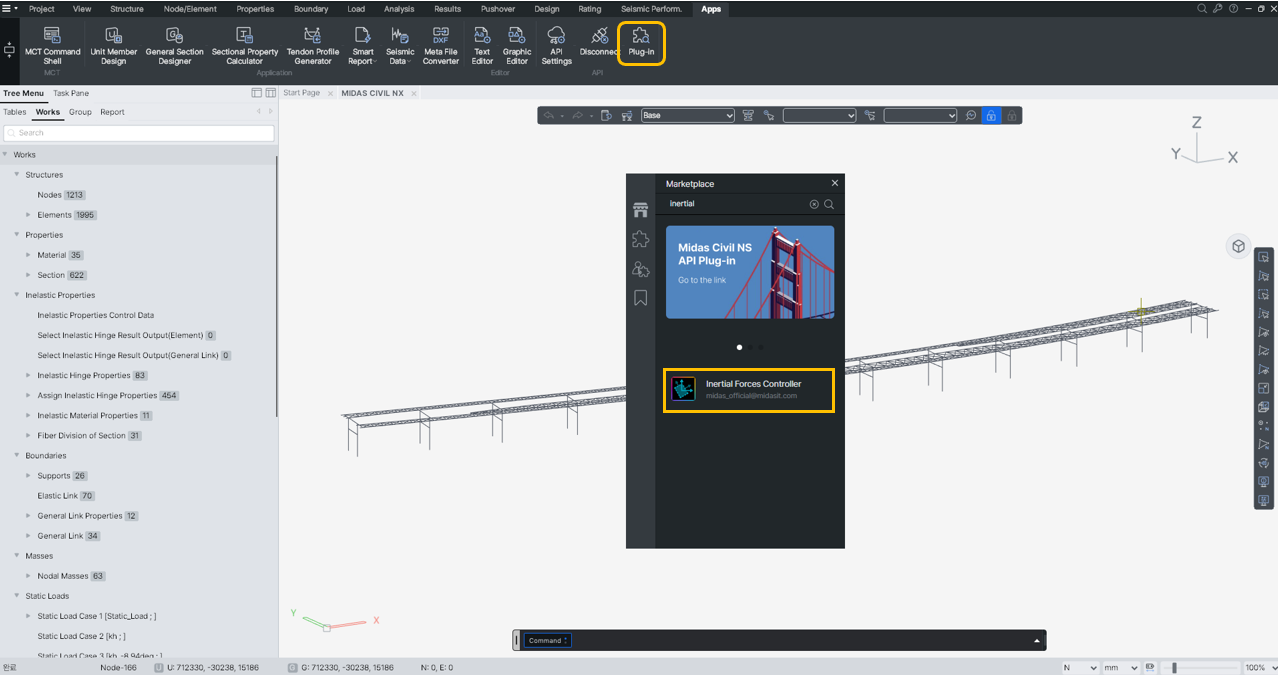
 

Figure2. Inertial Forces Controller Plugin Screenshot

Figure2. Inertial Forces Controller Plugin Screenshot


2. When users operate the Inertial Forces Controller plug-in, they can add this plug-in to the users’ bookmark(1). The user can read plug-in information(2) and start by clicking the Run(3) button.
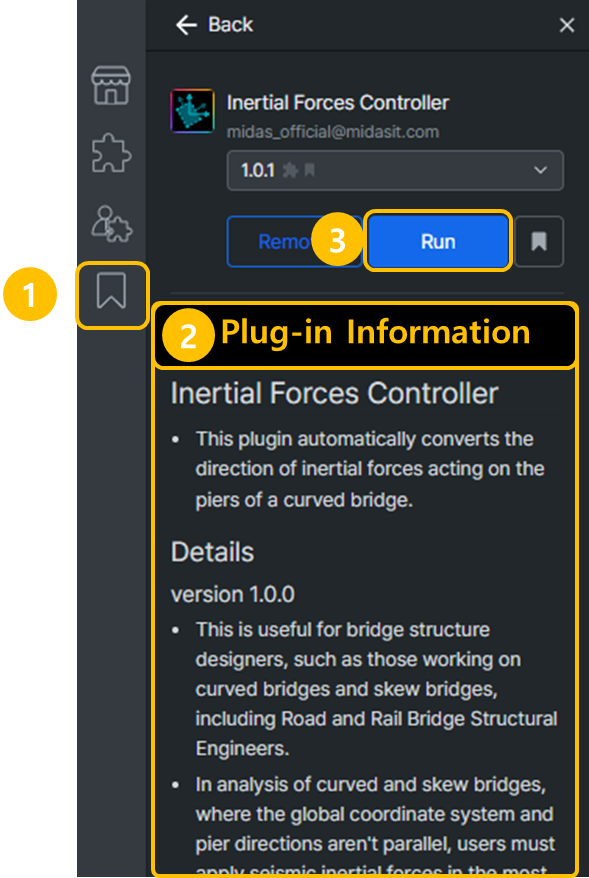
 

Figure3. Inertial Forces Controller PluginFigure3. Inertial Forces Controller Plugin


3. A new pop-up window will appear as this image. The user can show lists from Time History Load Cases, Static Load from Static Load Cases, and from Time History Functions(3)

   (1) In these lists, time history load cases for products with the Analysis Method set to "Static" type are displayed.

   (2) The static loads as shown are limited to cases where "Nodal Body Force" and "Nodal Loads" are assigned.

   (3) The time history functions with the "Normal" type for the Time Forcing Functions Data configured in the product settings are displayed.

   Additionally, it provides the following "Linear" function as default (Preset: Linear).
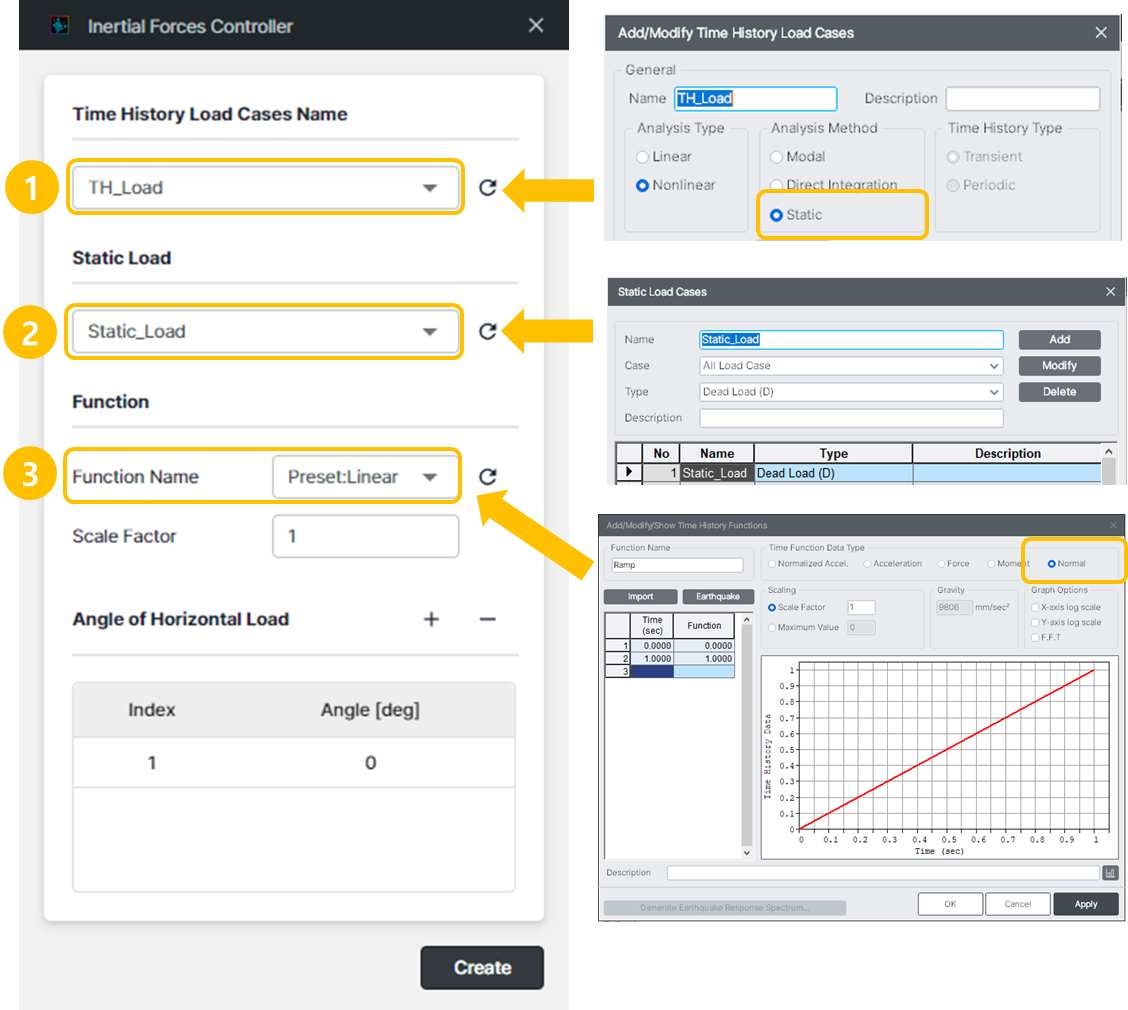
 

Figure4. Inertial Force Controller - Load Case Setting

Figure4. Inertial Force Controller - Load Case Setting


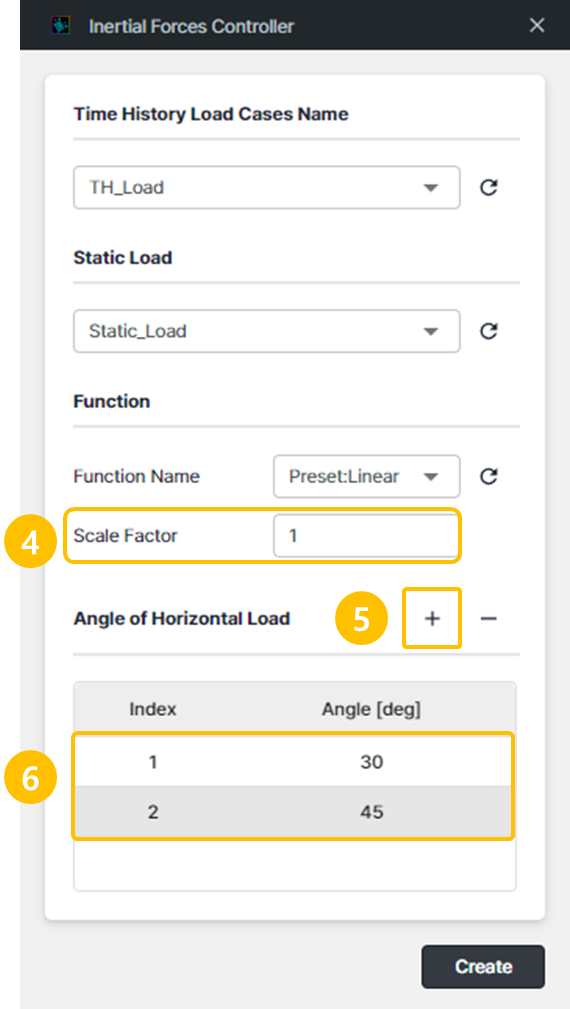
4. After inputting the load case information, input the scaling factor(4) for the time load function and the angle of the horizontal load(6). This angle represents the rotation of the X-axis concerning the Z-axis of the global coordinate system, which is aligned with the direction of the horizontal component of ground acceleration. You can input a positive real number, and using the "+" button(5), users can define multiple rotation angles.


Be careful!

(4)The scale factor should be larger than zero. and (6) angles cannot be defined as the same size.


Figure5. Inertial Force Controller - Scale Factor Angle Setting

Figure5. Inertial Force Controller - Scale Factor/Angle Setting


5. After inputting previous information, press the Create button(7). Then, MIDAS CIVIL NX will newly create static load cases with added nodal body forces, time history load cases, time forcing functions, and time-varying static load as below.

   The additional nodal body forces will be added in the form of "Static Load Name**_angle deg**," where the angle is in degrees, as configured in the "Static Load" setting.
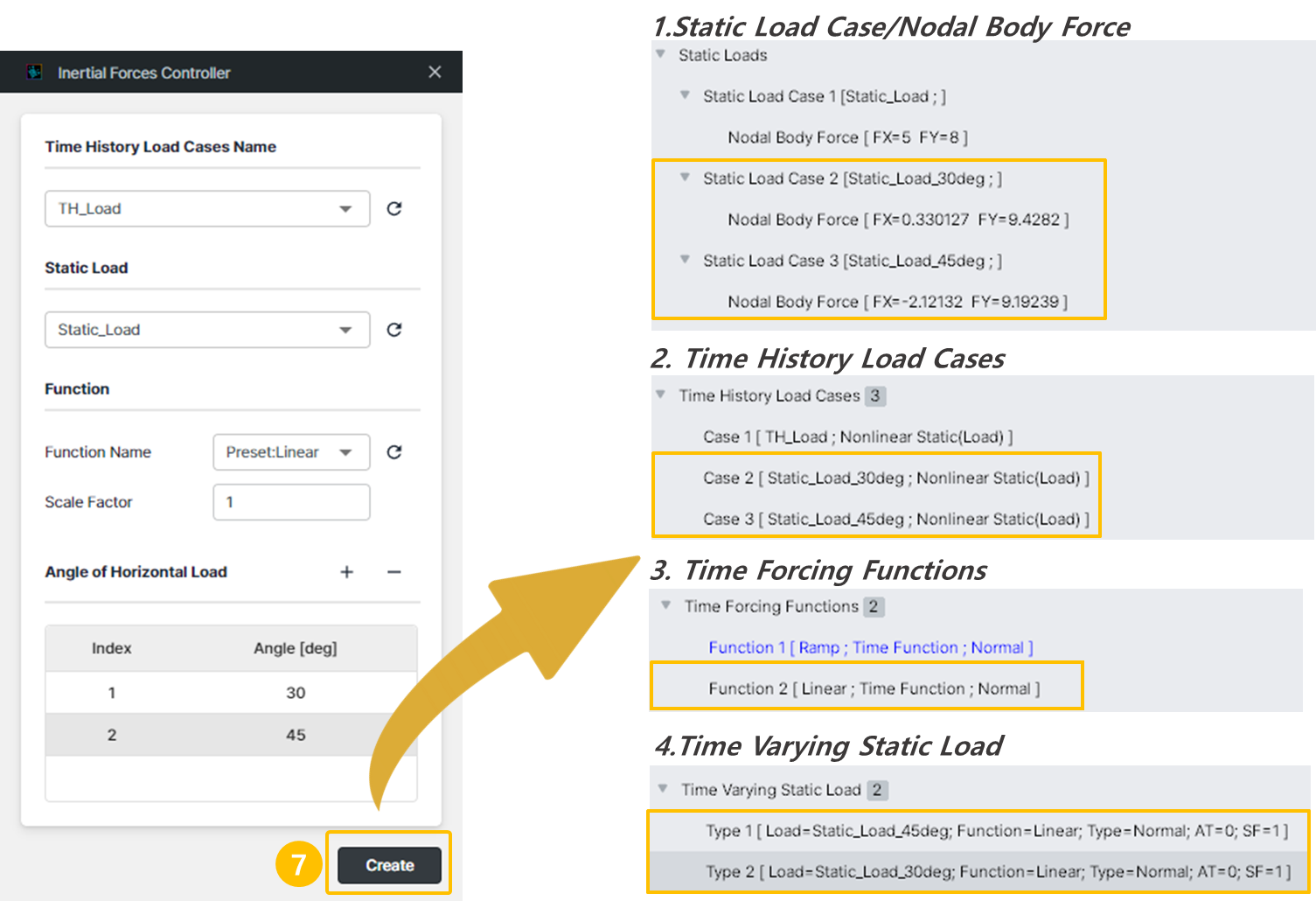

Figure6. Inertial Forces Controller Plugin - input information

Figure6. Inertial Forces Controller Plugin - input information


   The existing input nodal body forces loads are transformed according to the following procedure based on the angle of the load.


4. Coordinate-transformation Calculation
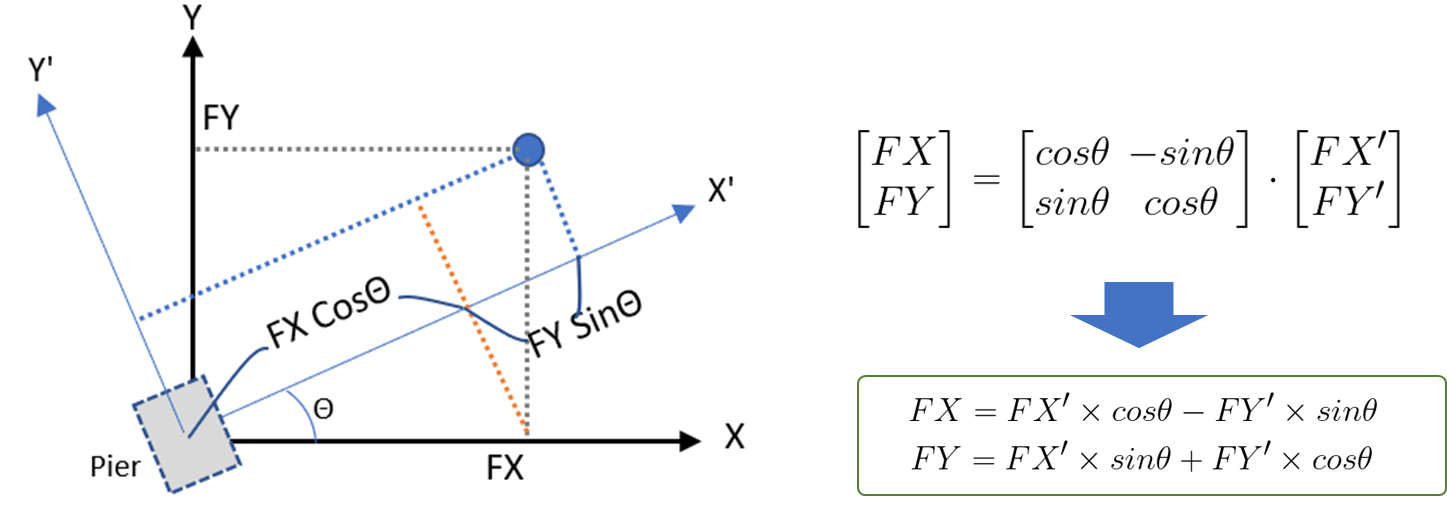
 

Figure7.

Figure7. Coordinate-transformation Calculation


   For example, when generated in the 30-degree direction, it automatically creates a static load case that is coordinate-transformed from the original static load.
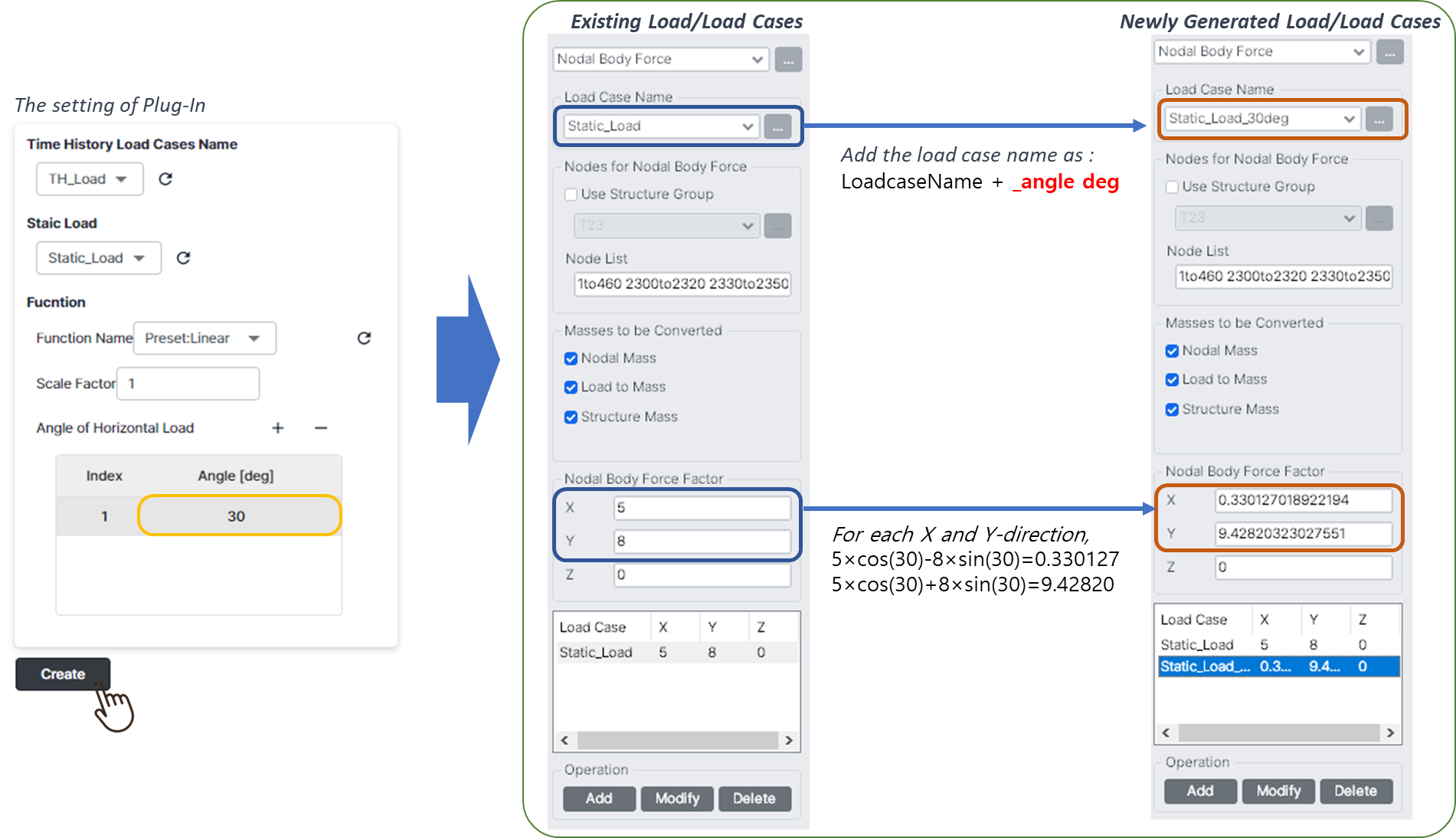
 

Figure8. The load is transformed into X and Y axes in the specified angle direction

Figure8. The load is transformed into X and Y axes in the specified angle direction


5. Conclusion

   The Inertial Forces Controller plugin automatically transforms the load direction of the inertia forces that need to be applied based on the number of braces, saving users time and eliminating potential human errors. Users only need to input the horizontal direction along the Z-axis of the global coordinate system to easily control inertia forces. Why don't you explore the benefits of using this plugin?


💡 Efficiently generate transformed inertial forces using the Inertial Forces Controller in MIDAS CIVIL NX!


#CurvedBridge #SkewBridge #InertialForces

Susbcribe
MIDAS Newsletter

Thank you, See you soon!
Share
About the Author
Lenny | Technical Manager | MIDAS IT HQ

Lenny has over 10+ years of experience in building design, especially apartment, complex and plant structures. He is currently working at MIDAS IT as a technical manager, mainly assisting with various projects related to structural engineering.

Comments