Would you like to sign out?

Select Country

  • Afghanistan English
  • Albania English
  • Algeria English
  • American Samoa English
  • Andorra English
  • Angola English
  • Anguilla English
  • Antarctica English
  • Antigua and Barbuda English
  • Argentina Español
  • Armenia English
  • Aruba English
  • Australia English
  • Austria English
  • Azerbaijan English
  • Bahamas English
  • Bahrain English
  • Bangladesh English
  • Barbados English
  • Belarus English
  • Belgium English
  • Belize English
  • Benin English
  • Bermuda English
  • Bhutan English
  • Bolivia Español
  • Bosnia and Herzegovina English
  • Botswana English
  • Bouvet Island English
  • Brazil English
  • British Indian Ocean Territory English
  • British Virgin Islands English
  • Brunei English
  • Bulgaria English
  • Burkina Faso English
  • Burundi English
  • Cambodia English
  • Cameroon English
  • Canada English
  • Cape Verde English
  • Caribbean Netherlands English
  • Cayman Islands English
  • Central African Republic English
  • Chad English
  • Chile Español
  • Christmas Island English
  • Cocos (Keeling) Islands English
  • Colombia Español
  • Comoros English
  • Congo English
  • Cook Islands English
  • Costa Rica Español
  • Côte d’Ivoire English
  • Croatia English
  • Cuba Español
  • Curaçao English
  • Cyprus English
  • Czech Republic English
  • Democratic Republic of the Congo English
  • Denmark English
  • Djibouti English
  • Dominica English
  • Dominican Republic Español
  • Ecuador Español
  • Egypt English
  • El Salvador Español
  • Equatorial Guinea English
  • Eritrea English
  • Estonia English
  • Ethiopia English
  • Falkland Islands English
  • Faroe Islands English
  • Fiji English
  • Finland English
  • France English
  • French Guiana Español
  • French Polynesia English
  • French Southern Territories English
  • Gabon English
  • Gambia English
  • Georgia English
  • Germany English
  • Ghana English
  • Gibraltar English
  • Greece English
  • Greenland English
  • Grenada English
  • Guadeloupe Español
  • Guam English
  • Guatemala Español
  • Guernsey English
  • Guinea English
  • Guinea-Bissau English
  • Guyana English
  • Haiti Español
  • Heard Island and McDonald Islands English
  • Honduras Español
  • Hong Kong English
  • Hungary English
  • Iceland English
  • India English
  • Indonesia English
  • Iran English
  • Iraq English
  • Ireland English
  • Isle of Man English
  • Israel English
  • Italy English
  • Jamaica English
  • Japan 日本語
  • Jersey English
  • Jordan English
  • Kazakhstan English
  • Kenya English
  • Kiribati English
  • South Korea 한국어
  • Kuwait English
  • Kyrgyzstan English
  • Laos English
  • Latvia English
  • Lebanon English
  • Lesotho English
  • Liberia English
  • Libya English
  • Liechtenstein English
  • Lithuania English
  • Luxembourg English
  • Macau English
  • Madagascar English
  • Malawi English
  • Malaysia English
  • Maldives English
  • Mali English
  • Malta English
  • Marshall Islands English
  • Martinique English
  • Mauritania English
  • Mauritius English
  • Mayotte English
  • Mexico Español
  • Micronesia English
  • Moldova English
  • Monaco English
  • Mongolia English
  • Montenegro English
  • Montserrat English
  • Morocco English
  • Mozambique English
  • Myanmar English
  • Namibia English
  • Nauru English
  • Nepal English
  • Netherlands English
  • New Caledonia English
  • New Zealand English
  • Nicaragua Español
  • Niger English
  • Nigeria English
  • Niue English
  • Norfolk Island English
  • Northern Mariana Islands English
  • Norway English
  • Oman English
  • Pakistan English
  • Palau English
  • Palestine English
  • Panama Español
  • Papua New Guinea English
  • Paraguay Español
  • Peru Español
  • Philippines English
  • Pitcairn Islands English
  • Poland English
  • Portugal Español
  • Puerto Rico Español
  • Qatar English
  • Réunion English
  • Romania English
  • Russia English
  • Rwanda English
  • Saint Barthélemy Español
  • Saint Helena English
  • Saint Kitts and Nevis English
  • Saint Lucia English
  • Saint Martin Español
  • Saint Pierre and Miquelon English
  • Saint Vincent and the Grenadines English
  • Samoa English
  • San Marino English
  • São Tomé and Príncipe English
  • Saudi Arabia English
  • Senegal English
  • Serbia English
  • Seychelles English
  • Sierra Leone English
  • Singapore English
  • Sint Maarten English
  • Slovakia English
  • Slovenia English
  • Solomon Islands English
  • Somalia English
  • South Africa English
  • South Georgia English
  • South Sudan English
  • Spain English
  • Sri Lanka English
  • Sudan English
  • Suriname English
  • Svalbard and Jan Mayen English
  • Eswatini English
  • Sweden English
  • Switzerland English
  • Syria English
  • Taiwan English
  • Tajikistan English
  • Tanzania English
  • Thailand English
  • Togo English
  • Tokelau English
  • Tonga English
  • Trinidad and Tobago English
  • Tunisia English
  • Turkey English
  • Turkmenistan English
  • Turks and Caicos Islands English
  • Tuvalu English
  • U.S. Virgin Islands English
  • Uganda English
  • Ukraine English
  • United Arab Emirates English
  • United Kingdom English
  • United States English
  • U.S. Minor Outlying Islands English
  • Uruguay Español
  • Uzbekistan English
  • Vanuatu English
  • Vatican City English
  • Venezuela Español
  • Vietnam English
  • Wallis and Futuna English
  • Western Sahara English
  • Yemen English
  • Zambia English
  • Zimbabwe English
  • Åland Islands English
  • East Timor English
  • Netherlands Antilles English
  • Serbia and Montenegro English
  • North Macedonia English
  • Timor-Leste English

The Role of Eurocode and BS Code in Structural Engineering

April 19, 2024
BLOG BRIDGE INSIGHT

Eurocode VS BS code

shutterstock_2221871071


Introduction

The Eurocodes’ history started around 1971-1976 when the Public Procurement Directive organized a steering committee to propose the development of a common European code that could cover the design of a great diversity of construction works.

Public safety, durability, and serviceability are really important issues for society, becoming significant aspects of the regulation of construction. It brought then, new rules into the Eurocodes regarding existing structures which accurately are objects of concern since they have undergone a long history of evolution. However, this concept does not mean that structures became suddenly unsafe, this only draws attention to the need for understanding, for instance, the changes in the load and consequent behavior in the structures.


History of BS code

In the late 1950s, there a rapid development of the UK road and motorway regarding structural design. The Ministry of Transport (Mot) was the entity that introduced a new guidance document regarding this subject. This document consisted of guidelines for standards, methods of construction, and loadings. By 1965, 1000 designs of Bridges had been already approved by that division. Nevertheless, apart from the constant appearance of new works, a growth concern about the maintenance of existing bridges started to occur due to increased traffic volume and weight.


A series of Euro codes Developed

Euro codes are a series of 10 European Technical Standards that provide a common approach to the structural design of buildings and other civil engineering works.


Euro code can be found in 10 significant categories:


EN 1990 Eurocode 0 Basis of Design
EN 1991 Eurocode 1 Action of Structures
EN 1992 Eurocode 2 Design of Concrete Structures
EN 1993 Eurocode 3 Design of steel structures
EN 1994 Eurocode 4 Design of composite steel and concrete structures
EN 1995 Eurocode 5 Design of timber structures
EN 1996 Eurocode 6 Design of masonry structures
EN 1997 Eurocode 7 Geotechnical Design
EN 1998 Eurocode 8 Design of structures for earthquake resistance
EN 1999 Eurocode 9 Design of aluminum structures


These codes have been approved by CEN and they could co-exist with the appropriate National code under the rules of the same authority.


Series of BS codes Developed

BD 63/07 Inspection of Highway Structures
BD  21/01 The Assessment of Highway Bridges and Structures
BD 37/01 Loads for Highway Bridges
BD 44/15 Assessment of Concrete Highway Bridges of Structures
BD 86/11 The Assessment of Highway Bridges and Structures for the effects of Special Types General Order (STGO) and Special Order (SO) vehicles
BD 56/10 The Assessment of Steel Highway Bridges and Structures
BD 61/10 The Assessment of Composite Highway Bridges and Structures


Major Differences between Euro Code and BS Code

 

shutterstock_2165952559-1


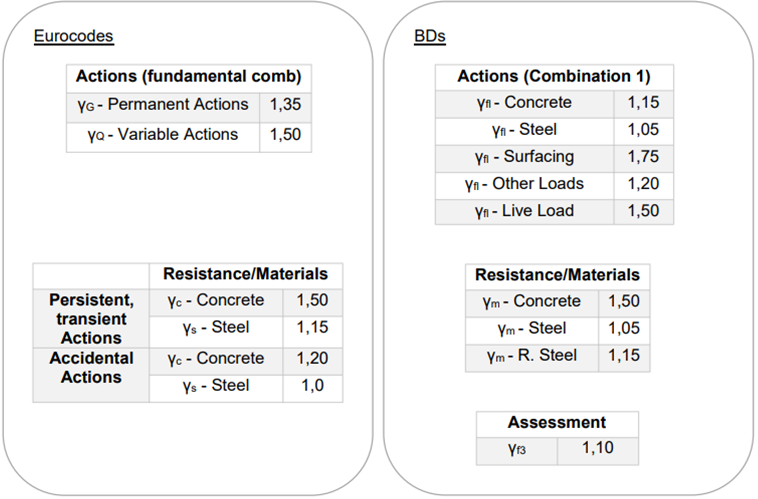
Partial Safety Factor


Partial Safety Factors

Partial Safety Factors


Moving Loads Based on Lanes
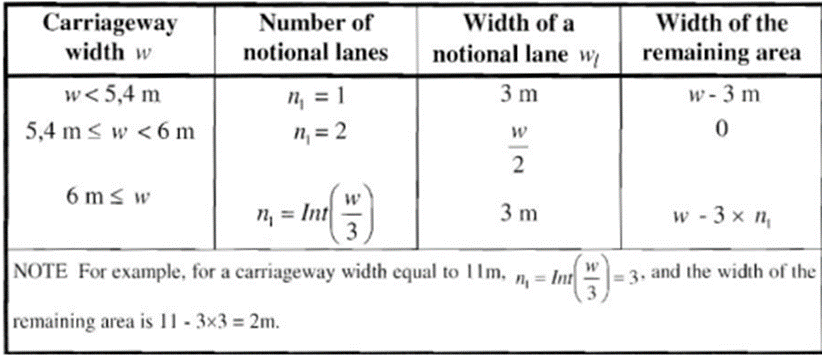
 

Number of lanes according to Euro codeNumber of lanes according to Euro code


Number of Notional Lanes, according to BDs [29]

Number of Notional Lanes, according to BDs [29]


Conclusion

So, as we can see there are several other differences between the Euro code and BS codes, and a lot of recent developments have taken place both the codes Euro and BS codes are equally important in each way both from an assessment point of view and a designing point of view. So in the coming years as a structural engineer, we need to give equal importance to the design of any structural element or assessment of a structural component. As this industry is rapidly growing both these things are going to work hand in hand. So let’s all cherish the fact that we have 2 such codes and both are equally contributing to this massive infrastructure world.


Susbcribe
MIDAS Newsletter

Thank you, See you soon!
Share
Comments