Would you like to sign out?

Select Country

  • Afghanistan English
  • Albania English
  • Algeria English
  • American Samoa English
  • Andorra English
  • Angola English
  • Anguilla English
  • Antarctica English
  • Antigua and Barbuda English
  • Argentina Español
  • Armenia English
  • Aruba English
  • Australia English
  • Austria English
  • Azerbaijan English
  • Bahamas English
  • Bahrain English
  • Bangladesh English
  • Barbados English
  • Belarus English
  • Belgium English
  • Belize English
  • Benin English
  • Bermuda English
  • Bhutan English
  • Bolivia Español
  • Bosnia and Herzegovina English
  • Botswana English
  • Bouvet Island English
  • Brazil English
  • British Indian Ocean Territory English
  • British Virgin Islands English
  • Brunei English
  • Bulgaria English
  • Burkina Faso English
  • Burundi English
  • Cambodia English
  • Cameroon English
  • Canada English
  • Cape Verde English
  • Caribbean Netherlands English
  • Cayman Islands English
  • Central African Republic English
  • Chad English
  • Chile Español
  • Christmas Island English
  • Cocos (Keeling) Islands English
  • Colombia Español
  • Comoros English
  • Congo English
  • Cook Islands English
  • Costa Rica Español
  • Côte d’Ivoire English
  • Croatia English
  • Cuba Español
  • Curaçao English
  • Cyprus English
  • Czech Republic English
  • Democratic Republic of the Congo English
  • Denmark English
  • Djibouti English
  • Dominica English
  • Dominican Republic Español
  • Ecuador Español
  • Egypt English
  • El Salvador Español
  • Equatorial Guinea English
  • Eritrea English
  • Estonia English
  • Ethiopia English
  • Falkland Islands English
  • Faroe Islands English
  • Fiji English
  • Finland English
  • France English
  • French Guiana Español
  • French Polynesia English
  • French Southern Territories English
  • Gabon English
  • Gambia English
  • Georgia English
  • Germany English
  • Ghana English
  • Gibraltar English
  • Greece English
  • Greenland English
  • Grenada English
  • Guadeloupe Español
  • Guam English
  • Guatemala Español
  • Guernsey English
  • Guinea English
  • Guinea-Bissau English
  • Guyana English
  • Haiti Español
  • Heard Island and McDonald Islands English
  • Honduras Español
  • Hong Kong English
  • Hungary English
  • Iceland English
  • India English
  • Indonesia English
  • Iran English
  • Iraq English
  • Ireland English
  • Isle of Man English
  • Israel English
  • Italy English
  • Jamaica English
  • Japan 日本語
  • Jersey English
  • Jordan English
  • Kazakhstan English
  • Kenya English
  • Kiribati English
  • South Korea 한국어
  • Kuwait English
  • Kyrgyzstan English
  • Laos English
  • Latvia English
  • Lebanon English
  • Lesotho English
  • Liberia English
  • Libya English
  • Liechtenstein English
  • Lithuania English
  • Luxembourg English
  • Macau English
  • Madagascar English
  • Malawi English
  • Malaysia English
  • Maldives English
  • Mali English
  • Malta English
  • Marshall Islands English
  • Martinique English
  • Mauritania English
  • Mauritius English
  • Mayotte English
  • Mexico Español
  • Micronesia English
  • Moldova English
  • Monaco English
  • Mongolia English
  • Montenegro English
  • Montserrat English
  • Morocco English
  • Mozambique English
  • Myanmar English
  • Namibia English
  • Nauru English
  • Nepal English
  • Netherlands English
  • New Caledonia English
  • New Zealand English
  • Nicaragua Español
  • Niger English
  • Nigeria English
  • Niue English
  • Norfolk Island English
  • Northern Mariana Islands English
  • Norway English
  • Oman English
  • Pakistan English
  • Palau English
  • Palestine English
  • Panama Español
  • Papua New Guinea English
  • Paraguay Español
  • Peru Español
  • Philippines English
  • Pitcairn Islands English
  • Poland English
  • Portugal Español
  • Puerto Rico Español
  • Qatar English
  • Réunion English
  • Romania English
  • Russia English
  • Rwanda English
  • Saint Barthélemy Español
  • Saint Helena English
  • Saint Kitts and Nevis English
  • Saint Lucia English
  • Saint Martin Español
  • Saint Pierre and Miquelon English
  • Saint Vincent and the Grenadines English
  • Samoa English
  • San Marino English
  • São Tomé and Príncipe English
  • Saudi Arabia English
  • Senegal English
  • Serbia English
  • Seychelles English
  • Sierra Leone English
  • Singapore English
  • Sint Maarten English
  • Slovakia English
  • Slovenia English
  • Solomon Islands English
  • Somalia English
  • South Africa English
  • South Georgia English
  • South Sudan English
  • Spain English
  • Sri Lanka English
  • Sudan English
  • Suriname English
  • Svalbard and Jan Mayen English
  • Eswatini English
  • Sweden English
  • Switzerland English
  • Syria English
  • Taiwan English
  • Tajikistan English
  • Tanzania English
  • Thailand English
  • Togo English
  • Tokelau English
  • Tonga English
  • Trinidad and Tobago English
  • Tunisia English
  • Turkey English
  • Turkmenistan English
  • Turks and Caicos Islands English
  • Tuvalu English
  • U.S. Virgin Islands English
  • Uganda English
  • Ukraine English
  • United Arab Emirates English
  • United Kingdom English
  • United States English
  • U.S. Minor Outlying Islands English
  • Uruguay Español
  • Uzbekistan English
  • Vanuatu English
  • Vatican City English
  • Venezuela Español
  • Vietnam English
  • Wallis and Futuna English
  • Western Sahara English
  • Yemen English
  • Zambia English
  • Zimbabwe English
  • Åland Islands English
  • East Timor English
  • Netherlands Antilles English
  • Serbia and Montenegro English
  • North Macedonia English
  • Timor-Leste English

Integral Bridge Analysis: Forder Valley Viaduct Bridge

February 9, 2021
BLOG CASE STUDY

This case study covers the following aspects:


  1. Overview of Integral Bridges

  2. Bridge Type

  3. Case Study 

  4. Time-Dependent Material Properties

  5. Construction Stages in Midas Civil

  6. Thermal action and its application in Midas Civil

  7. Earth pressure application in Midas Civil

  8. Global Static Analysis and Result Discussion

  9. Conclusion


1. Overview of Integral Bridges


An Integral bridge contains no expansion joints to accommodate enlargement due to temperature variations, and spans are monolithically cast from abutment to abutment. Thereby movement due to thermal expansion and contraction or braking loads is accommodated by the abutments and piers (if present).
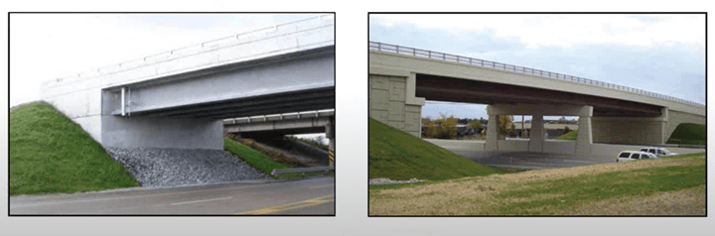
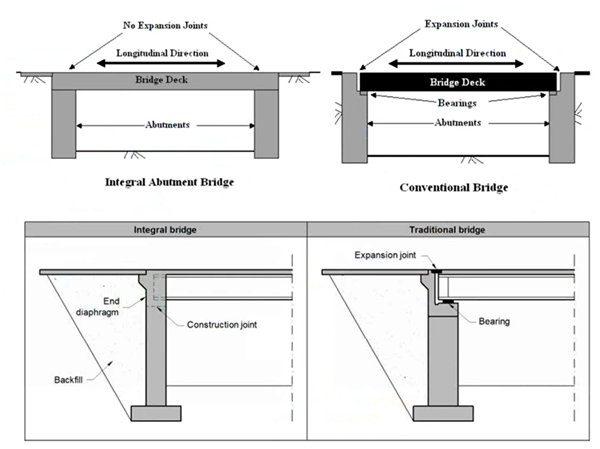
 

Figure 1: Integral Bridges
 
 
Figure 2: Structural arrangement of integral and jointed deck bridge


Continuous structures have proved to be more durable than simply supported decks, primarily because deck joints have allowed salty water to leak through to piers and abutments. Even BD 57/01 recommends the bridge structures to be designed as continuous over intermediate supports.


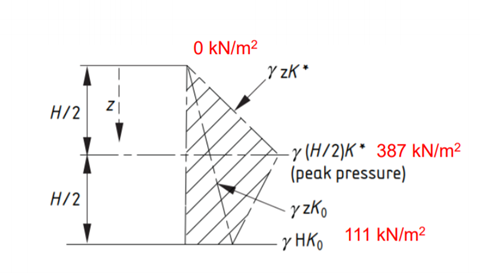
Integral bridges are subjected to many thermal cycles, repeated backward and forward movement of the abutment due to thermal expansion and contraction. This generates pressure when the bridge is expanding and is significantly higher than those that would occur with a single thermal cycle. After many cycles, this pressure tends to a maximum value with a pressure coefficient of K*. This K* is dependent on the total movement of the end of the deck from its maximum contraction position to its maximum expansion position.
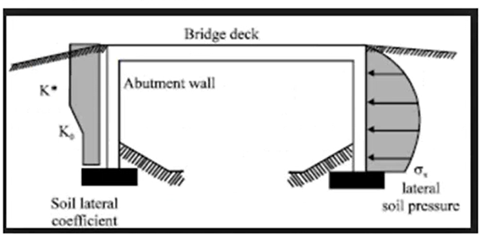
 

Figure 3: Earth Pressure Distribution in Integral Bridge


An alternative to applying the earth pressure loads is to assign appropriate spring supports to the abutment and/or piles to represent the soil properties. A method for calculation of the spring stiffness for abutments and piles published by Barry Lehane (1999, 2000, 2006) has gained significant popularity due to satisfactory performance in the prediction of the soil-structure interaction. This method considers the nonlinear behavior of soils and accounts for long-term ratcheting effects. In midas Civil this method has been adopted for automated definition of soil springs for abutments and piles.
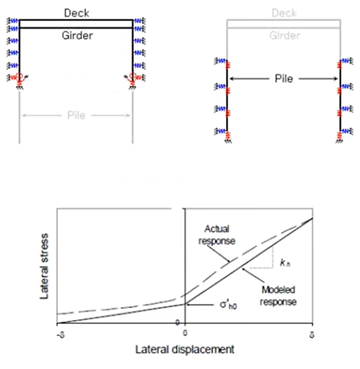
 

Figure 4: Soil Springs


2. Bridge Type


Integral Bridge Type


3. Case Study Brief.


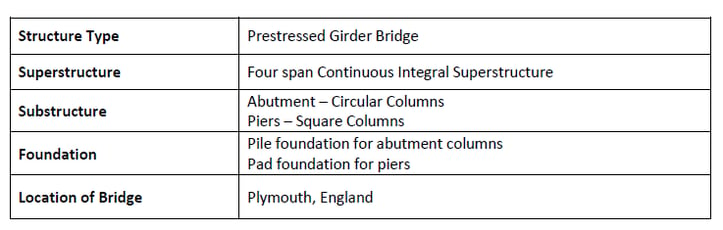
Forder Valley Link Road (FVLR) is a proposed one-kilometer road linking William Prance Road in Derriford to the junction of Forder Valley Road and Novorossiysk Road. It will also improve accessibility for vehicles, buses, cyclists and pedestrians to key destinations.


A. Choice of structure type and backfill materials
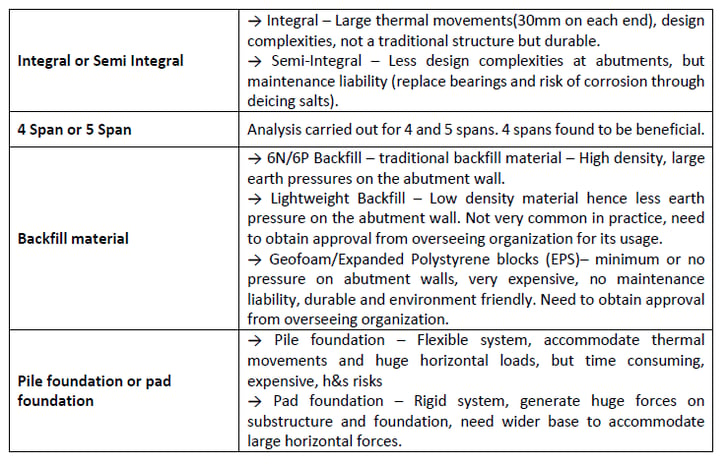
 

A. Choice of structure type and backfill materials


B. Choice of Abutment Wall
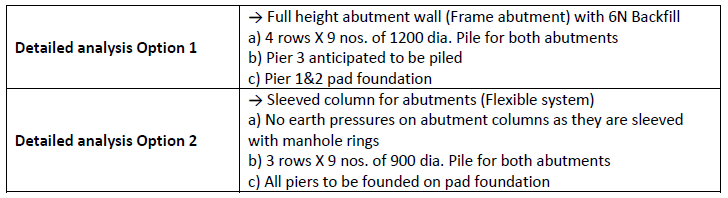

B. Choice of Abutment Wall


Design was finalized with Option 2 as it was structurally sound and cost-effective solution.
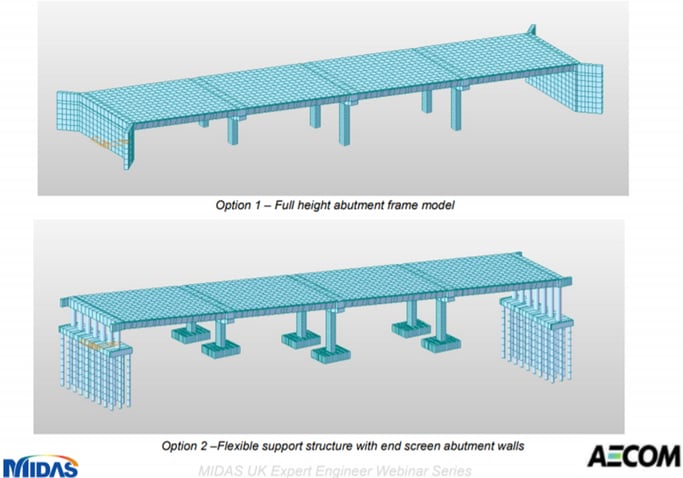
Figure 5: Viaduct options


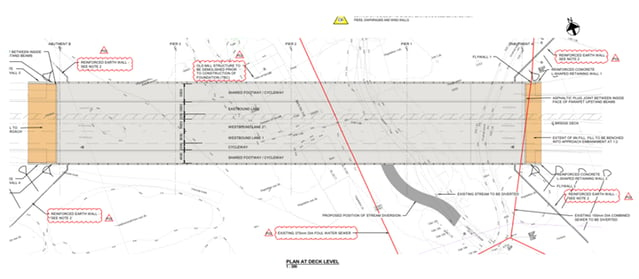
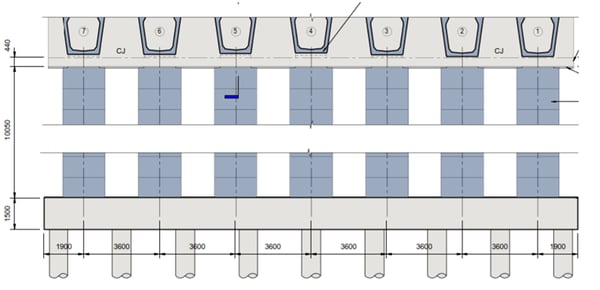
Figure 6: Bridge plane view
Figure 6: Bridge plane view (Click here to zoom)


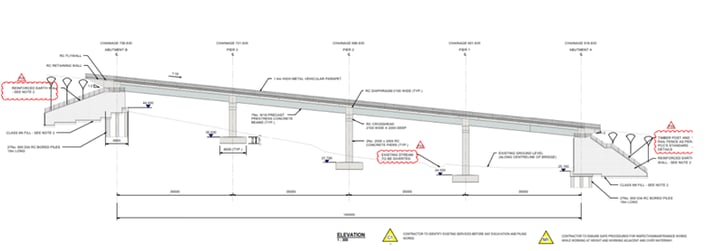
 Figure 7: Bridge elevation view
 
Figure 7: Bridge elevation view (Click here to zoom)


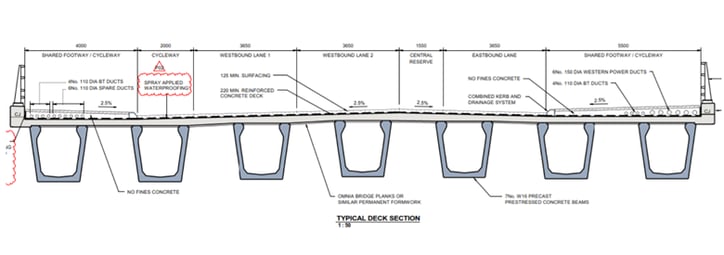
Figure 8: Bridge cross section view
Figure 8: Bridge cross section view (Click here to zoom)


Figure 9: Abutment elevation view
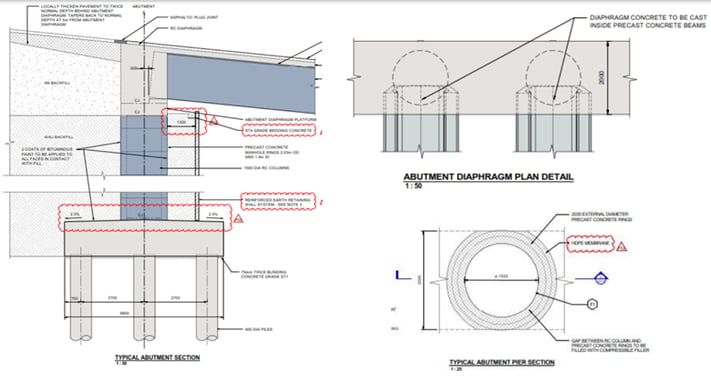
Figure 9: Abutment elevation view
 

Picture10
Figure 10: Abutment longitudinal section and plan view (Click here to zoom)
 
 
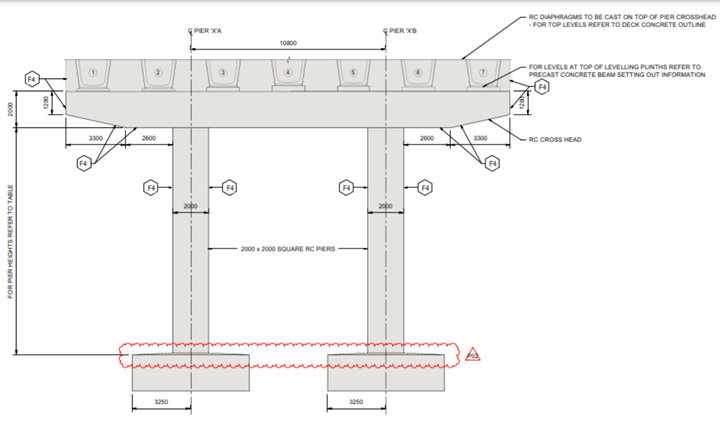
Figure 11: Pier section 
Figure 11: Pier section (Click here to zoom)


4. Time-Dependent Material Properties


Shrinkage and Creep are time-dependent properties of concrete and depend on the ambient humidity, the dimensions of the element, and the composition of concrete. Creep is also influenced by the maturity of the concrete when the load is first applied and depends on the duration and magnitude of the loading. These effects are generally considered into account for the verification of serviceability limit states. The effects of shrinkage and creep should be considered at ultimate limit states only where their effects are significant, for example in the verification of ultimate limit states of stability where second-order effects are of importance. In building structures, temperature and shrinkage effects may be omitted in the global analysis provided joints are incorporated at every 30m to accommodate resulting deformations.


1. Creep Coefficient and Shrinkage Strain for construction stage analysis


Midas Civil considers the creep and shrinkage in concrete members having different maturities and compressive strength gains of concrete members as a function of time. Below Table-1 indicates the relevant code clauses that midas civil uses to consider the creep and shrinkage effects.

 

   Table 1: Relevant code clauses
Table 1: Relevant code clauses


2. Compressive strength at t days for construction stage analysis


Cl. 3.1.2 (6) BS EN 1992-1-1 gives the basic equation to calculate the compressive strength at t days and are shown below:
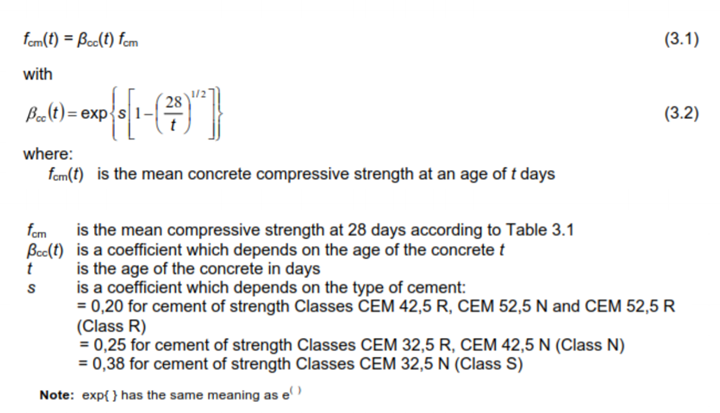
 

 Figure 12: BS EN 1992-1-1 extract
 
Figure 12: BS EN 1992-1-1 extract


5. Construction Stages in Midas Civil


Below construction sequence of the Forder valley viaduct is simulated in the midas model:


1. Construct foundation and substructure

2. Erect span 1 beams to span 4 beams progressively

3. Concrete deck pour except at pier regions and abutment ends (simply supported condition)

4. Deck pour stitch in concrete to make the structure fully integral

5. Install surfacing

6. Service condition – Open to traffic
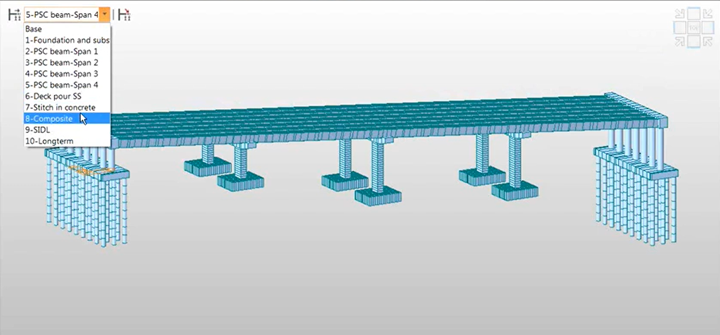


Figure 13: Model having the construction stages


6. Thermal action and its application in Midas Civil


Daily and seasonal changes in shade air temperature, solar radiation, etc. will result in variations of the temperature distribution within individual elements of the structure. The magnitude of thermal effects will be dependent on local climatic conditions, together with the orientation of the structure, finishes, and overall mass. The temperature distribution within an individual structural element may be split into the following four essential components, shown in Figure 4.1 of BS EN 1995-1-5-Thermal actions
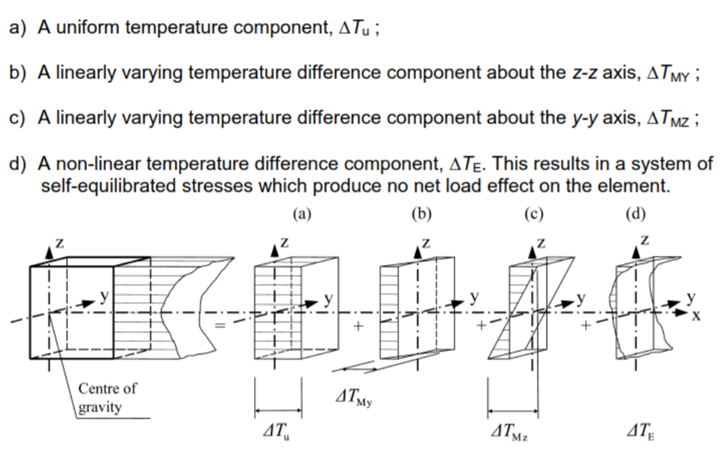
 

Figure 14: BS EN 1992-1-1 extract


The strains and therefore any resulting stresses are dependent on the geometry and boundary conditions of the element being considered and on the physical properties of the material used.


Minimum and Maximum air shade temperatures (Tmin and Tmax) for the site shall be derived from isotherms – Figure NA.1&NA.2 NA to BS EN 1991-1-5:2003. The air shade temperatures shall be adjusted for height above sea level. Refer A.1 (1) Note 2 BS EN 1991-1-5:2003. The minimum and maximum uniform bridge temperature components Temin and Temax shall be determined using the type of bridge deck as shown in the figure below.
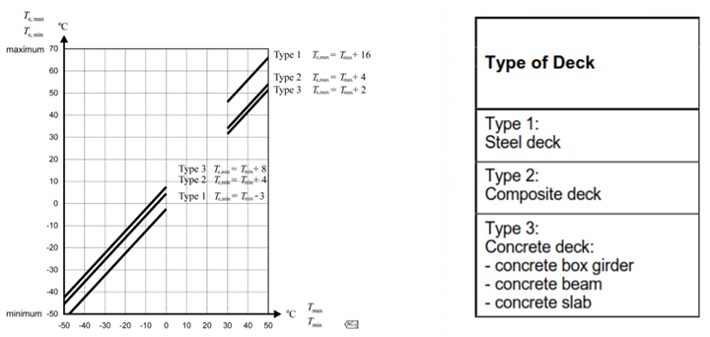
 

Figure 15: BS EN 1992-1-1 Uniform Temperature – code extract
Figure 15: BS EN 1992-1-1 Uniform Temperature – code extract (Click here to zoom)


NA 2.4 BS EN 1991-1-5:2003 says the values of Temin and Temax. Shall be adjusted for deck surfacing.
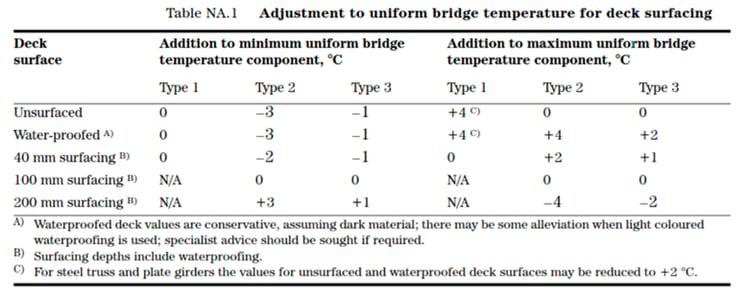
 

Figure 16: BS EN 1992-1-1-5 – Table NA.1 – code extract


The adjusted Temin and Temax shall be considered as the final uniform temperature components that shall be applied in to the model.
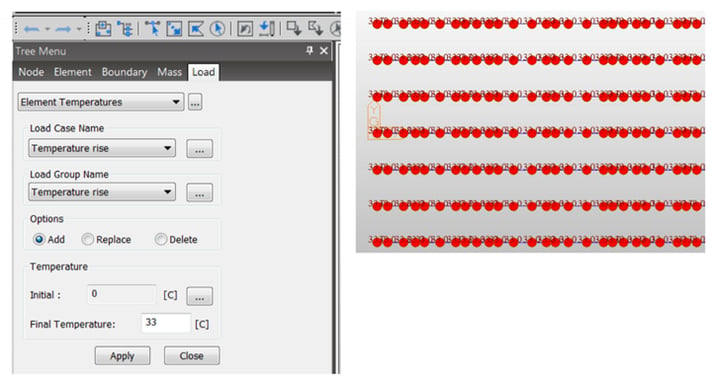
 

 Figure 17: Application of uniform temperature in Midas Civil
Figure 17: Application of uniform temperature in Midas Civil


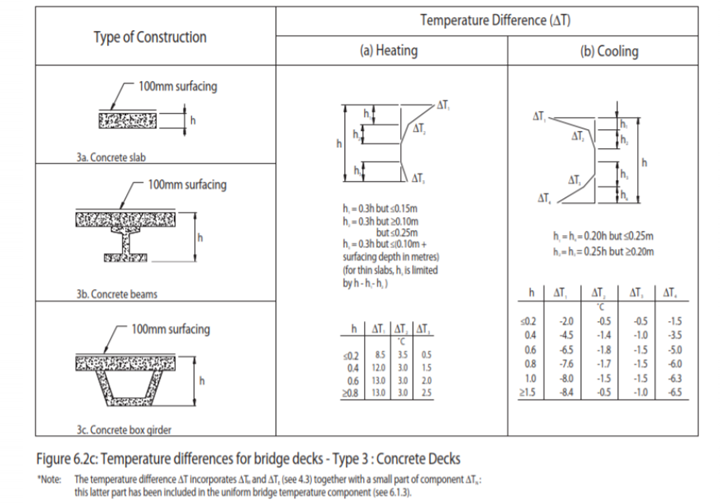
The vertical temperature component with linear effect (Approach 1) is not suitable for Forder Valley deck, as W beams are used. Not a standard rectangular section. The composite section is non-linear. Hence non-linear effect is used. The effect of the vertical temperature differences shall be considered by including a nonlinear temperature difference component as per Figure 6.2c of BS EN 1991-1-5:2003
 

 Picture18

Figure 18: BS EN 1992-1-1-5 – Temperature Gradient – code extract (Click here to zoom)
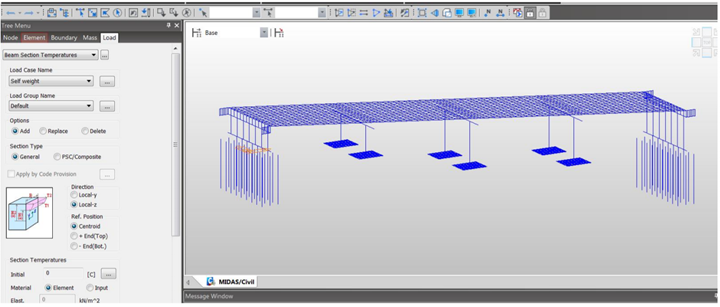


Figure 19: Application of Temperature Gradient Load in Midas Civil


7. Earth Pressure distribution and its application in MIDAS Civil


Earth Pressure design to abutment walls comprises of below three cases:

Case-1: Maximum thermal expansion + maximum bridge loads

Case-2: Maximum thermal contraction + minimum bridge loads

Case-3: Maximum thermal expansion + minimum bridge loads
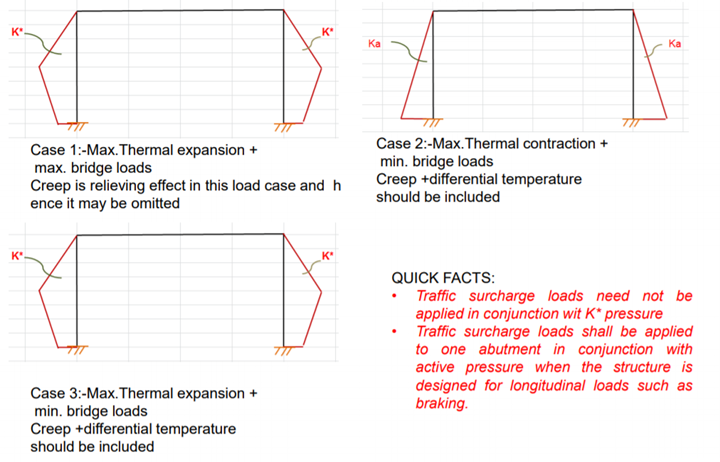
 

Figure 20: Earth Pressure design to abutment walls


Figure 21: Application of Earth Pressure on frame abutments


8. Global Static Analysis and Result Discussion


After analysis, the results need to be carefully chosen whether they need to be taken from construction stages or post-construction stages. Results can be extracted in tables which are excel friendly from midas Civil. Envelope load combinations can be created, and the results can be generated for these envelopes.
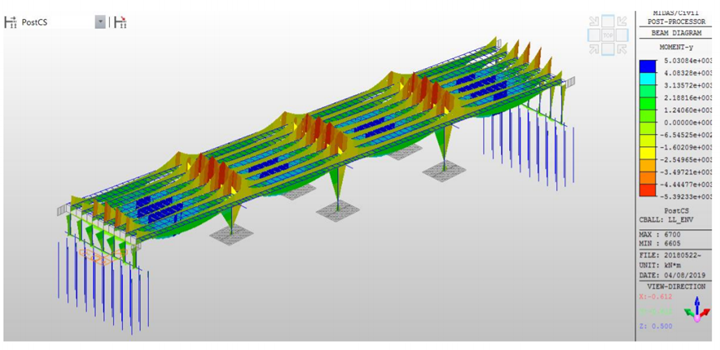
 

Figure 22: Bending Moment Envelope


 9. Conclusion


Integral Bridge Analysis Conclusion


Webinar video link


Susbcribe
MIDAS Newsletter

Thank you, See you soon!
Share
About the author
Mahesh Sankaran | Senior Engineer | AECOM UK

Mahesh Sankaran is a senior structural engineer with 11 years of design experience. In his career, he was involved in the design of various types of bridges from preliminary stages up to construction. He worked as a bridge engineer and design coordinator on some major infrastructure projects in India and in the UK.

Comments
Download Download the Webinar
Presentation file

Please fill out the below form to
download case study of Forder Valley Viaduct Bridge

All